
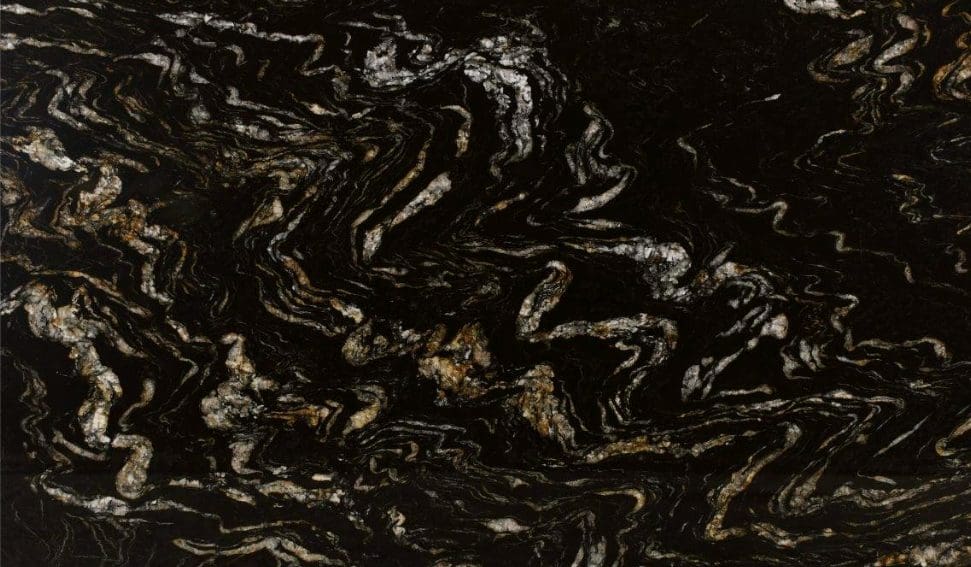
Black and blue granite occupies a fascinating corner of the natural stone world. These aren’t the warm, speckled granites most people picture when they think of the material. Black granite has a depth and intensity that reads more like a luxury material than a workhorse countertop surface. Blue gray granite and black granite with blue flecks carry an almost geological mystique, colors and patterns that form over millions of years and exist nowhere else in the manufactured material world.
And yet, both tend to attract more than their share of misconceptions. Homeowners hesitate over myths about maintenance, worry that dark surfaces will overwhelm a space, or question whether blue granite is even a natural stone. This article addresses the most common myths directly, so you can approach the decision with accurate information rather than inherited assumptions.
What Makes Black and Blue Granite Unique
Before getting into the myths, it helps to understand what actually creates the distinctive appearance of these granites.
Granite is an igneous rock formed when molten magma cools slowly deep within the Earth. The mineral composition of that magma determines the stone’s final color and pattern. Black granite gets its deep, dark tones primarily from high concentrations of hornblende, biotite mica, and augite. Blue gray granite and black granite with blue flecks owe their extraordinary coloring to the presence of labradorite, a feldspar mineral that produces an optical phenomenon called labradorescence, a shifting, iridescent quality that makes the stone appear to glow from within under certain lighting conditions.
No two slabs are identical, and that uniqueness is part of what makes these granites so compelling. Viewing a full slab in person is always worthwhile because photographs rarely capture the full depth and movement of the stone.
The Myths, Addressed
Black and blue granite carry more than their share of misconceptions. Here’s what the facts actually say.
Myth 1: Black Granite Requires More Maintenance Than Lighter Stones
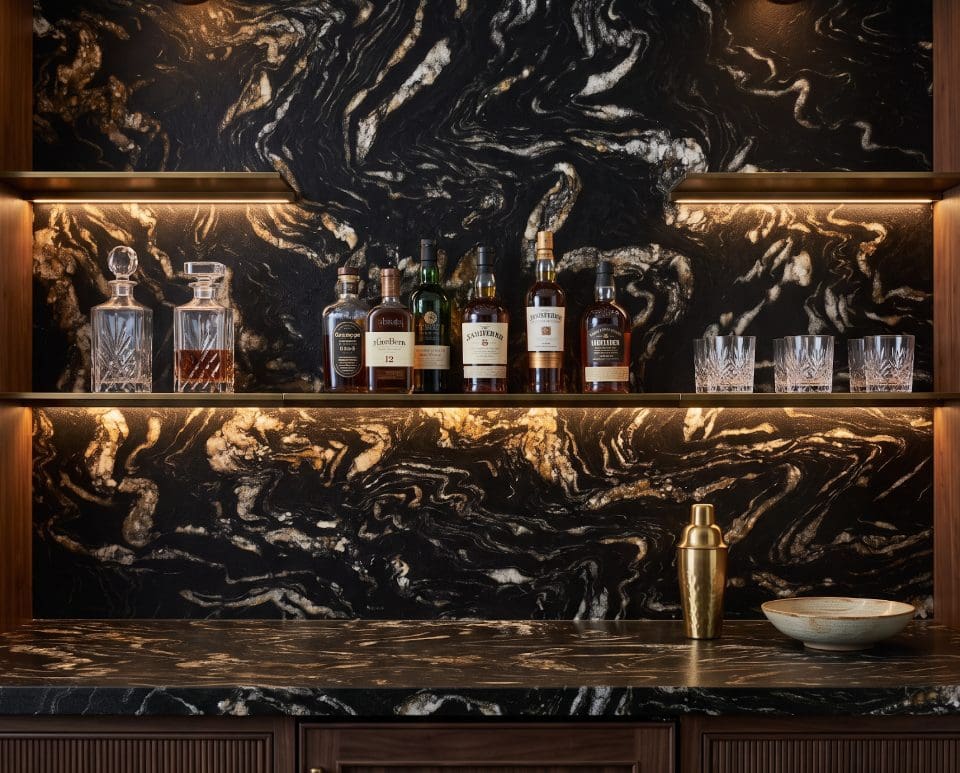
This one gets repeated often, and it’s simply not accurate. Granite’s maintenance requirements are determined by its porosity, not its color. Black granite varieties are often among the denser, less porous options in the granite family, which in some cases actually means they require less frequent sealing than lighter, more porous varieties.
The grain of truth here is that water spots, fingerprints, and light dust can be more visible on a polished dark surface than on a lighter one. But that’s a cleaning consideration, not a maintenance difference. Daily wiping keeps a black granite countertop looking sharp, and periodic sealing, typically once a year, is all the maintenance the stone needs.
Myth 2: Blue Granite Isn’t a Natural Stone
Blue granite confuses people because the color seems too unusual to be natural. Vivid blues, deep teals, and shifting iridescent tones look more like something engineered than something that came out of the ground.
But blue granite is completely natural. The mineral labradorite, which produces the blue and grey tones in stones like Blue Bahia, Volga Blue, and Sodalite Blue, is a naturally occurring feldspar with optical properties that create its distinctive shifting color. No dye, no resin, no manufacturing process is involved. The stone is quarried, cut, and polished and what you see is exactly what the Earth produced.
Myth 3: Dark Countertops Make a Room Look Smaller
This is a design myth that oversimplifies how color and space actually interact. Dark surfaces don’t inherently shrink a room, how they’re used and what surrounds them determines the spatial effect.
Black or dark blue-gray granite countertops against white or light cabinetry create contrast that actually draws the eye outward and defines the room’s boundaries more clearly. In well-lit kitchens with generous natural light, dark countertops read as grounding and sophisticated rather than heavy or confining. The myth is most relevant in very small, poorly lit spaces and even there, the right slab and the right surrounding palette can make dark granite work beautifully.
Myth 4: Black and Blue Granite Scratches Easily
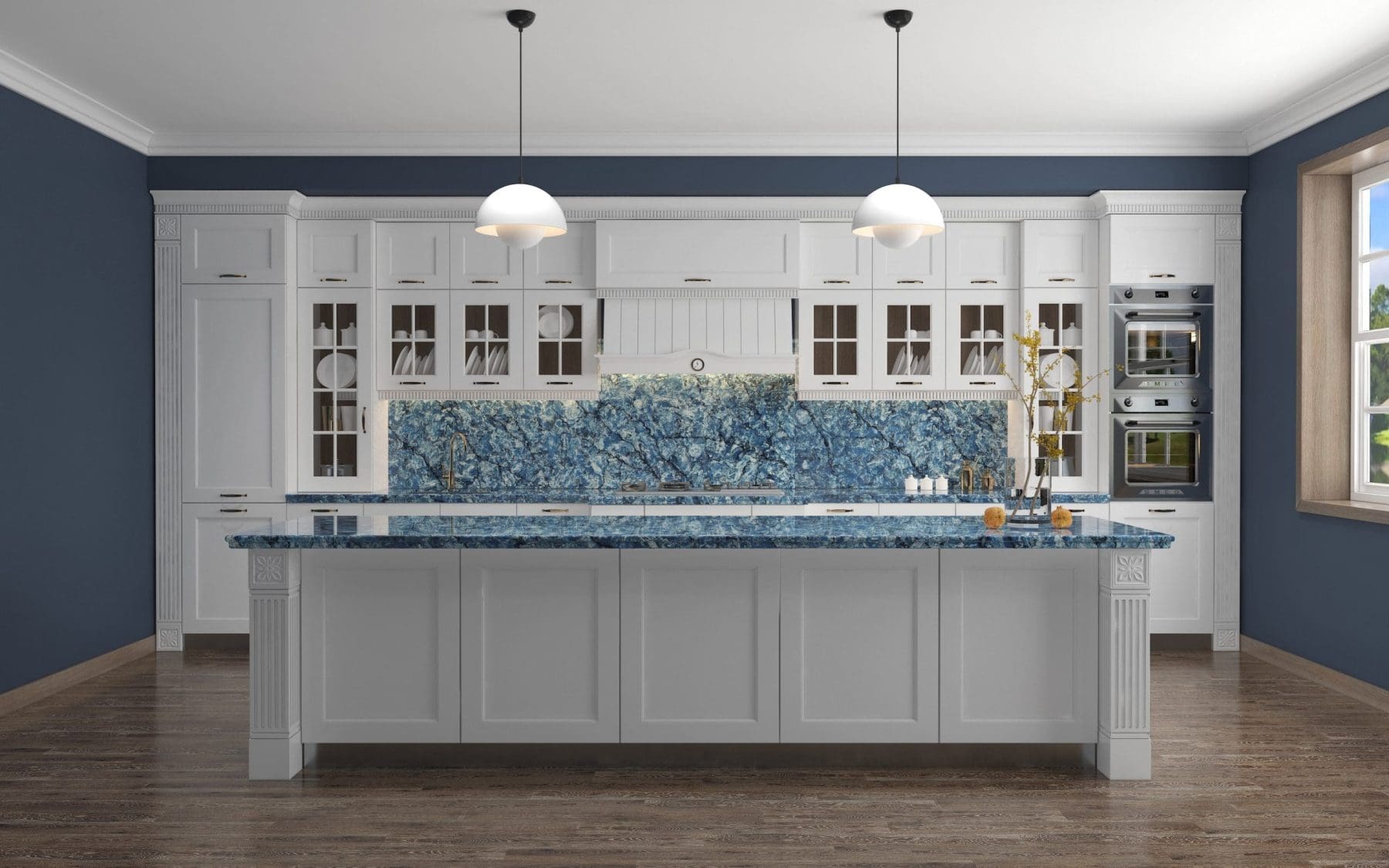
Granite is one of the hardest natural stones used for countertops, ranking 6 to 7 on the Mohs scale. Black and blue granites are no exception. They resist scratching from knives, utensils, and everyday kitchen use effectively, and in many cases outperform softer stones like marble or soapstone. Using cutting boards is still recommended, for the sake of your knives as much as your countertop, but normal kitchen activity isn’t going to damage the surface.
Myth 5: Black Granite Shows Every Imperfection
The reality is more nuanced. Polished black granite does show fingerprints, smudging, and water spots more readily than lighter surfaces, that’s a fair observation. But it doesn’t show crumbs, light dust, or minor food messes the way a white or cream countertop does. The trade-off is real, and which direction it cuts depends entirely on how you use your kitchen.
A honed finish on black granite addresses the fingerprint and water spot issue significantly by eliminating the high-gloss reflective surface. Many homeowners find that honed black granite gives them the depth and drama of the color without the maintenance reality of a polished dark surface.
Myth 6: Blue Granite Is Too Unusual to Work in Most Kitchens
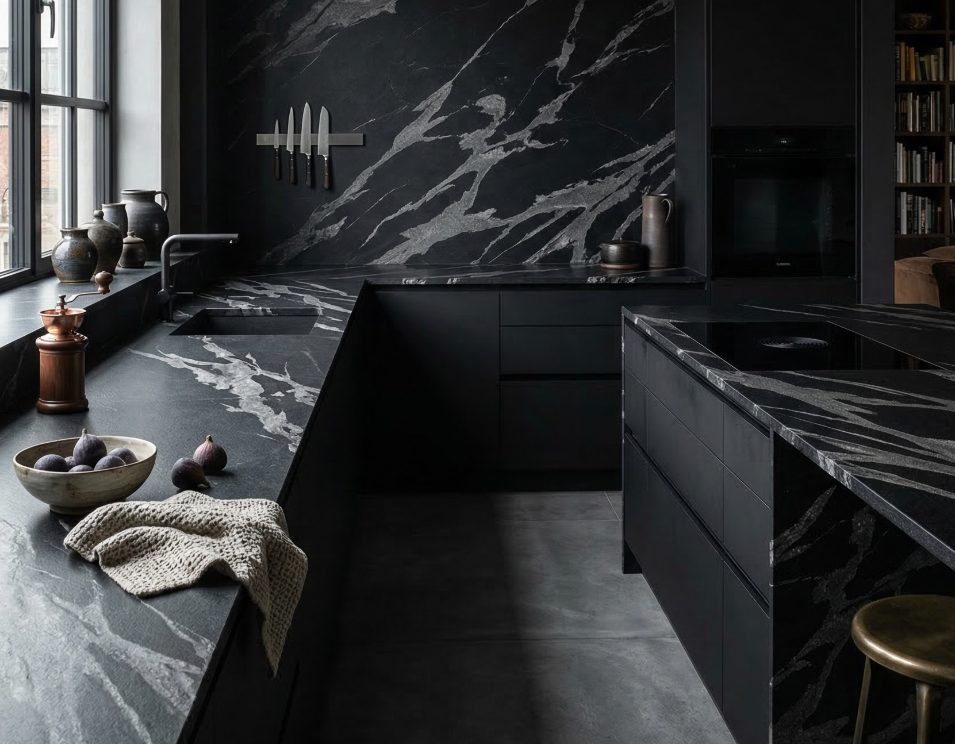
Blue gray granite and black granite with blue flecks are certainly distinctive, but distinctive doesn’t mean difficult to use. These stones work particularly well in contemporary, transitional, and even coastal-inspired interiors. The key is in the pairing: navy or charcoal cabinetry allows blue granite to lead without fighting for attention, while white or off-white cabinetry lets the stone’s color pop against a clean backdrop.
The iridescent quality of blue granite also shifts throughout the day as light conditions change, which gives the kitchen a dynamic quality that more static surfaces don’t have. Far from being too unusual, many designers find blue granite to be one of the more versatile and surprising natural stone options available.
Design Styles That Work Well With Black and Blue Granite
Black granite countertops excel in spaces where contrast, depth, and architectural confidence are design goals.
Contemporary kitchens are a natural fit. Flat-front cabinetry in white, grey, or navy against black or blue-gray granite creates a high-impact, intentional look. Matte black or brushed gold hardware reinforces the palette without competing.
Traditional kitchens can use black granite effectively as a grounding counterpoint to detailed millwork and warm wood tones. Against cream or antique white cabinetry with polished nickel hardware, black granite reads as classic rather than modern.
Transitional spaces benefit from blue gray granite’s ability to read as both cool and warm depending on surrounding elements. It bridges design directions with ease.
Bathrooms are where black and dark blue granites often make their strongest impression. A black granite vanity top against a light wall and warm fixtures creates an immediately spa-like quality that lighter surfaces don’t achieve as readily.
Tips for Choosing the Right Slab
Because black and blue granite varies significantly from slab to slab, selection requires more care than materials with engineered consistency.
View the actual slab you’re purchasing, not just a sample. The sample tells you the general character of the stone; the full slab tells you what your countertop will actually look like. Scale matters enormously with dark, veined, or iridescent stones.
Assess the slab under different lighting conditions if possible. Blue granite in particular can shift dramatically between natural daylight and warm artificial light, and understanding how it behaves in both conditions is important for a space that transitions from day to evening.
Consider the finish before committing to a stone. A polished black granite and a honed black granite from the same slab are effectively two different design choices. Ask your fabricator or showroom to show you both options if the stone is available in multiple finishes.
Explore Black and Blue Granite at UMI Stone
At UMI Stone, we carry a curated selection of premium granite including black and blue varieties that have to be seen in person to be fully appreciated. Our team can walk you through the available slabs, help you understand how different stones will perform in your specific application, and answer any remaining questions about maintenance, fabrication, and design.
Visit a showroom near you or contact us today to start the conversation.
Frequently Asked Questions
Is blue granite a natural stone?
Yes. Blue granite gets its distinctive color from naturally occurring minerals, primarily labradorite, a feldspar with optical properties that create shifting blue and iridescent tones. No dyes or synthetic materials are involved.
Does black granite require more maintenance than lighter granite?
No. Granite maintenance is determined by porosity, not color. Many black granites are among the denser, less porous varieties and may require sealing less frequently than some lighter options. Dark surfaces do show fingerprints and water spots more readily, which calls for more frequent wiping rather than more intensive maintenance.
Can black granite make a kitchen feel smaller?
Not necessarily. Dark countertops in a well-lit kitchen with light cabinetry create contrast that defines the space rather than closing it in. The myth that dark surfaces always reduce perceived space oversimplifies how color, light, and proportion actually work together.
Is black granite scratch-resistant?
Yes. Granite ranks 6 to 7 on the Mohs hardness scale and resists scratching from normal kitchen use effectively. Using cutting boards is still recommended to protect both the surface and your knives.
What’s the difference between polished and honed black granite?
A polished finish creates a high-gloss, reflective surface that shows fingerprints and water spots more readily. A honed finish is matte, softer in appearance, and significantly more forgiving in terms of daily upkeep. Both are appropriate finishes for black granite; the right choice depends on the look you’re after and how much daily wiping you’re willing to do.
What cabinet colors work best with black and blue granite?
White and light grey cabinetry creates high contrast that lets the stone take center stage. Navy and deep charcoal cabinetry creates a tonal, enveloping look. Warm wood tones add organic warmth that balances the intensity of dark stone. All three are strong pairings depending on the design direction.
Does blue granite look different in different lighting?
Yes, significantly. The labradorescence in blue granite shifts under different light conditions, often appearing more intensely blue in natural daylight and taking on deeper, moodier tones under warm artificial light. Viewing the slab under both conditions before purchasing is worthwhile.

