
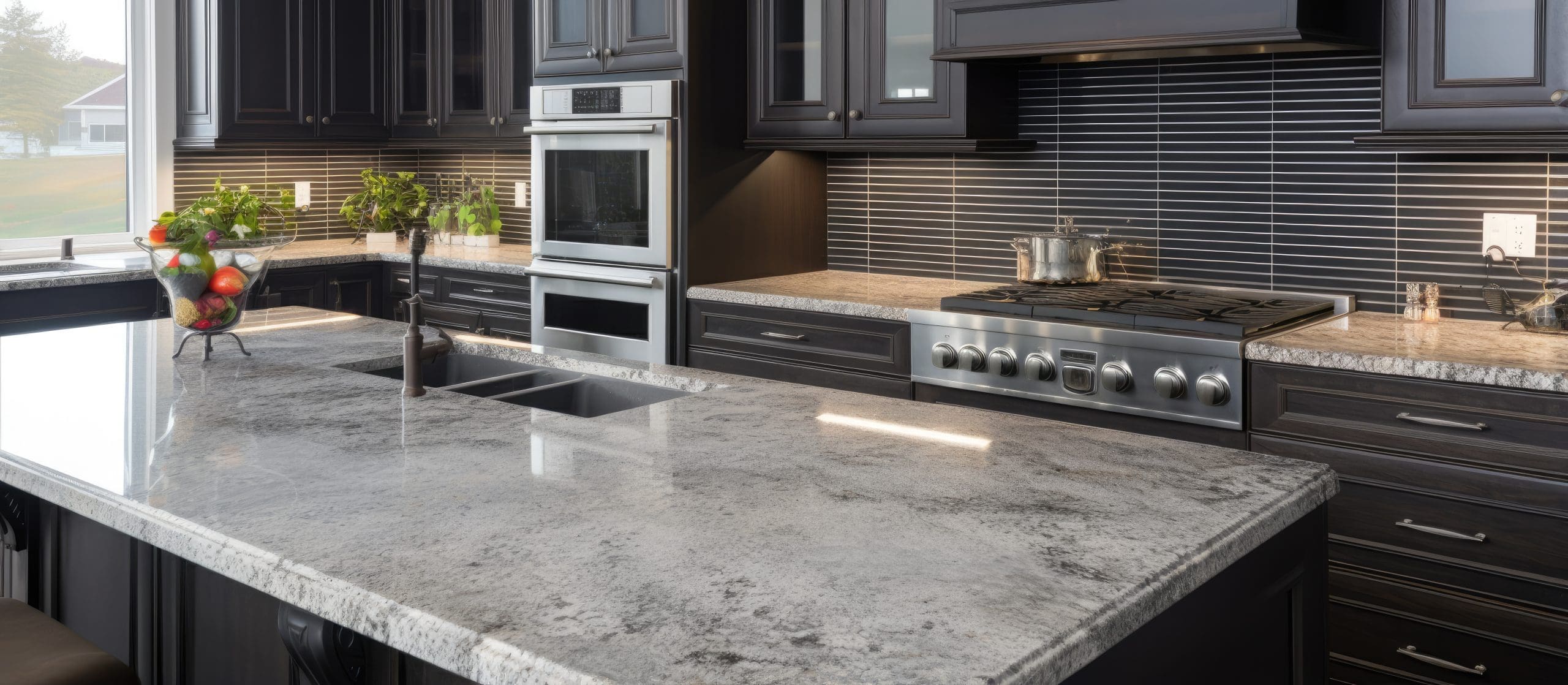
Choosing the right surface for your kitchen remodel can feel overwhelming, especially when every material promises something different. But if you’re drawn to natural beauty, strength, and long-term reliability, a granite countertop slab may already be on your radar. These slabs offer durability and elegance wrapped into one impressive surface.
In this guide, we’ll walk you through everything you need to know to understand whether a granite counter slab is truly the right fit for your renovation.
What Are Granite Countertops?
A granite countertop slab comes directly from the earth, cut from large blocks of natural stone and polished into a smooth, high-performance surface. Unlike prefabricated pieces or tiles, slabs feature uninterrupted patterns and variations. Because no two slabs are identical, you’re guaranteed a surface with character and individuality that no one else will have.
Homeowners often choose granite because it blends luxury with practicality, making it one of the most balanced countertop materials available. You get the high-end aesthetic of natural stone alongside the durability needed for a busy kitchen.
Color and Finish Choices
Granite slabs appear in a wide range of colors and patterns that include familiar whites, greys, and blacks along with striking blues, greens, and dramatic multicolored styles. These natural variations make every slab one-of-a-kind and allow you to select a surface that works with modern, traditional, or eclectic designs. Veining and movement can create a standout focal point that adds depth and visual interest.
Along with color, several finish options shape the overall look and feel of your counters:
- Polished: This high-gloss, reflective finish enhances the vibrancy of the stone’s natural colors and patterns, creating a sleek and elegant appearance.
- Honed: With a matte, non-reflective surface, honed granite offers a softer, more understated look that suits contemporary and casual spaces.
- Leathered: This textured finish provides a tactile, organic feel that highlights the stone’s natural character and adds subtle warmth to your kitchen.
Your choice of color and finish can dramatically impact the ambiance of your kitchen. Lighter colors and polished surfaces can make the space feel larger and brighter, while darker hues and matte or leathered finishes contribute warmth, sophistication, or a bold statement.
Dimensions and Sizing
Granite countertop slabs come in a range of lengths, widths, and thicknesses to accommodate different layouts. Standard slabs run about 105 to 120 inches long and 55 to 70 inches wide, though exact dimensions vary by quarry and supplier. Common thicknesses include 2 cm (about 3/4 inch) and 3 cm (about 1 1/4 inch), with thicker slabs offering a more substantial, premium presence.
When planning your remodel, consider the measurements of your counters, islands, and any areas that will require a custom cut. Larger slabs reduce the number of seams and create a cleaner visual flow. For kitchens with unique shapes or multiple pieces, your fabricator can guide you through slab selection and seam placement to maintain pattern continuity. Viewing full slabs in person can also help you visualize how the scale and veining will look in your space.
The Benefits of Granite Slabs
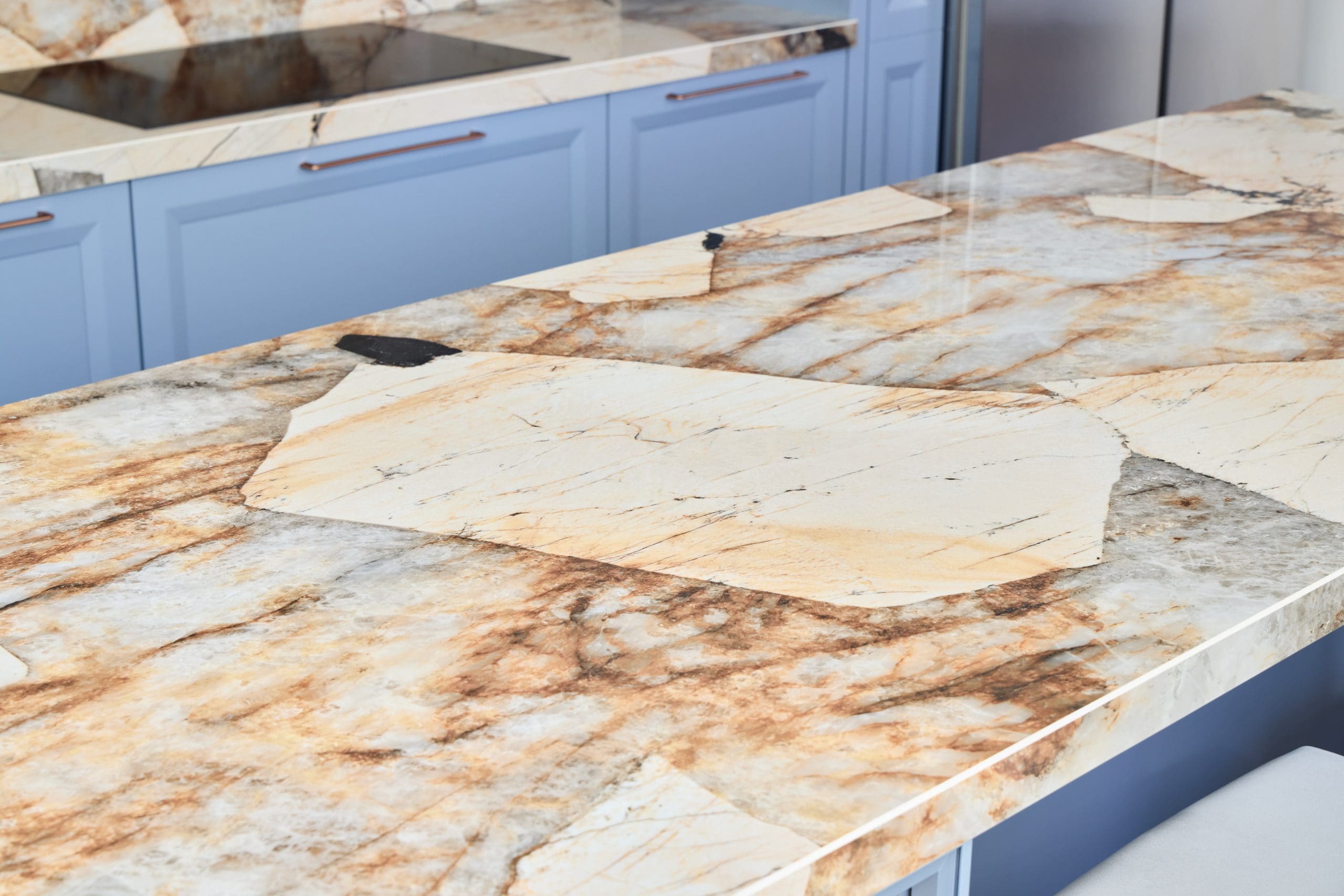
You’ll find that a granite countertop slab brings a blend of performance and beauty that few materials can match. Here are a few of the primary benefits of granite stone slabs:
- Natural Durability: A granite counter slab resists chips, cracks, and everyday wear because it forms under intense geological pressure.
- Heat Resistance: You can place hot pots and pans on granite without worry because its dense structure knows how to handle high temperatures.
- Scratch Resistance: Granite stands up to sharp tools and heavy use because it’s harder than most metals.
- Unique Patterns: Every slab features its own distinct veining and coloration.
- Long-Term Value: Granite increases resale appeal because buyers recognize its longevity and beauty.
- Wide Color Variety: Slabs come in everything from soft creams to dramatic blacks and everything in between.
- Stain Resistance (When Sealed): Proper sealing prevents stains because it protects granite’s porous surface.
The Potential Drawbacks of Granite Slabs
Even with its strengths, a granite countertop slab comes with a few potential downsides that you should weigh before committing.
- Sealing: Granite needs periodic sealing because it’s naturally porous.
- Price Range: Some slabs can be relatively expensive because of rarity.
- Heavy Weight: Granite requires strong cabinetry and professional installation because the slabs are extremely heavy.
- Inconsistent Patterns: Natural variation can be a downside if you prefer a uniform look because each slab is unique.
- Limited DIY Options: Installation is not DIY-friendly because granite is a material that demands precise fabrication and leveling.
- Repairs: Chips can be repaired, but repairs aren’t always invisible.
How Granite Compares to Other Countertop Materials
A granite counter slab holds its own against quartz, marble, porcelain, and laminate. Granite excels at heat resistance and natural variation, making it ideal if you want something with a little more organic beauty.
Quartz offers lower maintenance but lacks the individuality of natural stone. Marble is stunning but softer and more prone to etching, while laminate is budget-friendly but doesn’t offer long-term value. If you want a durable surface with a luxury feel, granite often lands in the sweet spot.
Do You Need a Professional Installer for Granite Counter Slabs?
Yes. Professional installation is non-negotiable when working with a granite countertop slab. Slabs must be cut and placed with precision to ensure proper support. Seam placement matters as well, especially with high-movement patterns. This isn’t something any homeowner should tackle without an extensive amount of professional experience.
5 Maintenance Tips to Help Protect Your Granite Counters
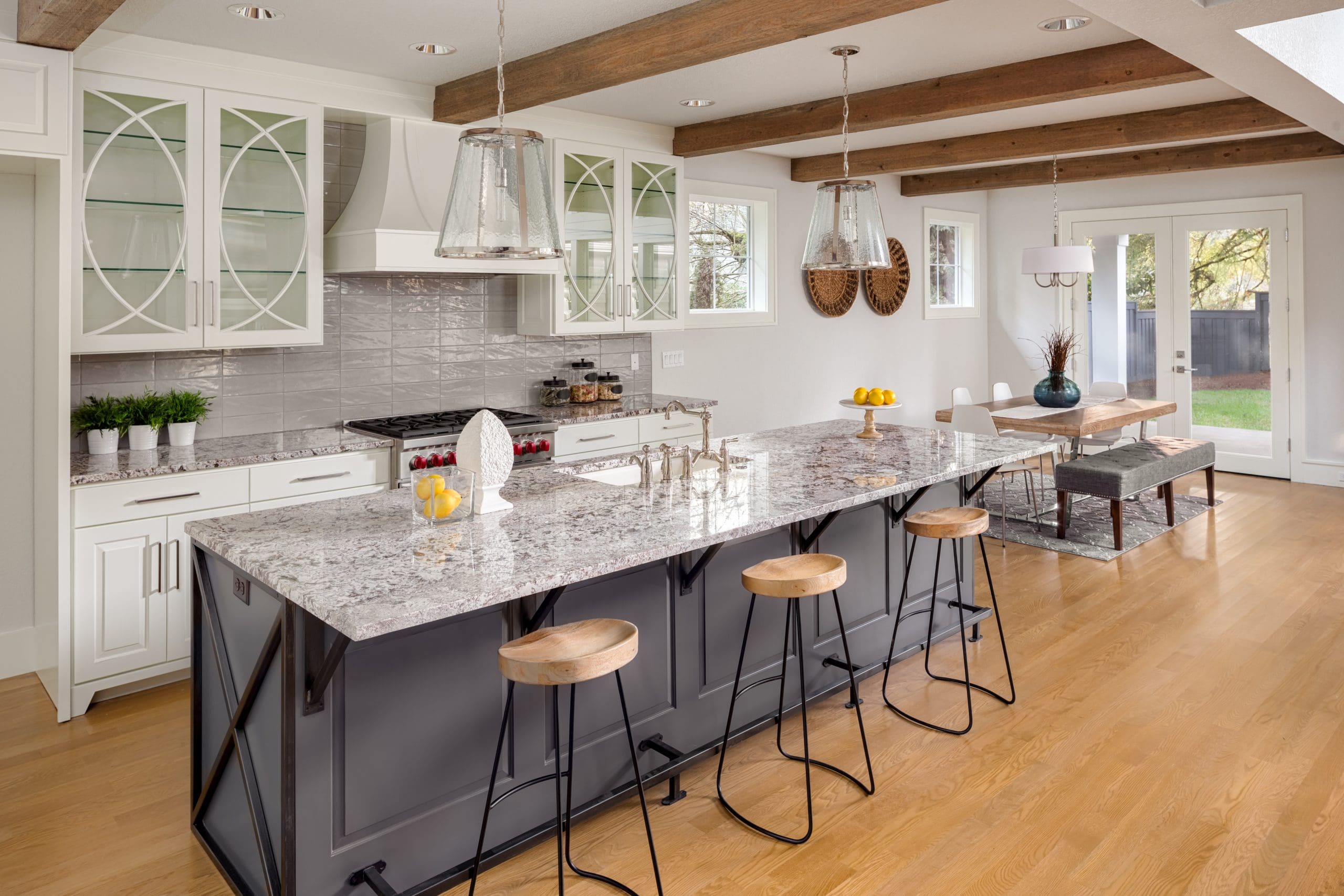
Taking care of a granite countertop slab can be pretty straightforward if you follow a few simple habits.
1. Clean Daily
Use gentle stone-safe cleaners because harsh chemicals can dull the finish. A quick wipe keeps your slab looking pristine, and if you fall into the habit of doing this daily, you’ll never have to worry about stains or unsightly grime.
2. Seal Regularly
Reseal once or twice a year because granite is naturally porous. This protects it from oils and spills, and will help you get the longest possible lifespan from your granite counters.
3. Avoid Standing Water
Dry water as soon as you see or spill it because prolonged exposure can lead to mineral buildup. This simple habit can help you prevent cloudy spots that can damage the appearance of your granite.
4. Use Cutting Boards
Granite is scratch-resistant, but as a result, you can damage your knives because the stone is harder than steel. That’s why you should always use cutting boards to protect your tools and your countertop.
5. Avoid Extreme Impact
Heavy cookware can chip corners because granite, while durable, isn’t indestructible. So, you should always handle items with care around the edges of your granite slab.
Explore Granite Countertop Slab Options from UMI Stone
A granite countertop slab offers the perfect blend of durability, beauty, and long-term performance for many kitchen remodels. With its natural strength and one-of-a-kind patterns, it brings character to any space while holding up to everyday wear and tear. When you choose the right slab and maintain it properly, your granite countertop slab can last for decades.
Are you ready to find the perfect slab for your kitchen? Find a showroom near you!

