
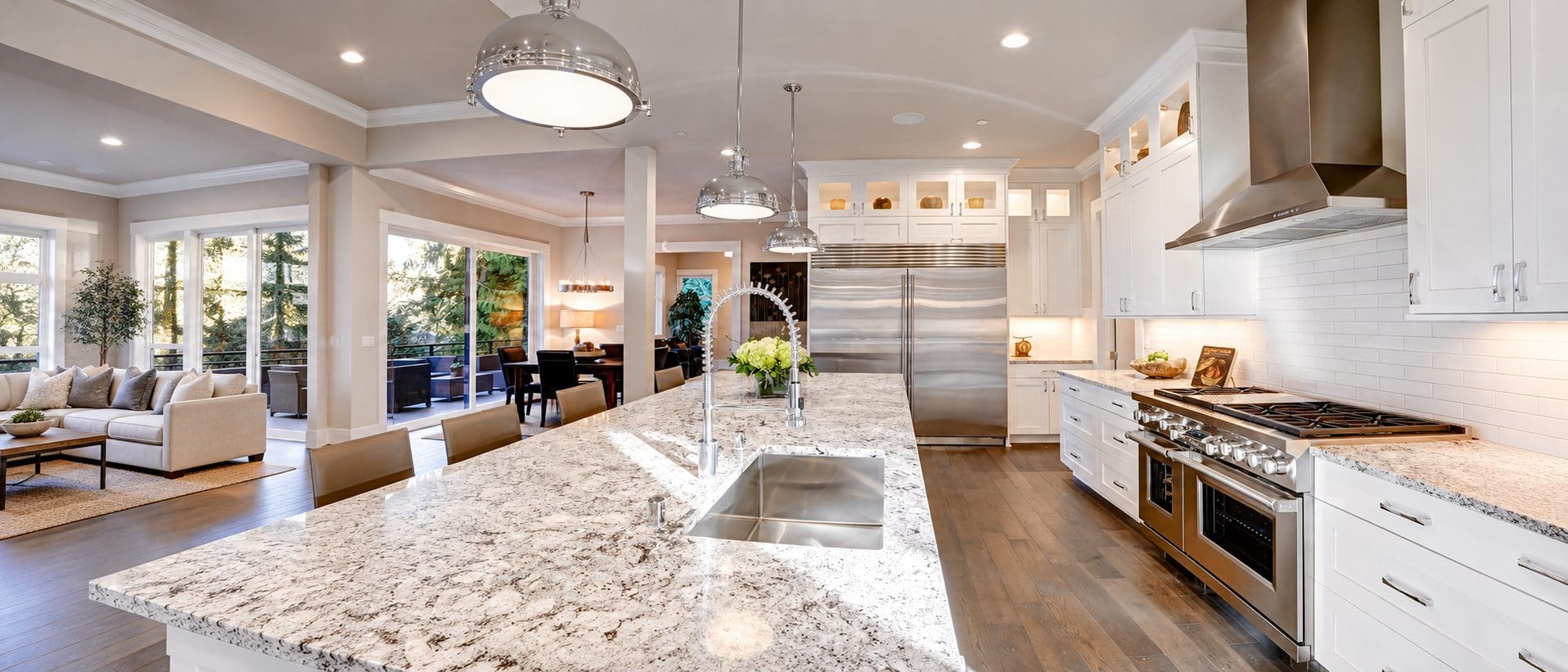
Most homeowners approach the backsplash decision backward. They pick a tile they like, then try to make it work with everything else in the kitchen. With white cabinets and granite countertops, that sequence tends to produce results that look fine in the store and slightly off once installed.
The right starting point isn’t the backsplash. It’s the granite.
Granite is not a neutral material, even when it reads as gray or beige. Nearly every slab carries undertones (green, gold, rust, blue, or cool silver) that become more visible once the stone is installed and lit. A backsplash that fights those undertones creates a kitchen that feels slightly unresolved, even if no one can quite put their finger on why. A backsplash that works with them pulls the whole room together.
Before you choose a single tile, take your granite sample into the kitchen at different times of day and look hard at what colors emerge. That’s where this decision begins.
Classic Backsplash Options That Work with Almost Any Granite
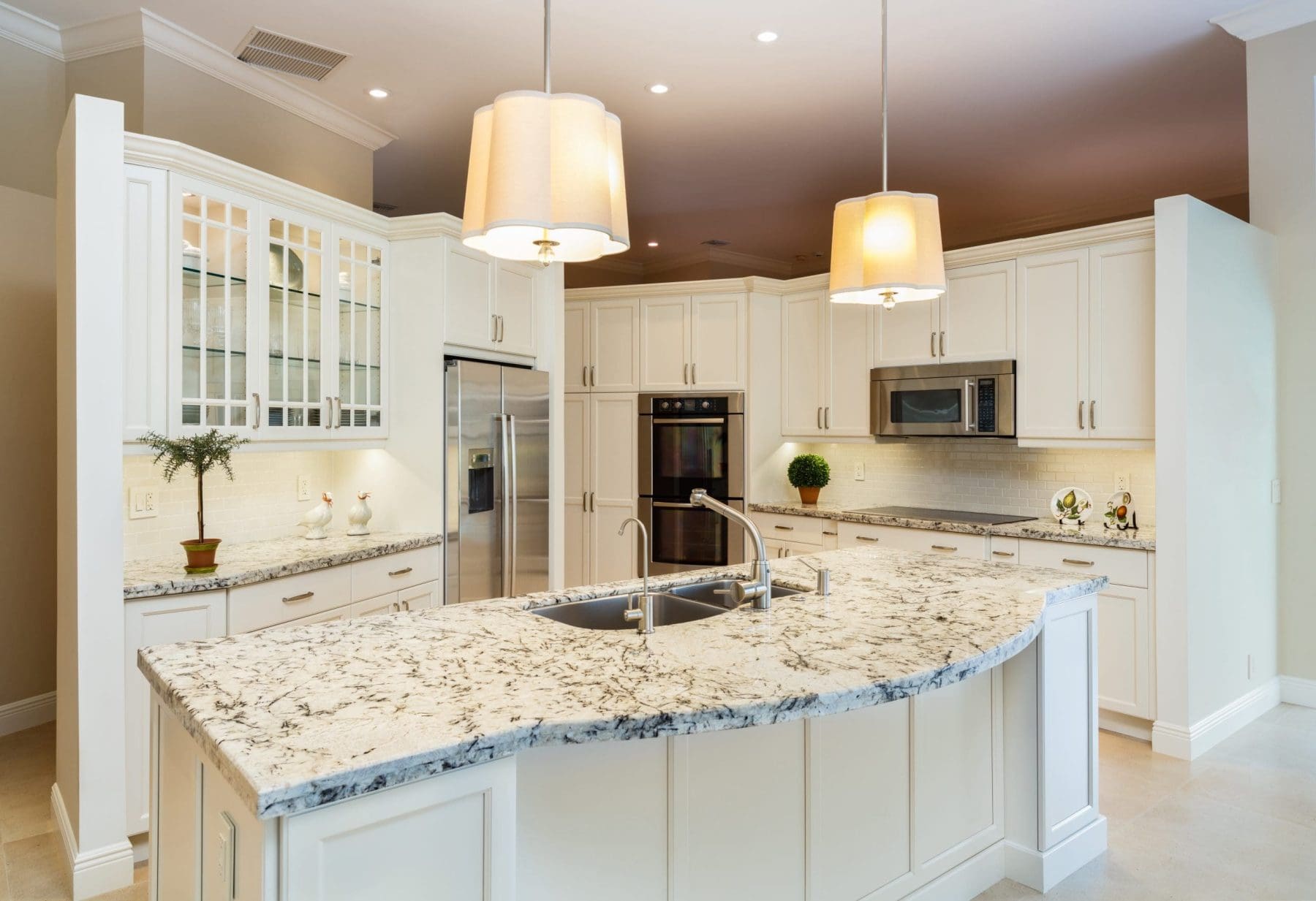
Some backsplash choices are reliable precisely because they don’t compete. For homeowners who want the granite to lead and the backsplash to support, these options deliver consistency across a wide range of granite varieties.
White Subway Tile
White subway tile remains one of the most effective backsplash choices for white cabinets and granite countertops because it resolves the visual hierarchy immediately: the granite is the feature, the backsplash is the backdrop. The format you choose within the subway tile category changes the mood considerably.
A classic brick lay is clean, timeless, and recedes gracefully. A vertical stacked layout feels more contemporary and structured. Herringbone adds texture and directional energy without introducing color. For granite slabs with bold movement or dramatic veining, letting the tile stay quiet in a simple format is usually the right call.
Grout color matters here. Warm white or cream grout with warm-toned granite maintains harmony. Cool white grout with cool-toned grey or blue granite keeps the palette consistent. Matching grout to tile creates the most seamless, recessive effect.
Neutral Stone-Look Tile
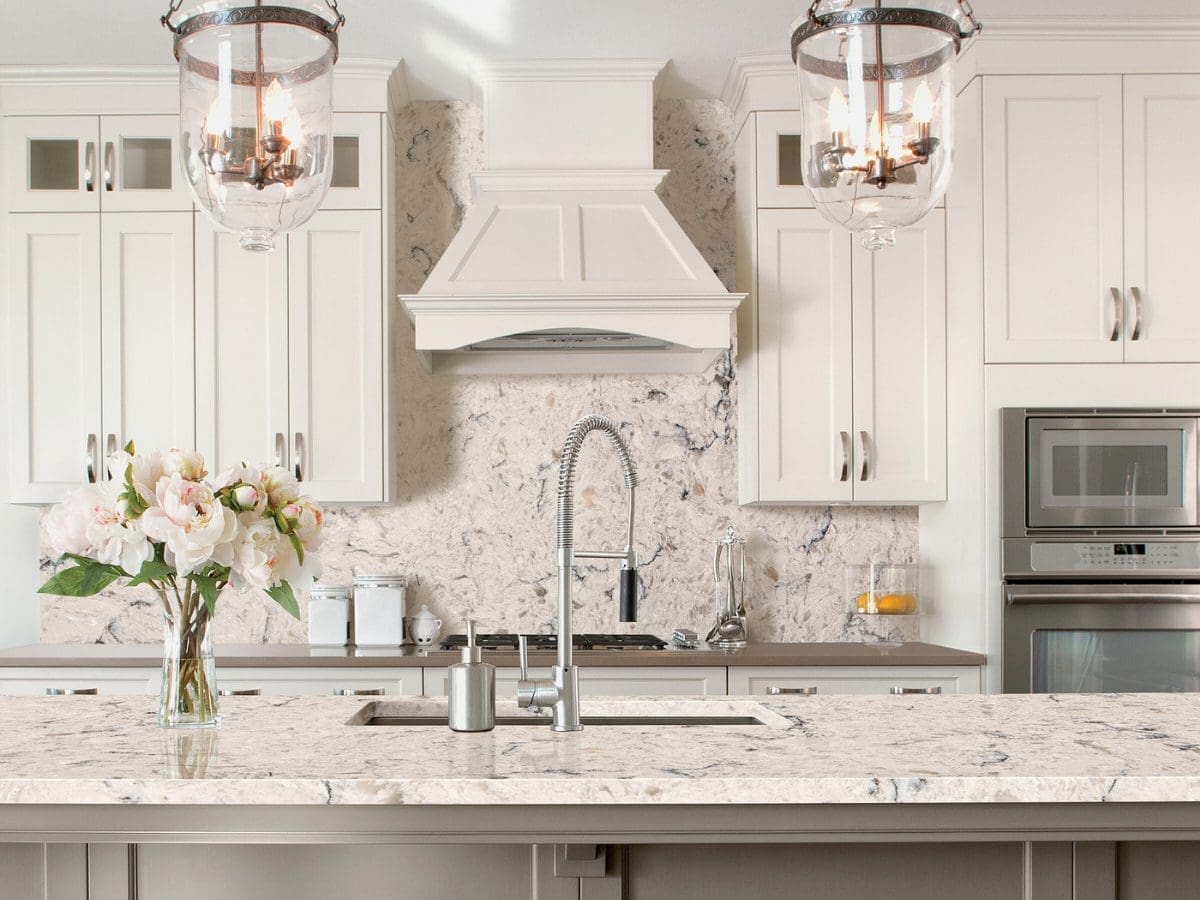
Large-format porcelain tile in soft grey, greige, or warm cream tones brings a refined, contemporary quality to the kitchen without introducing strong color. These tiles extend the visual weight of the granite across the backsplash zone without competing for attention, creating a layered, tonal aesthetic that works well in transitional and contemporary kitchens.
For granite slabs with complex patterning, a quieter stone-look tile in a coordinating tone lets the countertop remain the room’s focal point while still giving the backsplash presence.
Soft Gray or Cream Ceramic
Simple glazed ceramic in soft gray or cream is an underrated backsplash option for granite kitchens. It’s cost-effective, available in a range of finishes and formats, and provides a clean, low-distraction backdrop that lets the granite do the heavy lifting visually.
Natural Stone Backsplash Options
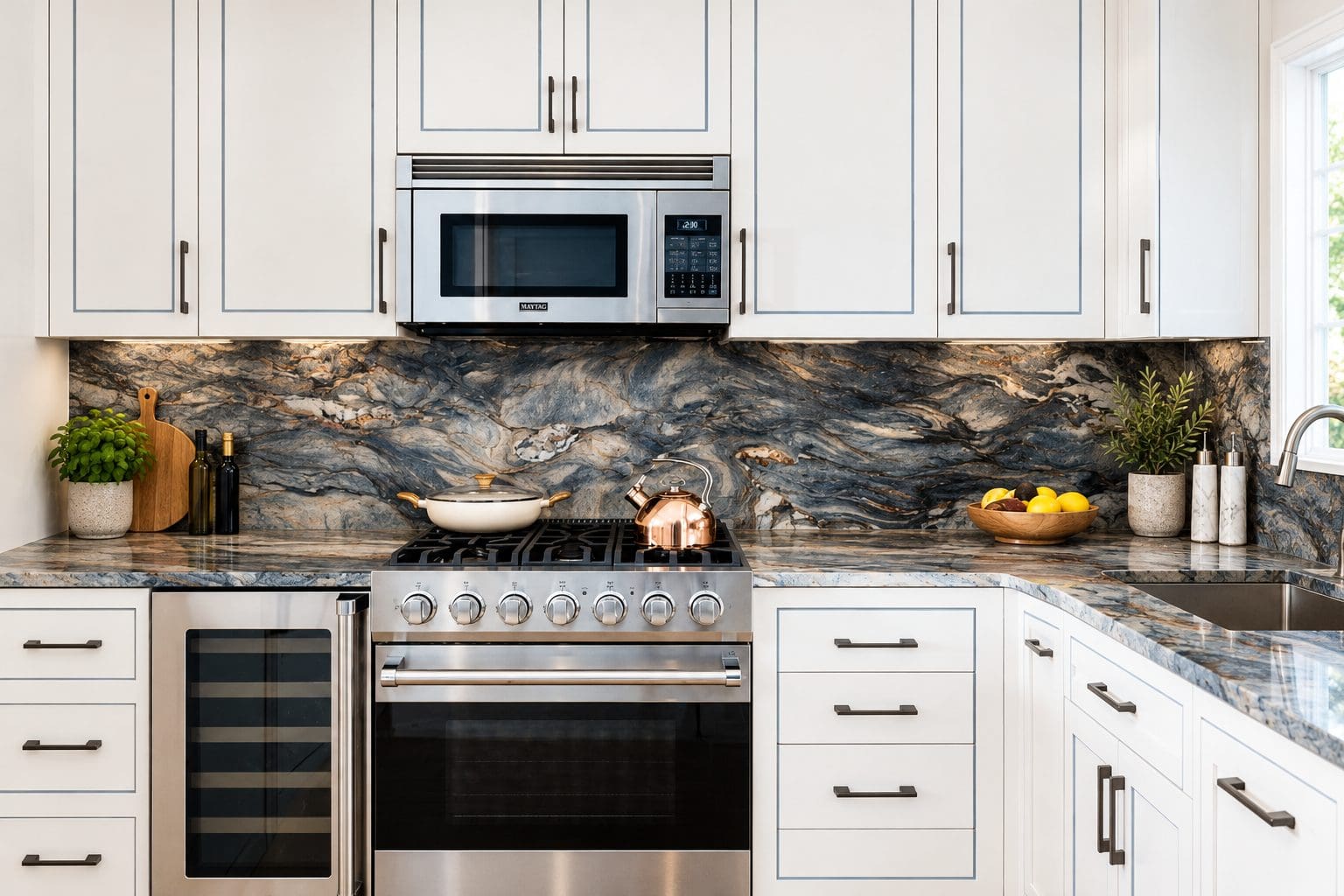
A natural stone backsplash brings a material coherence to a kitchen that tile alternatives can’t quite replicate. When the backsplash and countertop are both natural stone, the room reads as intentionally designed rather than assembled from separate decisions.
Marble Tile
Marble kitchen backsplash tile (particularly in white Carrara or soft grey varieties) pairs beautifully with warmer granite countertops. The stone’s natural veining adds visual interest without introducing strong color, and the material relationship between marble and granite gives the kitchen a cohesive natural stone story. This pairing works especially well in transitional and traditional kitchens where warmth and elegance are the design goals.
Travertine
Travertine tile in the backsplash zone complements warm-toned granite naturally. Its earthy cream and gold tones reinforce the warmth in gold or beige-undertone granite slabs, and its natural texture adds a tactile quality that contrasts pleasantly with the polished countertop surface. This pairing suits Mediterranean, farmhouse, and transitional kitchen styles particularly well.
Full Slab Backsplash
For a premium, design-forward look, extending the granite countertop material up the wall as a full slab backsplash creates a seamless, high-impact statement. Minimal grout lines, uninterrupted stone movement, and a completely cohesive visual plane make this one of the most striking options available, particularly for granite slabs with dramatic veining or bold color.
Large-format porcelain in a coordinating stone look is a practical alternative for full slab installations where matching the exact granite slab isn’t feasible, offering the same minimal-grout aesthetic at a more accessible price point.
Glass Backsplash Options
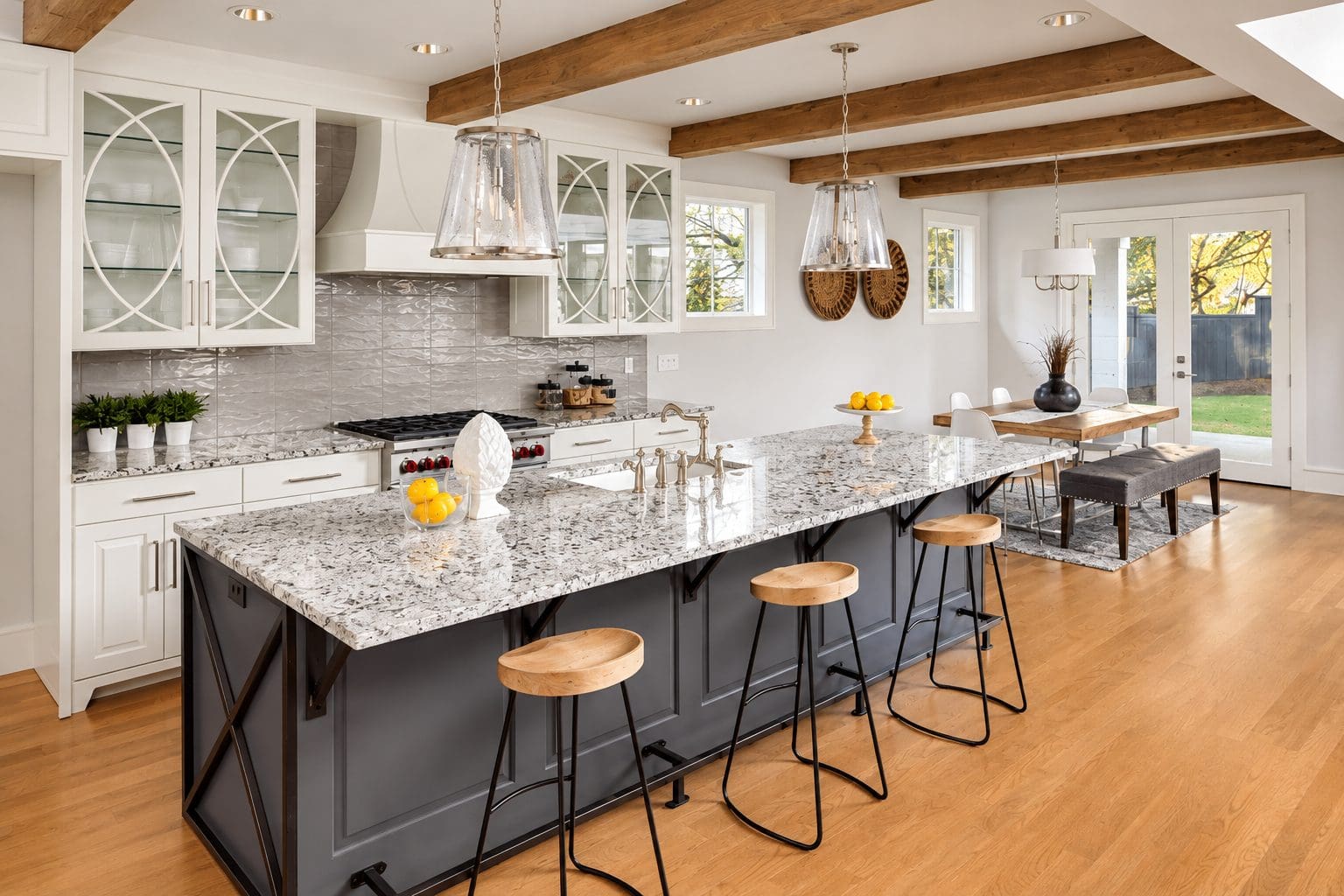
Glass backsplash tile works particularly well with lighter granite varieties, where its reflective quality adds brightness and visual openness without competing with the stone’s natural movement.
Subway glass tile in white, soft grey, or pale green amplifies natural light in the kitchen and creates a clean, contemporary backdrop for white granite countertops. The reflective surface plays well with polished granite, bouncing light around the kitchen in a way that matte tile doesn’t.
Glass mosaic tile introduces more texture and pattern into the backsplash zone. Used in a coordinating neutral or as a subtle accent, it adds a layered quality to the kitchen without overwhelming the granite. For granite slabs with flecks of color (blue, green, or rust) a glass mosaic that picks up one of those tones creates a deliberate visual connection between countertop and backsplash.
Bold Options for Dark Granite with White Cabinets
Dark granite with white cabinets creates a natural high-contrast dynamic that’s visually strong on its own. The backsplash in this context has two equally valid directions: stay quiet and let the contrast between dark stone and white cabinetry carry the room, or introduce texture that adds complexity without disrupting the palette.
For the quiet approach, white herringbone tile or simple white subway in a brick lay keeps the kitchen’s contrast clean and contemporary. The backsplash recedes, the granite anchors the space, and the white cabinets provide the visual relief. This is the most consistently successful formula for black granite countertop kitchens.
For the textured approach, zellige tile in soft whites, warm creams, or sage introduces handmade character and surface variation without strong color competition. The irregular faces of zellige catch light differently across the day, giving the backsplash a dynamic quality that flat tile doesn’t have. Patterned ceramic in a tone-on-tone approach (soft grey pattern on grey ground, or cream pattern on white) adds visual interest while staying well within the palette.
Pairing Tips: Hardware, Grout, and Letting Granite Lead
A few practical considerations that make a meaningful difference in how the finished kitchen reads.
Let the granite’s undertones guide your decisions. If your slab has green undertones, avoid warm gold hardware and backsplash tile that introduces competing warmth. If your granite has cool blue or silver tones, warm brass hardware can create a beautiful contrast, but warm-toned tile in the backsplash will fight the stone.
Grout color is a design decision, not an afterthought. Matching grout to tile creates the most recessive, seamless backsplash. Contrasting grout emphasizes the tile pattern and introduces another graphic element into the kitchen. With granite countertops, the simpler the backsplash graphic, generally the better the overall result.
Hardware finishes. Brushed gold and unlacquered brass warm up granite slabs with gold or green undertones. Matte black hardware reinforces the contrast of dark granite with white cabinets and keeps the aesthetic contemporary. Polished nickel and satin chrome complement cooler, blue-grey granite slabs.
When to let the backsplash lead. If your granite is relatively uniform in color with subtle movement, a more expressive backsplash (bold pattern, strong texture, or a statement material) has room to become a focal point. If your granite is the room’s most visually dynamic element, the backsplash serves the stone.
For granite countertop inspiration across a range of kitchen styles and color palettes, UMI Stone’s editorial coverage provides a useful reference for seeing how different granite varieties read in finished spaces.
Choosing the Right Granite First
The backsplash conversation becomes significantly easier once the granite is selected and its undertones are understood. At UMI Stone, we carry a curated selection of premium granite in a wide range of colors and patterns, from classic whites and creams to dramatic blacks and exotic blue-grey varieties.
Viewing slabs in person is the only reliable way to assess a granite’s undertones accurately. Photographs and small samples rarely capture how the stone reads at full scale and under your specific kitchen’s lighting conditions.
Visit a showroom near you to explore the full range of granite options and start the backsplash conversation from the right place. Or contact us today to speak with our team about your project.
Frequently Asked Questions
What backsplash goes with white cabinets and granite countertops?
The best backsplash depends on your granite’s specific undertones. Classic white subway tile works with almost any granite. Natural stone tile creates material coherence. Glass tile adds brightness with lighter granite. For dark granite with white cabinets, simple white tile or textured zellige keeps the high-contrast palette clean and contemporary.
What color backsplash goes with white cabinets and dark countertops?
White or light neutral backsplash tile is the most reliable choice for dark countertops with white cabinets. It maintains the kitchen’s high-contrast palette without introducing competing color. Textured options like zellige or handmade ceramic add interest while staying within the neutral range.
Should the backsplash match the granite countertop?
Not necessarily, but it should coordinate with the granite’s undertones. Backsplash tile that fights the granite’s underlying color creates an unresolved look. The goal is harmony between the two surfaces, not an exact match.
Are glass backsplashes good with granite countertops?
Yes, particularly with lighter granite varieties. Glass tile reflects light and adds brightness, and its reflective quality complements polished granite well. For dark granite, glass tile can work but tends to be most effective in neutral tones rather than bright or highly saturated colors.
What is a full slab backsplash?
A full slab backsplash extends the countertop material up the wall in a continuous sheet rather than individual tiles. It creates a seamless, high-impact look with minimal grout lines. Natural stone and large-format porcelain are both used for this application, with porcelain offering a more accessible price point.
What grout color should I use with a granite backsplash?
Matching grout to tile creates the most seamless, recessive backsplash. Contrasting grout emphasizes the tile pattern. With granite countertops, keeping the backsplash visually quiet through matching grout typically produces the best overall result.

