
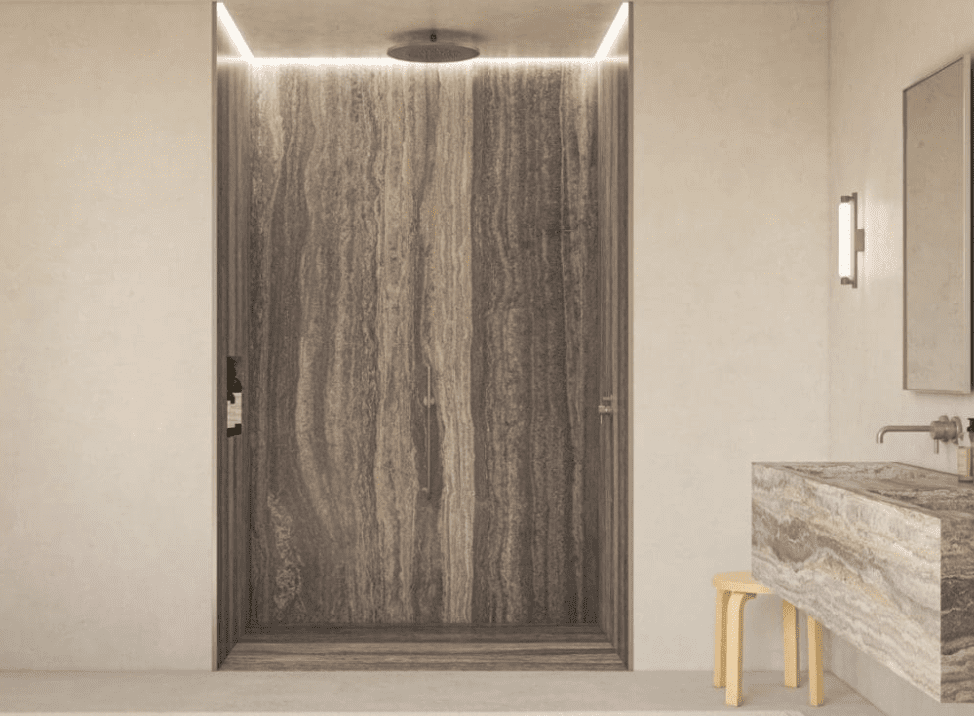
Travertine is one of the oldest building materials in the world. From the columns of ancient Rome to the floors of modern luxury homes, this warm, textured limestone has been prized for centuries for its natural beauty and timeless character. Today, it’s making a notable comeback in kitchens and bathrooms as homeowners seek surfaces that feel organic, layered, and genuinely one of a kind.
But travertine isn’t for everyone. Like all natural stone, it comes with a distinct set of strengths and limitations that are worth understanding before you commit. In this guide, we’ll walk through the travertine countertops pros and cons so you can make a decision that fits your home, your lifestyle, and your design vision.
What Is Travertine?
Travertine is a form of limestone that forms around natural hot springs and rivers, where mineral-rich water deposits calcium carbonate over time. The result is a sedimentary stone with a characteristically porous surface, warm earthy tones, and a naturally textured appearance that no manufactured material can replicate.
It’s available in a range of finishes: polished, honed, brushed, and tumbled. Each brings out different qualities of the stone. Polished travertine has a smooth, reflective surface that highlights its veining and color depth. Honed and brushed finishes offer a more matte, tactile quality that feels relaxed and organic. Tumbled travertine has soft, worn edges that lend a rustic, aged character to any space.
The Pros of Travertine Countertops
Travertine brings a lot to the table. Here’s what makes it such a compelling choice for kitchens and bathrooms.
Timeless Natural Beauty
There’s a warmth to travertine that’s difficult to achieve with any other material. Its palette of creams, ivories, golds, and soft browns brings an earthy richness to kitchens and bathrooms that feels both sophisticated and inviting. The natural variation from slab to slab means no two installations look identical, and your countertop is genuinely unique.
Travertine also has a visual depth and texture that photographs beautifully and holds up even better in person. It’s a material that rewards a closer look.
Versatile Aesthetic Appeal
One of travertine’s greatest design strengths is its versatility. Its neutral, warm tones complement virtually any cabinetry color, from crisp white to deep walnut, and work harmoniously across a range of interior styles. It feels at home in Mediterranean and Tuscan-inspired kitchens, but it’s equally compelling in modern and transitional spaces where its organic quality adds warmth to an otherwise clean-lined design.
Heat Resistance
As a natural stone, travertine handles heat well. It won’t scorch or blister under a hot pan the way some engineered surfaces might. That said, using trivets remains a good habit, protecting both the stone and its sealant from unnecessary stress.
Relative Affordability Among Natural Stones
Compared to premium marble or exotic quartzite, travertine is often one of the more accessible natural stone options. This makes it an appealing entry point for homeowners who want the authenticity and beauty of natural stone without the higher price tag of some alternatives.
Adds Character Over Time
Some homeowners appreciate that travertine develops a patina with age. Rather than looking worn, a well-maintained travertine surface can take on a quiet richness that makes it feel even more beautiful as years pass, particularly in honed or brushed finishes where the natural texture is already part of the appeal.
The Cons of Travertine Countertops
Travertine’s trade-offs are worth understanding before you commit. Here’s what to keep in mind.
High Porosity
Travertine’s most significant limitation as a countertop material is its porosity. The stone naturally contains small pits and voids, a byproduct of how it forms, and its open structure means it can absorb liquids readily if left unsealed or if the sealant degrades. Staining from wine, coffee, oil, or acidic foods is a real risk without proper maintenance.
Many travertine slabs are filled with grout or resin before installation to address the surface voids, but sealing remains essential and non-negotiable.
Requires Regular Sealing
To keep travertine performing well, you’ll need to seal it upon installation and reseal it regularly, typically every one to two years depending on use. This isn’t a complicated process, but it’s a commitment. Homeowners who prefer a set-it-and-forget-it countertop will find this requirement more demanding than materials like engineered quartz, which never needs sealing.
Susceptibility to Etching and Scratching
Like marble, travertine is a calcium-based stone, which makes it vulnerable to etching from acidic substances. Lemon juice, vinegar, wine, and certain cleaning products can leave dull marks on a polished surface. Over time, scratching is also possible, particularly from abrasive materials or heavy use without cutting boards.
This doesn’t disqualify travertine from kitchen use, but it does mean you’ll want to be thoughtful about how you use and clean the surface day to day.
Requires More Careful Cleaning
Travertine’s care routine is more specific than that of harder, less porous stones. Avoid acidic or abrasive cleaners entirely, as they’ll damage the surface and degrade the sealant. Stick to pH-neutral stone cleaners and mild dish soap, and address spills promptly by blotting rather than wiping.
Where Travertine Works Best
Understanding the travertine countertops pros and cons also means knowing where this material shines and where other options might serve you better.
Kitchen Countertops
Travertine can work beautifully in kitchens, particularly in lower-traffic prep areas or when paired with a kitchen island that’s used more for gathering than heavy cooking. In high-use kitchens where spills are frequent and acidic ingredients are a daily reality, it demands more attentive care than granite or quartzite would.
Bathroom Vanities
Bathrooms are often an ideal setting for travertine. Exposure to acidic substances is less common than in kitchens, and the stone’s warmth and texture create an effortlessly spa-like quality. Honed or brushed finishes are particularly well-suited here.
Outdoor Applications
Travertine’s natural texture provides good traction, and the stone handles temperature variation reasonably well, making it a consideration for covered outdoor kitchens or bar areas. Ensure proper sealing and drainage in any outdoor application.
How Travertine Compares to Other Natural Stones
Travertine shares its calcium-based composition with marble, which means the two materials behave similarly. Both require sealing, both are vulnerable to etching, and both offer a natural beauty that manufactured surfaces can’t fully replicate. Marble, however, tends to offer more dramatic veining and a wider range of high-contrast color options.
Granite and quartzite are harder, denser, and more resistant to both etching and staining, making them lower-maintenance choices for demanding kitchen environments. But they lack travertine’s warm, earthy character and distinctive texture.
The right choice comes down to what you’re optimizing for. If beauty and warmth are your priorities and you’re prepared to give your countertops attentive care, travertine is a deeply rewarding option. If durability and minimal maintenance matter most, harder stones may be a better fit.
Explore Travertine at UMI Stone
Travertine’s combination of natural warmth, timeless character, and accessible price point makes it a compelling choice for the right homeowner. At UMI Stone, we carry a curated selection of premium travertine surfaces in a range of finishes and tones. Our team can help you evaluate your options, understand the care requirements, and find a surface that fits both your design vision and your lifestyle.
Visit a showroom near you or contact us today to get started.

