
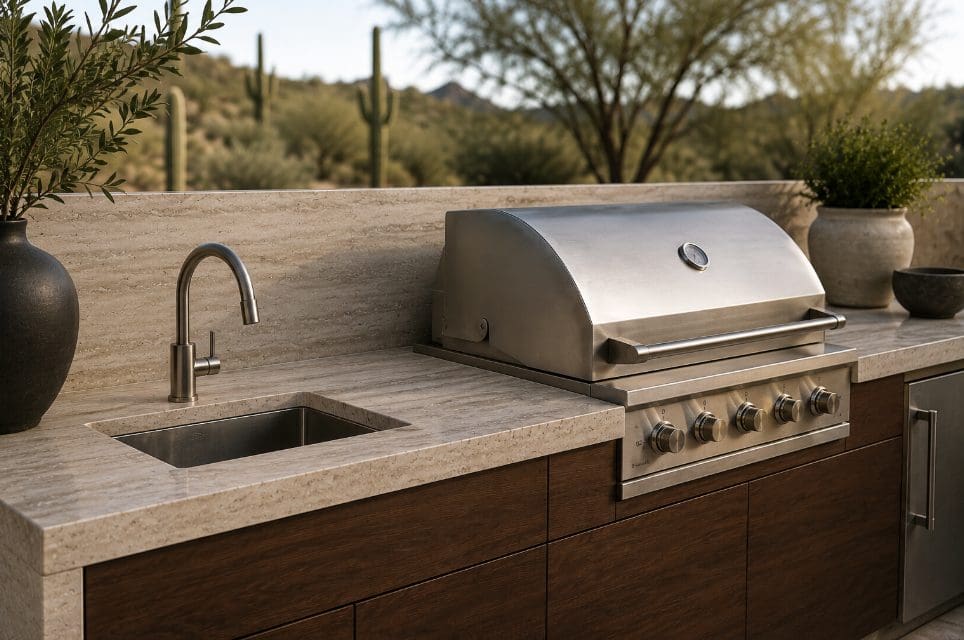
Outdoor kitchens have evolved into serious design investments, and the countertop material you choose sets the tone for everything else. Travertine has been a favored outdoor surface for centuries, from ancient Roman aqueducts to contemporary covered patios, and its continued presence in modern exterior design speaks to something real: this is a stone that handles the outdoors with grace.
But travertine outdoor countertops aren’t without considerations. Like any natural stone in an exterior environment, they require thoughtful selection, proper installation, and consistent maintenance to perform at their best. This guide covers everything you need to know to make a confident decision.
What Is Travertine and How Does It Differ from Other Outdoor Stones?
Travertine is a sedimentary limestone formed around natural hot springs and rivers, where mineral-rich water deposits calcium carbonate over time. The process creates a stone with characteristic porous voids, warm earthy tones, and a naturally textured surface that has been quarried and used in construction for millennia.
What distinguishes travertine from other stones commonly used outdoors comes down to composition and character. Granite is an igneous rock that’s harder, denser, and less porous than travertine, giving it greater resistance to the elements with less maintenance. Quartzite is a metamorphic stone with a hardness that rivals or exceeds granite, making it one of the most durable natural stone options for outdoor use. Travertine sits between these harder stones and softer materials like marble in terms of durability, offering a warmer, more textured aesthetic that neither granite nor quartzite fully replicates.
For a broader look at how travertine compares across applications, the types of stone countertops guide at UMI Stone provides useful context.
Pros and Cons of Travertine for Outdoor Kitchens
Understanding travertine’s strengths and limitations in an outdoor context is the foundation of a good decision.
Pros:
- Natural heat resistance that handles sun exposure and hot cookware well
- Distinctive warm, earthy aesthetic that complements outdoor environments naturally
- Natural texture provides good traction in wet conditions, particularly in tumbled and honed finishes
- Quarried in generous slab sizes, allowing for seamless large-format outdoor installations
- Develops a natural patina that many homeowners find beautiful over time
Cons:
- Higher porosity than granite or quartzite requires more frequent sealing outdoors
- Susceptible to etching from acidic substances including rain in highly polluted environments
- Softer composition makes it more vulnerable to scratching than harder outdoor stone options
- Freeze-thaw cycles can be damaging if moisture enters the stone’s pores and expands
- Polished finishes are not recommended outdoors due to slipperiness when wet
For a deeper look at travertine’s overall performance profile, the travertine countertops pros and cons guide covers the full picture.
How Travertine Performs Across Climates
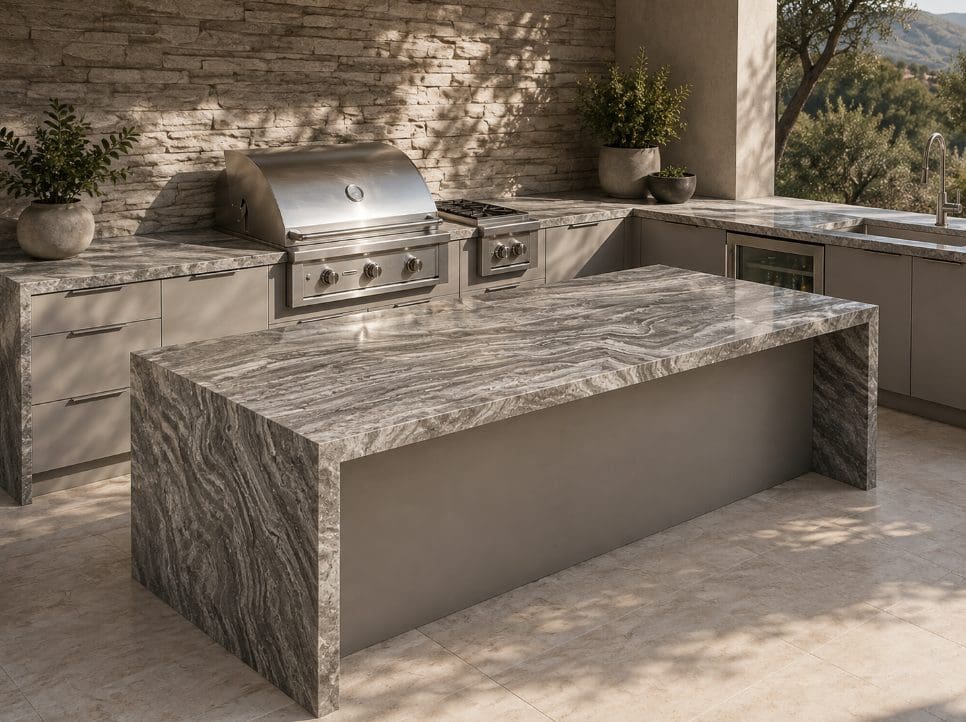
Climate is one of the most important factors in evaluating travertine for an outdoor kitchen, and the honest answer is that performance varies significantly depending on where you live.
- Hot and dry climates are where travertine performs most comfortably outdoors. Its natural heat tolerance means it handles high temperatures and direct sun exposure without cracking, discoloring, or degrading. In covered outdoor kitchens in warm climates, properly sealed travertine can deliver exceptional long-term performance.
- Humid and rainy climates require more vigilance. Travertine’s porosity means moisture infiltration is the primary risk. A quality penetrating sealer applied consistently creates meaningful protection, but the sealing schedule needs to be maintained more rigorously than in drier environments. Covered or partially sheltered outdoor kitchens are strongly preferred in high-humidity regions.
- Cold and freeze-thaw climates present the greatest challenge for travertine outdoors. When moisture enters the stone’s pores and freezes, the expansion can cause cracking and spalling over time. In climates with regular freeze-thaw cycles, travertine requires exceptional sealing discipline, and even then it carries more risk than denser stones like granite or quartzite. For these climates, a harder stone is generally the more reliable long-term choice.
Sealing Requirements and Ongoing Maintenance
Sealing is non-negotiable for travertine in any outdoor application, and the requirements are more demanding outside than in an interior kitchen.
For outdoor travertine countertops, plan on applying a quality penetrating stone sealer upon installation and resealing every six to twelve months depending on climate, sun exposure, and use. This is more frequent than the one-to-two-year interior schedule and reflects the greater environmental stress the stone faces outdoors.
Daily maintenance is straightforward. Warm water and a mild, pH-neutral cleaner handle routine cleaning effectively. Avoid acidic or abrasive cleaners entirely, as they degrade both the stone and the sealant. Clean up spills from acidic substances like citrus juice, wine, and tomatoes promptly to minimize etching risk.
If the surface develops staining or etching over time, professional stone restoration can address most issues. Minor scratches can typically be addressed with fine-grit sanding followed by resealing.
Travertine Finishes for Outdoor Use
Not all travertine finishes are created equal for outdoor applications. The finish you choose has meaningful implications for both safety and maintenance.
Tumbled finish is the most recommended option for outdoor use. The tumbling process rounds the edges of the stone and creates a naturally weathered, textured surface that provides good traction when wet and fits naturally into garden and exterior environments. Tumbled travertine has a rustic, old-world quality that suits relaxed outdoor kitchen aesthetics particularly well.
Honed finish offers a smooth, matte surface without the high gloss of polished stone. It provides better traction than polished and is significantly more forgiving in outdoor conditions. Honed travertine reads as clean and contemporary outdoors while retaining the natural warmth of the stone.
Polished finish is generally not recommended for outdoor countertops. Polished travertine becomes slippery when wet, which creates a safety concern in an outdoor environment where water exposure is unavoidable. If polished travertine is desired for aesthetic reasons, it should be limited to covered, sheltered surfaces where wet conditions are unlikely.
Design Ideas and Color Options
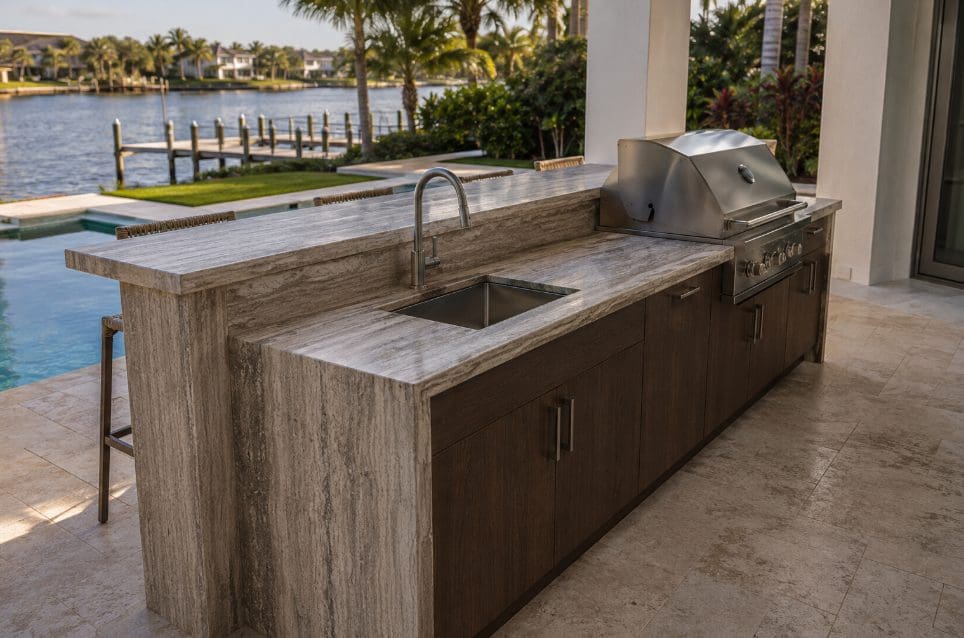
One of travertine’s strongest arguments for outdoor kitchens is its natural design range. Its palette of creams, ivories, golds, warm beiges, and soft browns integrates beautifully into exterior environments in a way that engineered materials often struggle to achieve. The stone looks like it belongs outdoors because it effectively comes from there.
Lighter travertine varieties in cream and ivory tones reflect heat and light effectively, keeping surfaces cooler in direct sun and creating a bright, airy quality in open outdoor spaces. They pair naturally with white or light-painted cabinetry, stainless steel appliances, and outdoor tile in warm neutral tones.
Darker walnut and gold-toned travertines create a richer, more dramatic outdoor kitchen aesthetic. They complement natural wood structures, dark metal accents, and stone or brick surrounds particularly well, and their deeper tones tend to show surface wear less visibly than lighter varieties.
For covered outdoor kitchens with a Mediterranean, Tuscan, or Spanish Colonial design direction, travertine is arguably the most authentic material choice available. Its historical and aesthetic associations with those traditions give the space a character that no manufactured alternative replicates.
Explore the full range of travertine surfaces available at UMI Stone to see how different varieties read in outdoor contexts.
Travertine vs. Granite vs. Quartzite for Outdoor Kitchens
| Travertine | Granite | Quartzite | |
|---|---|---|---|
| Hardness (Mohs) | 3-4 | 6-7 | 7 |
| Porosity | Higher | Moderate | Lower |
| Sealing Required | Yes, frequently | Yes, periodically | Yes, periodically |
| Heat Resistance | Good | Excellent | Excellent |
| Freeze-Thaw Performance | Moderate risk | Good | Good |
| Scratch Resistance | Moderate | Very Good | Excellent |
| Traction When Wet | Good (tumbled/honed) |
Good | Good |
| Aesthetic | Warm, earthy, textured | Bold, varied | Marble-like elegance |
Is Travertine Right for Your Outdoor Kitchen?
Travertine outdoor countertops make the most sense for homeowners in warmer, drier climates with covered or sheltered outdoor kitchen setups, who are committed to a consistent sealing and maintenance routine, and who value the warm, authentic character of natural stone over the lower-maintenance profile of harder alternatives.
If your outdoor kitchen sees significant temperature swings, heavy rainfall, or freeze-thaw conditions, a denser stone like granite or quartzite will deliver more reliable long-term performance with less maintenance risk. For a side-by-side look at outdoor countertop options, the outdoor kitchen countertops guide at UMI Stone is a useful reference.
And if you’re also considering travertine for interior applications, the is travertine good for kitchen countertops guide covers how the material performs in indoor environments.
Explore Travertine at UMI Stone
At UMI Stone, we carry a curated selection of premium travertine in a range of colors, finishes, and slab sizes suited to both indoor and outdoor applications. Our team can help you evaluate your climate, installation context, and design goals to determine whether travertine is the right fit for your outdoor kitchen. Visit a showroom near you or contact us today to start planning.
Frequently Asked Questions
Can travertine be used for outdoor kitchen countertops?
Yes, travertine can be used outdoors with proper sealing and maintenance. It performs best in warmer, drier climates with covered or sheltered installations. In climates with regular freeze-thaw cycles, denser stones like granite or quartzite are generally more reliable long-term choices.
How often does outdoor travertine need to be sealed?
Outdoor travertine should be sealed every six to twelve months, depending on climate, sun exposure, and use. This is more frequent than the one-to-two-year schedule for interior travertine and reflects the greater environmental demands of outdoor installation.
What finish is best for travertine outdoor countertops?
Tumbled and honed finishes are the best options for outdoor use. Both provide good traction when wet and handle exterior conditions well. Polished travertine is generally not recommended outdoors because it becomes slippery when wet.
Does travertine hold up in cold climates?
Travertine presents more risk in cold climates with freeze-thaw cycles. Moisture entering the stone’s pores can expand when frozen, potentially causing cracking or spalling over time. Rigorous sealing discipline reduces this risk, but denser stones are typically a safer choice for cold-climate outdoor applications.
How does travertine compare to granite for outdoor kitchens?
Granite is harder, denser, and less porous than travertine, requiring less frequent sealing and offering better resistance to freeze-thaw conditions. Travertine offers a warmer, more textured aesthetic that granite can’t replicate, along with better traction in tumbled or honed finishes. The right choice depends on your climate, maintenance commitment, and design priorities.
What colors of travertine work best for outdoor kitchens?
Lighter cream and ivory travertines reflect heat and light effectively in open outdoor spaces. Darker gold and walnut tones complement natural wood structures and create a richer outdoor aesthetic. Both work well in covered outdoor kitchens, and the right choice ultimately comes down to your overall design direction.

