
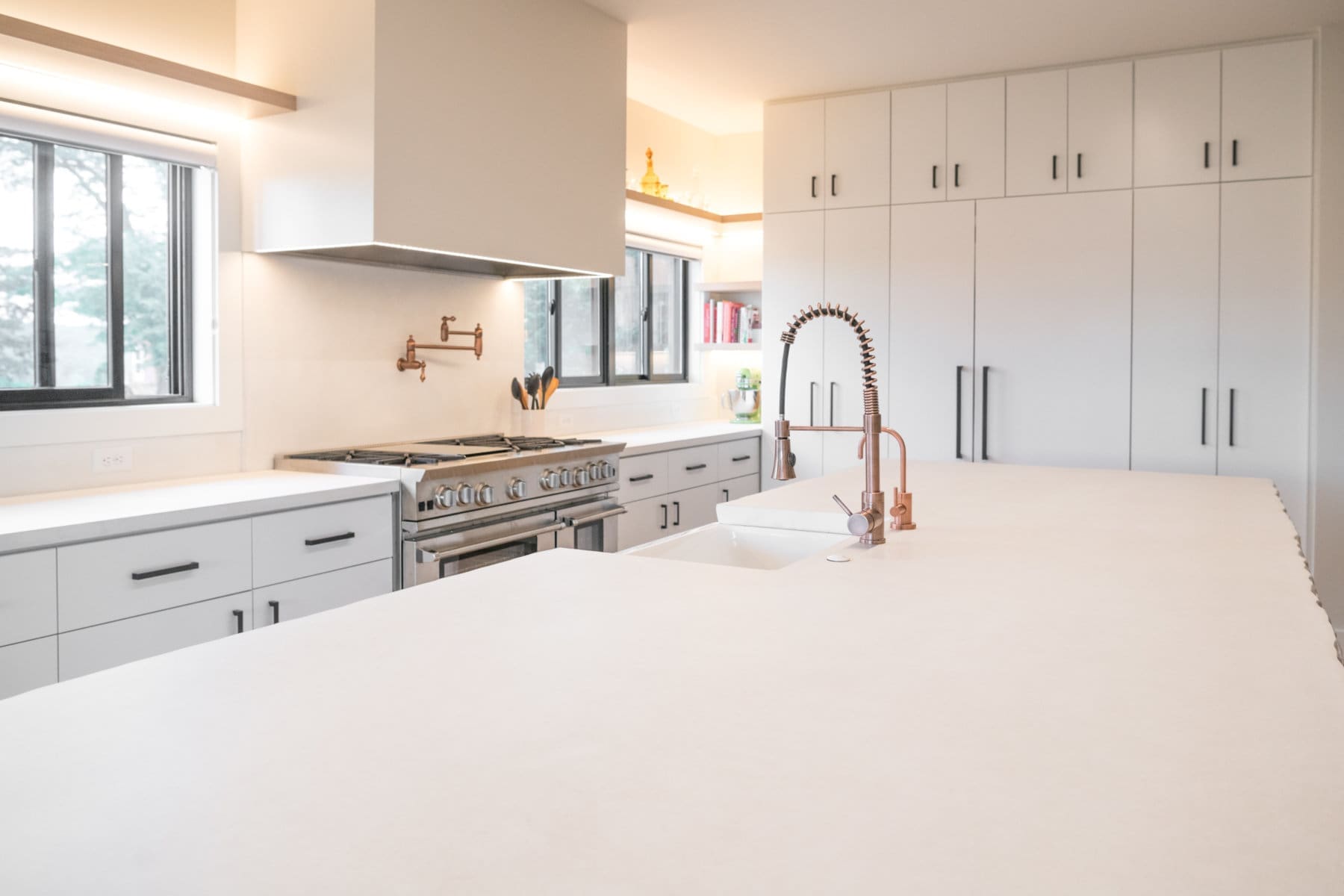
Not every design trend earns its staying power. Some are driven by novelty, and others reflect a genuine shift in how people think about their spaces. Matte white quartz countertops fall into the second category. Their rise in popularity isn’t about chasing something new. It’s about a growing preference for surfaces that feel considered, calm, and genuinely livable rather than flashy.
The soft, low-sheen finish of matte quartz has quietly become one of the most requested countertop specifications in modern kitchen and bathroom design, and the reasons why are worth understanding before you make a surface decision of your own.
What Is a Matte Finish on Quartz?
A matte finish on quartz countertops means the surface has been processed to eliminate the high-gloss sheen associated with traditional polished quartz. Rather than a reflective, mirror-like surface, matte quartz has a smooth, low-luster quality that absorbs light rather than bouncing it back.
The result is a surface that looks softer, more tactile, and more organic than its polished counterpart, closer in feel to honed natural stone than to the conventional engineered quartz most people picture. For a deeper look at how honed and matte finishes perform, the honed quartz countertops guide at UMI Stone covers the specifics in detail.
It’s worth noting that matte and honed are often used interchangeably in the countertop industry, though some manufacturers distinguish between them based on the degree of sheen reduction. In practice, both refer to a surface that prioritizes a soft, non-reflective appearance over the traditional polished look.
Why Matte White Quartz Has Become a Design Staple
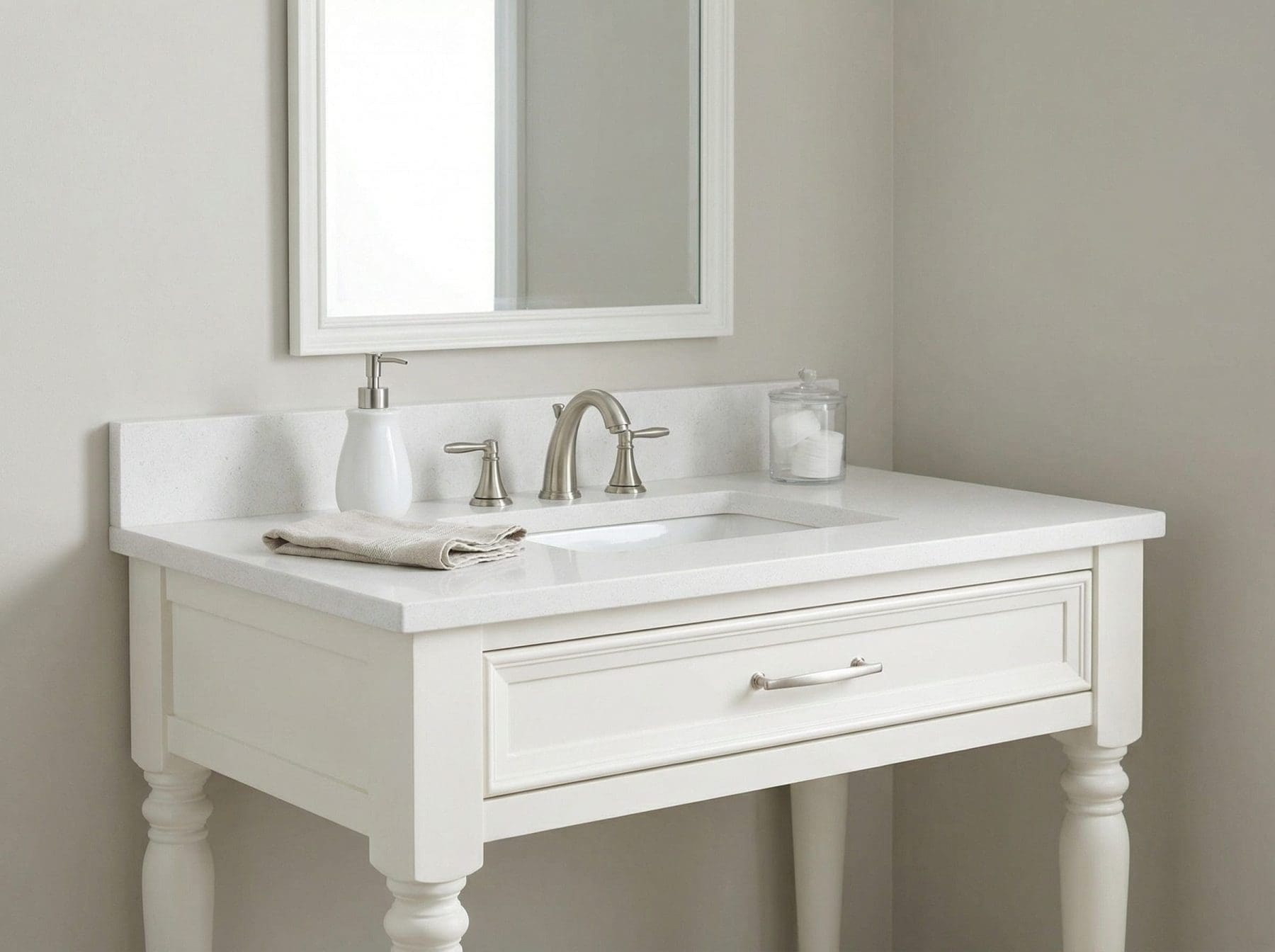
The shift toward matte finishes tracks closely with broader changes in how people want their homes to feel. The high-gloss, highly polished aesthetic that dominated kitchen design for much of the early 2000s has given way to a preference for surfaces that feel warm, grounded, and unpretentious. Matte white quartz fits that sensibility perfectly.
It also photographs exceptionally well, which matters in an era when home design is shared and consumed visually at a scale that didn’t exist a generation ago. A polished white quartz surface can produce glare and hot spots that make photography challenging. Matte surfaces render evenly, which is part of why they appear so consistently in design publications, social media, and portfolio photography.
Beyond aesthetics, matte quartz countertops appeal to homeowners who want a surface that doesn’t demand visual attention. In kitchens where the design intent is calm and cohesive rather than high-contrast and dramatic, a matte white quartz counter recedes gracefully and lets other elements, cabinetry, hardware, lighting, and textures, do the expressive work.
Benefits of Matte White Quartz Countertops
Matte white quartz brings a compelling set of advantages to both kitchens and bathrooms. Here’s what makes it worth serious consideration.
1. Forgiving on Fingerprints and Smudging
This is one of the most practical advantages of matte quartz over polished. A polished white surface shows every fingerprint, water spot, and smudge with clarity. The non-reflective quality of matte finishes diffuses these marks and makes them significantly less visible in daily use.
2. Soft, Sophisticated Aesthetic
Matte quartz countertops have a quiet luxury to them that polished surfaces don’t replicate. The finish feels considered and intentional in a way that resonates with contemporary and minimalist design sensibilities.
3. All the Performance of Engineered Quartz
Matte finish quartz countertops carry all the same durability advantages as any engineered quartz surface: non-porous composition, no sealing required, scratch resistance, and stain resistance. The finish changes the look, not the material’s core performance profile. For a full overview of how quartz performs, the pros and cons of quartz countertops guide covers it comprehensively.
4. Versatile Across Design Styles
Matte white quartz doesn’t lock you into a single aesthetic the way more distinctive materials can. It works in contemporary kitchens, transitional spaces, Scandinavian-inspired interiors, and even softer traditional designs where the goal is warmth rather than formality.
Drawbacks and Maintenance Considerations
No surface is without trade-offs, and matte white quartz has a few worth knowing.
Light-colored surfaces could show certain messes more readily. The matte finish helps with fingerprints and smudging, but a white surface will still show coffee spills, red wine, and sauce more clearly than a darker countertop would. Prompt cleanup remains important, particularly for pigmented liquids.
Matte finishes can be harder to clean than polished ones. Polished quartz surfaces are exceptionally smooth, which means spills and residue wipe away easily. Matte finishes have more surface texture, which can allow certain residues to cling slightly more. A soft cloth, warm water, and mild dish soap handle daily cleaning effectively — abrasive sponges and harsh cleaners should always be avoided regardless of finish.
Scratches may be slightly more visible. On a polished surface, minor surface marks can sometimes blend into the reflective sheen. On a matte surface, scratches have less visual camouflage. Matte quartz is still highly scratch-resistant as a material — this is more a theoretical consideration than a practical concern for most homeowners.
Matte vs. Polished White Quartz: A Quick Comparison
| Matte White Quartz | Polished White Quartz | |
|---|---|---|
| Appearance | Soft, low-sheen, organic | High-gloss, reflective |
| Fingerprint Visibility | Low | High |
| Smudge Visibility | Low | High |
| Stain Visibility | Moderate | Moderate |
| Ease of Cleaning | Good | Excellent |
| Scratch Camouflage | Moderate | Better |
| Design Sensibility | Contemporary, minimalist, transitional | Traditional, formal, high-contrast |
| Photography | Renders evenly, no glare | Can produce hot spots |
Best Kitchen and Bathroom Styles for Matte White Quartz
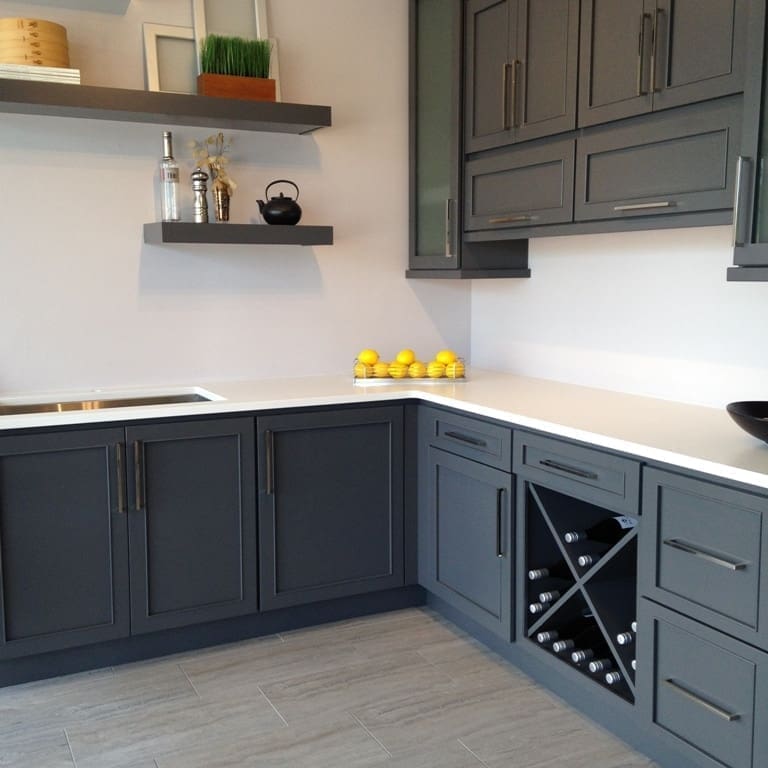
Contemporary and minimalist kitchens are the most natural fit. Flat-front cabinetry, integrated appliances, and simple hardware pairings benefit from a countertop surface that contributes clean, consistent tone without competing for visual attention. Matte quartz countertops in this context feel like a deliberate architectural choice rather than just a surface material.
Transitional kitchens benefit from matte white quartz’s ability to bridge classic and contemporary elements. Its soft finish adds warmth that polished surfaces sometimes lack, making it a more comfortable companion for traditional cabinetry details or mixed-material kitchens.
Scandinavian-inspired interiors are a particularly strong fit. The design language of light wood, neutral tones, and quiet, tactile surfaces aligns naturally with what matte white quartz delivers.
Bathroom vanities are where matte white quartz often makes its quietest but most lasting impression. In a bathroom where the goal is calm and restoration, a matte surface at the vanity reinforces the mood without demanding attention.
Edge Profiles and Design Pairings
Matte white quartz pairs most naturally with edge profiles that reinforce its understated character. Simple eased, straight, or slight bevel edges complement the surface’s clean aesthetic without adding decorative complexity. Waterfall edges on kitchen islands are a particularly compelling application. The continuous flow of matte white quartz from horizontal to vertical creates a seamless, sculptural quality that feels very current.
In terms of material pairings, matte white quartz works beautifully with warm natural wood cabinetry, light grey or greige painted cabinets, and white shaker-style kitchens. Brushed gold, matte black, and warm nickel hardware all complement the finish well. For backsplash pairings, handmade ceramic tile, subtle marble mosaic, and limewash-finish plaster all feel harmonious with the organic quality of the matte surface.
A UMI Stone Option Worth Considering
For homeowners drawn to matte white quartz, Pure White Brushed from Pompeii Quartz is a strong starting point. Its clean white base and brushed matte finish deliver the soft, sophisticated aesthetic that makes this surface category so appealing, with the performance and consistency of a premium engineered quartz.
Is Matte White Quartz Right for Your Space?
If you want a countertop that feels calm, reads as sophisticated in person and on camera, and requires less daily attention to fingerprints and smudging than a polished surface, matte white quartz delivers on all of those fronts. The trend has staying power because it solves a real problem: how to have a white countertop that doesn’t feel like constant maintenance, while looking genuinely beautiful in the process.
At UMI Stone, our team can help you compare matte finish options alongside polished alternatives and find the right surface for your specific kitchen or bathroom. Visit a showroom near you or contact us today to explore the full range of white quartz options.
Frequently Asked Questions
What is a matte finish on quartz countertops?
A matte finish on quartz means the surface has been processed to reduce or eliminate the high-gloss sheen of traditional polished quartz. The result is a soft, low-luster surface that absorbs light rather than reflecting it, creating a more organic and understated appearance.
Are matte quartz countertops harder to clean than polished?
Slightly, in some situations. Matte surfaces have more texture than polished ones, which can allow certain residues to cling slightly more. That said, daily cleaning with a soft cloth, warm water, and mild dish soap is all that’s needed. The bigger practical advantage of matte is that it shows fingerprints and water spots far less than polished surfaces.
Do matte white quartz countertops require sealing?
No. Like all engineered quartz, matte white quartz is non-porous and never requires sealing. The finish affects the surface appearance only, not the material’s performance characteristics.
Is matte quartz more durable than polished quartz?
The durability of the underlying material is the same regardless of finish. Both matte and polished quartz offer the same scratch resistance, stain resistance, and hardness. The finish difference is aesthetic, not structural.
What design styles work best with matte white quartz?
Matte white quartz is most at home in contemporary, minimalist, transitional, and Scandinavian-inspired interiors. It works well with flat-front cabinetry, natural wood tones, and understated hardware finishes like brushed gold, matte black, and warm nickel.
How does matte quartz compare to honed natural stone?
Both deliver a soft, non-reflective surface aesthetic, but engineered matte quartz offers consistent patterning, no sealing requirement, and better stain resistance than most honed natural stones. Honed natural stone has greater organic character and uniqueness but requires more maintenance.

