
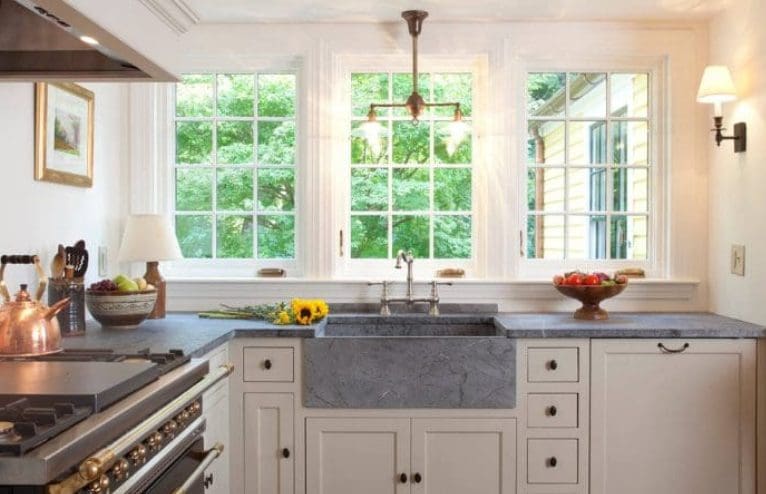
Some materials earn their place in a home through performance alone. Others earn it through beauty. Grey soapstone countertops earn it through both, and they do it in a way that very few other natural stones can claim: sustainably, quietly, and with a character that deepens rather than diminishes over time.
Soapstone has been used in kitchens and fireplaces for centuries, thanks to its durability and heat resistance. Today, it sits at an interesting intersection of old-world craft and modern values, appealing to homeowners who want a surface that is beautiful, durable, and thoughtfully sourced. This article explores why grey soapstone is having a well-deserved moment, and what makes it a choice worth considering for your next project.
What Is Soapstone and How Does It Differ from Other Stones?
Soapstone is a metamorphic rock composed primarily of talc, along with varying amounts of chlorite, magnesite, and other minerals. The name comes from the stone’s distinctive smooth, slightly waxy feel, a product of its high talc content. Architectural-grade soapstone used for countertops contains less talc than carving-grade varieties, giving it greater density and durability while retaining the soft, tactile surface quality that makes it so distinctive.
Unlike granite, which is an igneous rock formed from cooled magma, or marble and quartzite, which are metamorphic stones derived from limestone and sandstone respectively, soapstone has a composition that gives it a unique set of performance characteristics. It is naturally non-porous without any sealing, highly heat-resistant, and largely immune to the acid etching that affects marble and travertine.
Compared to engineered quartz, soapstone is a fully natural material with no synthetic resins or binders. Every slab comes directly from the earth, with natural variation in tone, veining, and character that no manufactured surface can replicate.
Why Soapstone Is Considered a Sustainable Choice
The sustainability conversation around countertop materials is more nuanced than it might initially appear, but soapstone makes a strong case on several fronts.
Soapstone is quarried in relatively small operations, often from deposits in Brazil, the United States, and parts of Europe. Because it requires minimal processing beyond cutting and polishing, its production footprint is lower than materials that involve significant chemical treatment or manufacturing processes. There are no resins, no binders, and no synthetic components introduced during fabrication.
Soapstone is also extraordinarily long-lived. A well-maintained soapstone countertop doesn’t degrade, discolor, or need replacement on the timescale that some engineered surfaces might. Choosing a material that lasts generations rather than decades is one of the most meaningful sustainability decisions a homeowner can make, and soapstone consistently delivers on that front.
Finally, soapstone’s maintenance requirements are minimal and chemical-free. Warm water and mild soap handle daily cleaning, and the optional mineral oil treatment that many homeowners use to even out patina development is a natural product with no environmental impact.
The Characteristics of Grey Soapstone
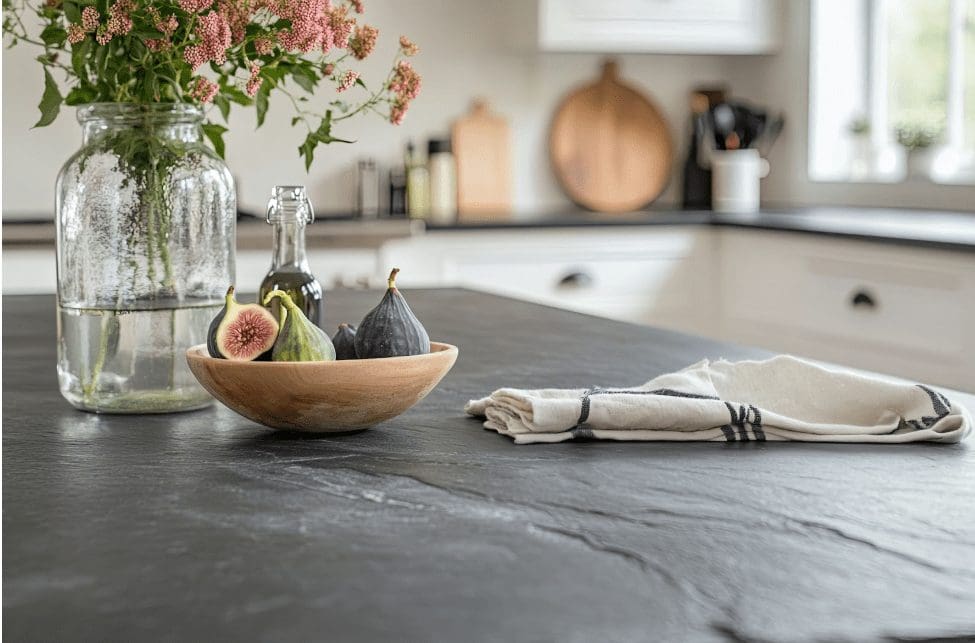
Grey soapstone is the most widely available and sought-after color family within the soapstone category. Its palette ranges from soft, silvery light grey soapstone countertops with subtle white veining to rich, deep dark grey soapstone countertops with dramatic movement and near-charcoal tones. Between those poles sits a range of mid-grey varieties that offer a quiet sophistication well-suited to both traditional and contemporary interiors.
What distinguishes grey soapstone from other grey surfaces is the quality of its color. Rather than the flat, uniform grey of an engineered material, soapstone grey has depth and variation, tonal shifts within a single slab that give the stone a living quality. Veining ranges from barely perceptible wisps to more pronounced streaks of white, cream, or darker grey that create visual movement across the surface.
The patina that grey soapstone develops over time is one of its most distinctive characteristics. As the stone oxidizes and absorbs the natural oils from everyday use, it gradually deepens in color, shifting from lighter grey toward a richer, more saturated tone. This process can be accelerated and evened out by applying mineral oil periodically. Many homeowners find the patina-aged soapstone more beautiful than the original surface, treating it as evidence of a well-used and well-loved kitchen rather than wear and tear.
Explore the full range of soapstone countertop colors at UMI Stone to see how much variety exists within the grey soapstone family.
Durability, Heat Resistance, and Stain Resistance
Grey soapstone’s performance profile is one of its most compelling selling points, particularly for homeowners who associate natural stone with high maintenance.
- Heat resistance: is where soapstone genuinely excels. It is one of the most heat-tolerant countertop materials available, capable of handling hot pots and pans placed directly on the surface without scorching, discoloring, or cracking. This quality has made soapstone the traditional material of choice for wood-burning stove surrounds and laboratory countertops for generations.
- Stain resistance: is another meaningful advantage. Soapstone is naturally non-porous, meaning it does not absorb liquids, oils, or bacteria without any sealing required. Spills sit on the surface rather than penetrating it, making cleanup straightforward and reducing the risk of permanent staining.
- Scratch resistance: is where soapstone requires more realistic expectations. Its relatively soft talc-based composition makes it more susceptible to surface scratching than granite or quartzite. In a busy kitchen, scratches will happen. The saving grace is that scratches in soapstone are easily addressed with fine-grit sandpaper, and the developing patina tends to absorb minor surface wear naturally over time.
Maintenance and Mineral Oil Treatment
One of soapstone’s most appealing qualities for homeowners who prefer low-maintenance surfaces is how little it actually demands. Daily cleaning requires nothing more than warm water and mild dish soap. No sealing, no special stone cleaners, no periodic professional treatments.
The one optional maintenance step unique to soapstone is mineral oil treatment. Applying food-grade mineral oil to the surface periodically, every few weeks initially and then less frequently as the stone matures, helps even out the patina development so the stone darkens consistently rather than in patches. It also deepens the color and brings out the stone’s natural character in a way that water alone doesn’t.
This isn’t a required step. Soapstone left to develop its patina naturally will eventually reach a consistent tone on its own. But homeowners who prefer a more controlled and uniform aging process find mineral oil treatment a simple and satisfying ritual.
Pros and Cons of Grey Soapstone Countertops
Understanding the full picture of grey soapstone means looking at both sides honestly.
Pros:
- Naturally non-porous with no sealing required
- Exceptional heat resistance
- Sustainable sourcing and minimal processing
- Develops a rich, beautiful patina over time
- Unique appearance that no manufactured surface replicates
- Chemical-free maintenance routine
Cons:
- Softer than granite or quartzite, more susceptible to scratching
- Limited color range compared to granite or quartz
- Patina development requires some tolerance for change over time
- Less widely available than more common stone options
- Mineral oil treatment, while simple, is an additional maintenance step
Grey Soapstone vs. Granite vs. Quartz
| Grey Soapstone | Granite | Quartz | |
|---|---|---|---|
| Porosity | Naturally non-porous | Porous, requires sealing | Non-porous |
| Sealing Required | No | Yes | No |
| Heat Resistance | Excellent | Excellent | Moderate |
| Scratch Resistance | Moderate | Very Good | Very Good |
| Stain Resistance | Excellent | Good (with sealing) | Excellent |
| Patina Development | Yes, deepens over time | No | No |
| Sustainability | High | Moderate | Lower |
| Natural Character | Unique, one-of-a-kind |
Unique, one-of-a-kind |
Engineered, consistent |
| Maintenance | Minimal, optional oiling | Periodic sealing | Minimal |
Design Styles That Pair Well With Grey Soapstone
Grey soapstone’s understated, organic quality makes it a natural fit for a range of interior styles, though it tends to feel most at home in spaces that value warmth and authenticity over high-contrast drama.
- Farmhouse and cottage kitchens are perhaps the most natural fit. The stone’s earthy character and historical associations with traditional craftsmanship align perfectly with the design language of beadboard cabinetry, apron-front sinks, and open shelving.
- Contemporary and minimalist interiors benefit from grey soapstone’s quiet, tonal quality. A dark grey soapstone countertop in a kitchen with flat-front cabinetry and minimal hardware creates a sophisticated, considered look that feels both modern and grounded.
- Transitional kitchens appreciate grey soapstone’s ability to feel simultaneously classic and current. Its neutral grey palette bridges traditional and contemporary elements without forcing a commitment to either direction.
- Bathroom vanities are where soapstone often makes its most serene impression. A light grey soapstone countertop in a bathroom with warm wood accents and simple fixtures creates an effortlessly spa-like quality.
Explore how grey soapstone translates across different spaces in the soapstone design inspiration gallery at UMI Stone.
Explore Grey Soapstone at UMI Stone
Grey soapstone countertops reward homeowners who value authenticity, sustainability, and a surface that tells the story of its use over time. At UMI Stone, we carry a curated selection of premium soapstone surfaces in a range of grey tones and veining patterns. Our team can help you understand the full character of the stone, compare light and dark varieties, and find the right slab for your project.
Visit a showroom near you or contact us today to start the conversation.
Frequently Asked Questions
What is grey soapstone?
Grey soapstone is a naturally occurring metamorphic rock composed primarily of talc and chlorite. It ranges in tone from soft, silvery light grey to deep charcoal, with natural veining and a smooth, slightly waxy surface feel. It is naturally non-porous and one of the most heat-resistant countertop materials available.
Does grey soapstone require sealing?
No. Soapstone is naturally non-porous and never requires sealing. It resists liquid absorption on its own, making it one of the few natural stones that doesn’t need periodic sealing to maintain its stain resistance.
How does grey soapstone develop its patina?
Over time, soapstone oxidizes and absorbs natural oils from everyday use, gradually deepening in color from lighter grey toward a richer, darker tone. This process can be accelerated and evened out by applying food-grade mineral oil periodically. Many homeowners find the aged patina more beautiful than the original surface.
Is grey soapstone durable enough for a kitchen countertop?
Yes, with realistic expectations around scratching. Soapstone is heat-resistant, stain-resistant, and non-porous. Its main limitation is surface scratch susceptibility due to its softer talc-based composition. Minor scratches can be sanded out easily, and the developing patina tends to absorb light surface wear naturally.
What is the difference between light grey and dark grey soapstone?
Light grey soapstone tends to have a softer, more silvery tone with subtle veining and a quieter overall presence. Dark grey soapstone is richer and more saturated, often with more pronounced movement and a deeper, near-charcoal character. Both develop patina over time, though the change is more visually dramatic in lighter varieties.
Is soapstone a sustainable countertop material?
Yes. Soapstone is quarried with minimal processing, contains no synthetic resins or binders, and is extraordinarily long-lived. Choosing a material that lasts generations is one of the most meaningful sustainability decisions a homeowner can make, and soapstone consistently delivers on that standard.

