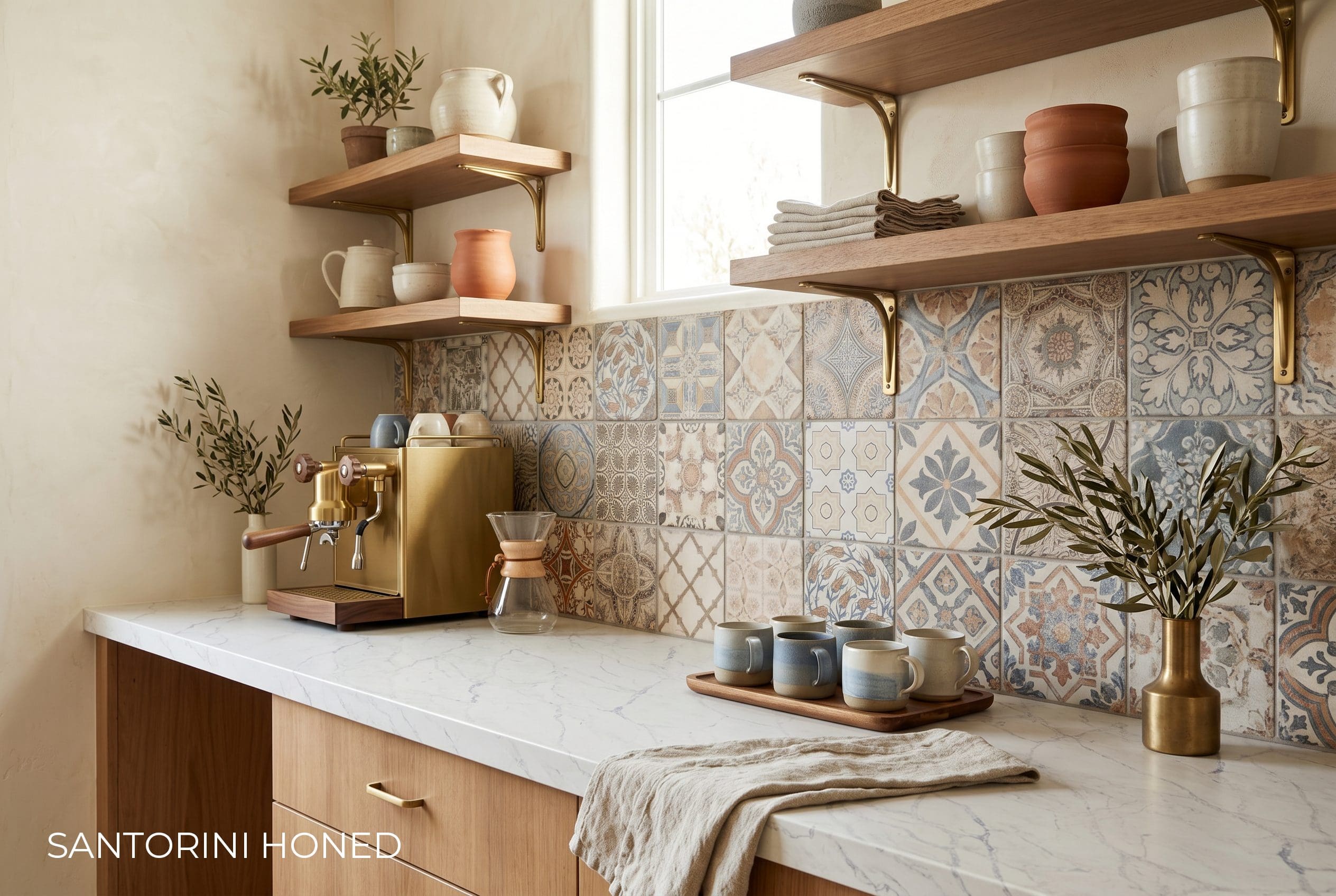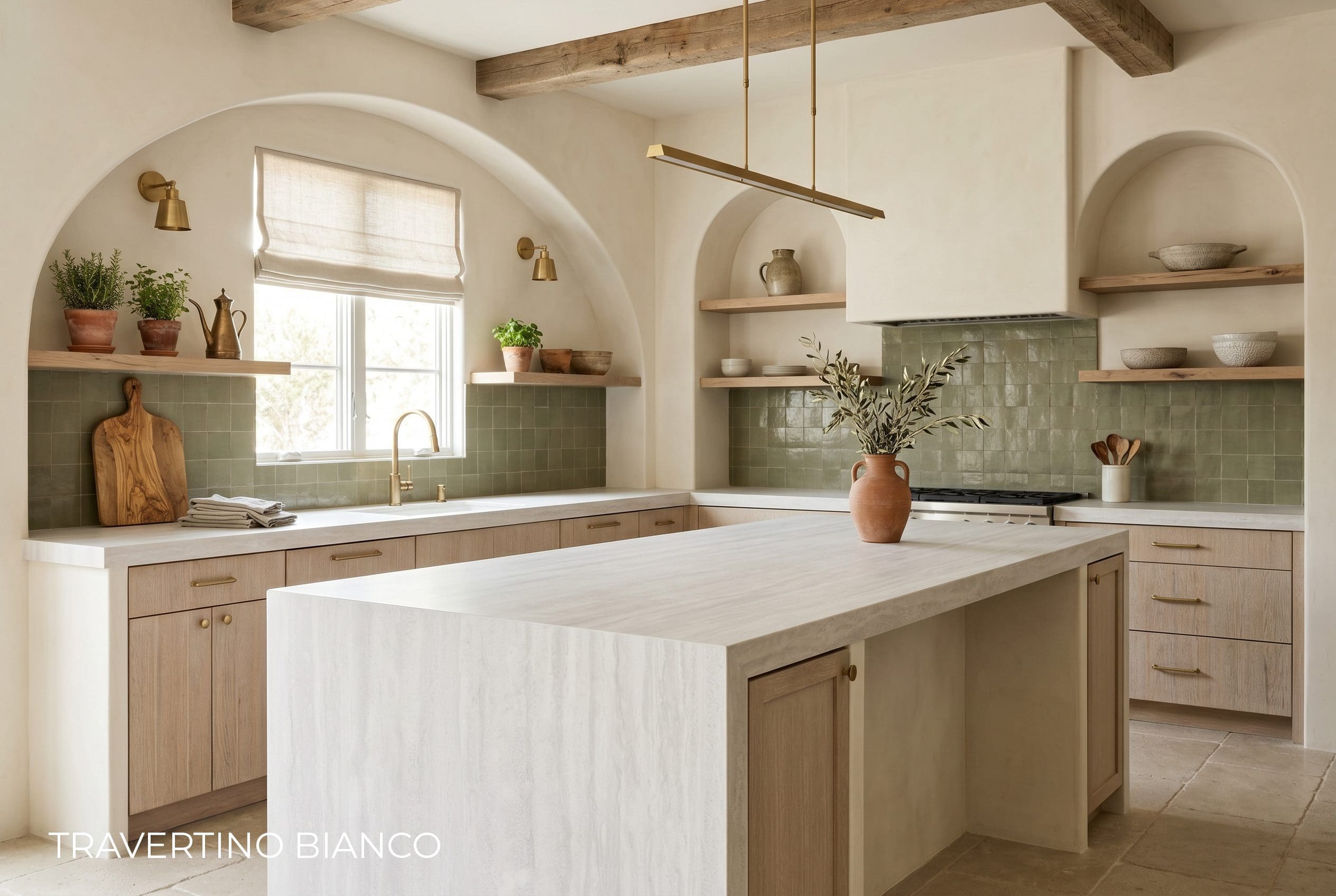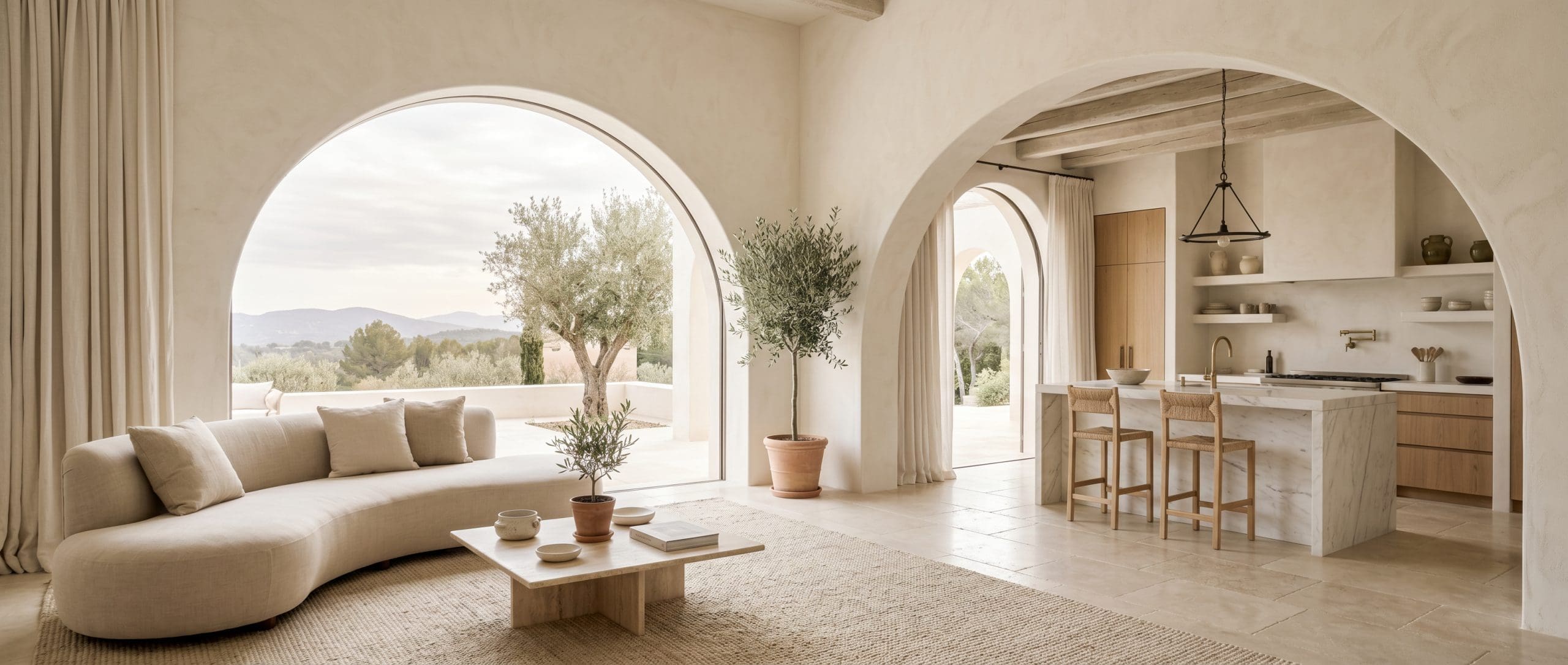
When the Stone
Steps Back
There’s a shift happening in Mediterranean design — one where the stone stops performing, and the room finally exhales. For decades, Mediterranean design in America meant ornate — carved corbels, dramatic veining, hand-painted tile, wrought iron heavy enough to anchor a room on its own. It was beautiful, but it was loud. The stone did most of the talking, and everything else in the room had to work around it.
The new Mediterranean is a quieter conversation. It’s the same sun, the same plaster, the same slow-living sensibility that has shaped these coasts for thousands of years — but the volume has dropped. Surfaces are softer, paler, more textural. Palettes are pulled from limewash, bone, warm oat, and sea salt. And the stone? The stone has learned to sit back. It sets the light, holds the temperature of the room, and lets the linen curtain, the hand-thrown bowl, the olive branch on the counter finally take center stage. It’s luxury that no longer needs to announce itself — because the whole room is doing the announcing together.
A Coastline That Built a Design Language
To understand why Mediterranean luxury feels the way it does today, you have to start about three thousand years earlier. What we recognize as Mediterranean design was shaped over centuries by three foundational influences, all refined by the same sun, the same materials, and the same sea.
GREEK ROOTS
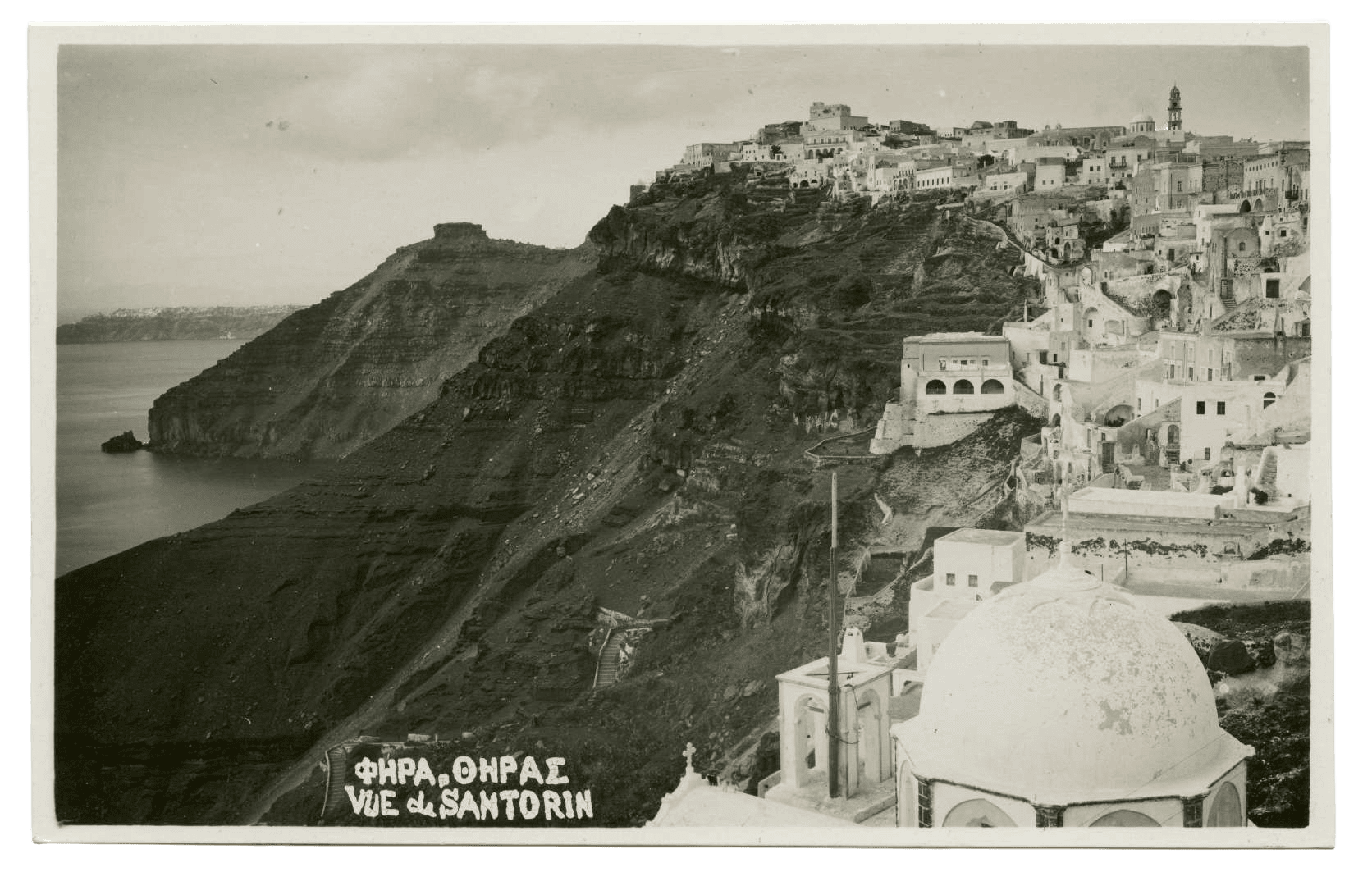
Santorini, early 20th century
The earliest DNA came from the Greeks, who built the whitewashed, cube-stacked villages we still recognize on Santorini and Mykonos. Their architecture was a response to climate before it was ever a response to taste: thick lime-coated walls to reflect heat, small deep-set windows to hold cool air, and open interior courtyards that pulled sea breeze through the house. That instinct — let the building work with the light, not against it — is the seed of everything that came after.
ROMAN STRUCTURE
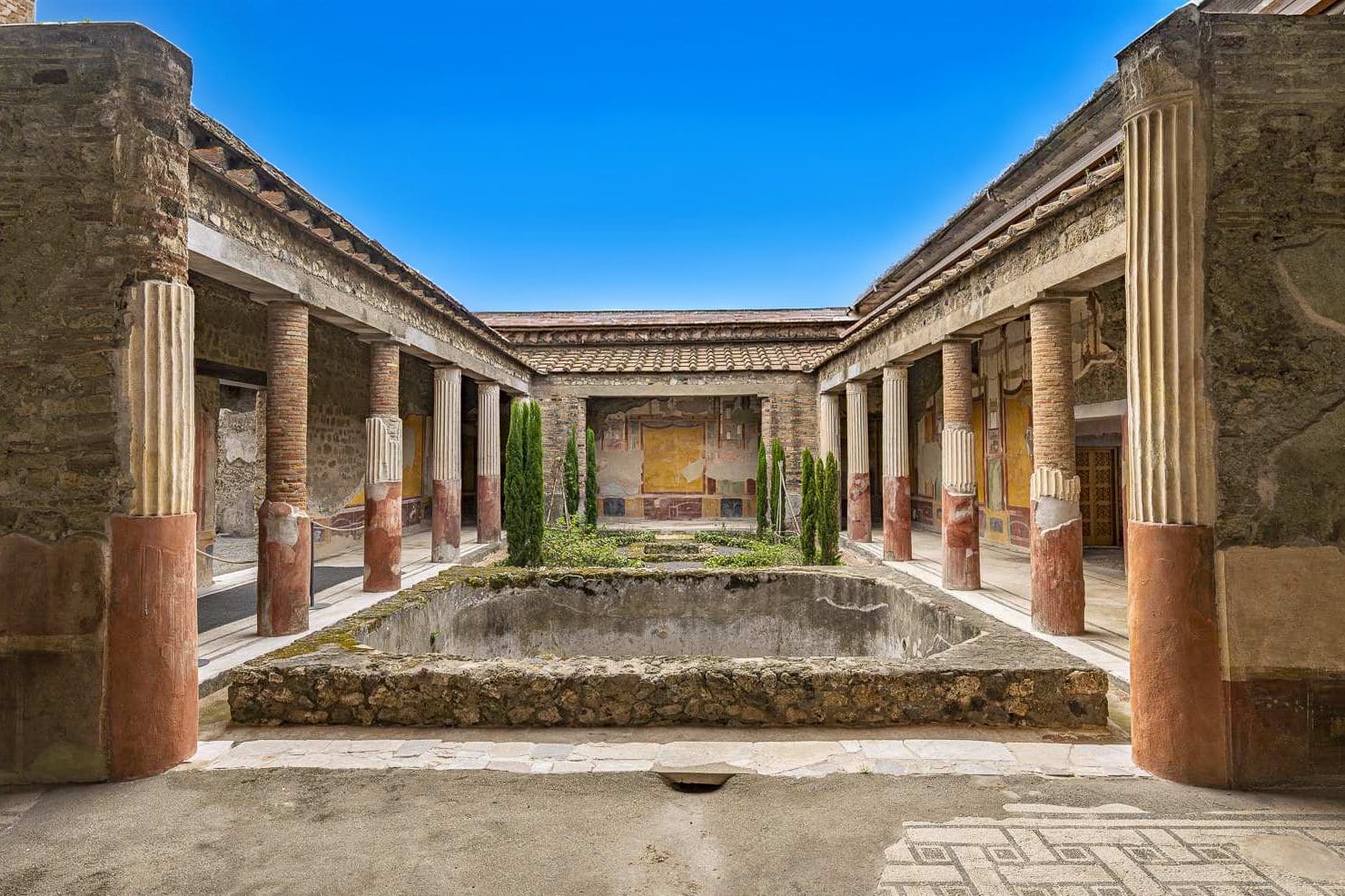
Roman attrium, Pompeii
Then came the Romans, who introduced the arch, the colonnade, the interior atrium, and the idea that a home could be a series of framed, symmetrical moments rather than a single enclosed box. They also brought stone into the domestic conversation — travertine, marble, tufa — used not as ornament but as structure. When you walk through a modern Mediterranean home and feel that quiet weight in the walls and floors, that’s still Rome.
MOORISH DETAIL
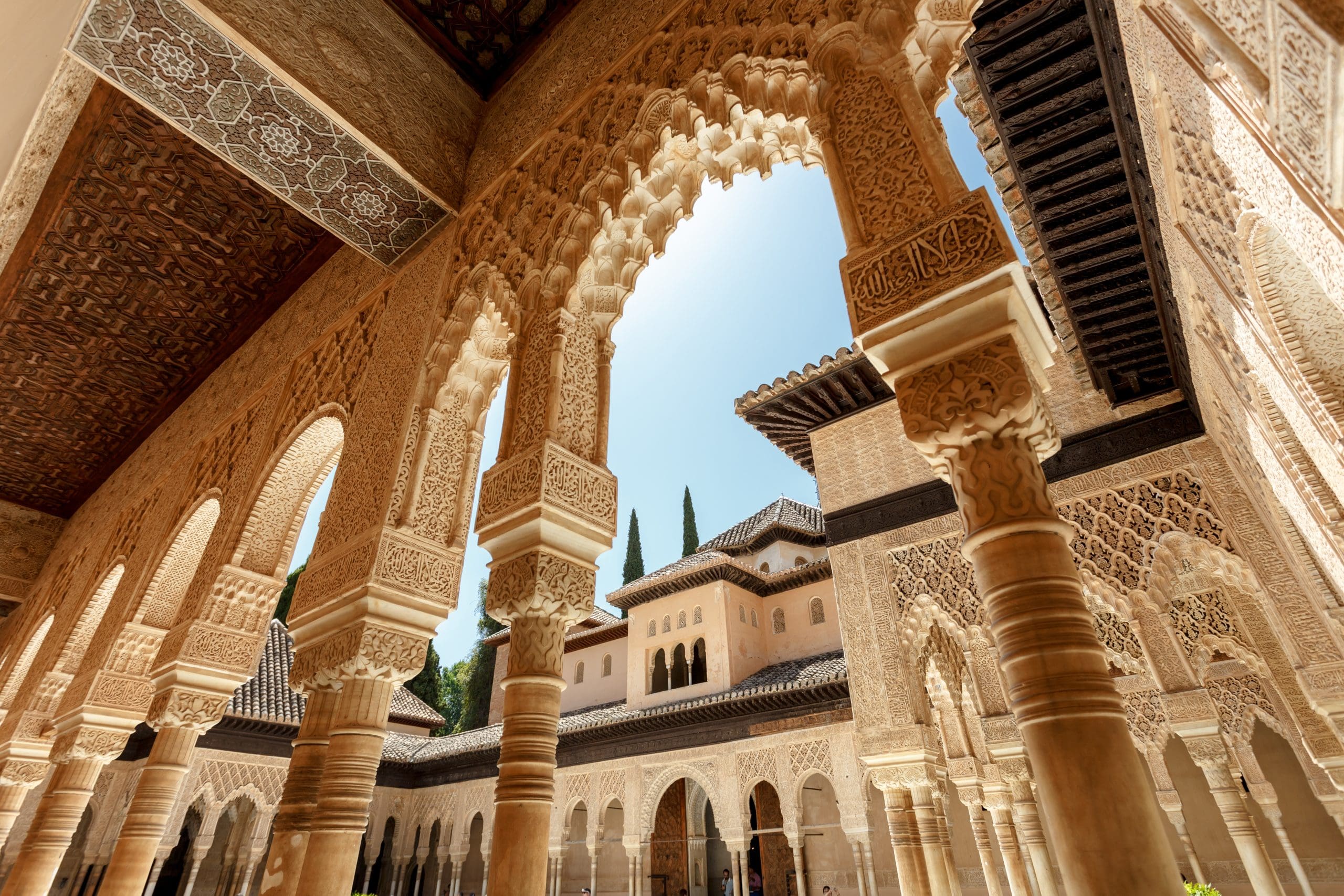
Alhambra palace in Granada, Andalusia Spain
The third and most decorative influence arrived with the Moors, whose eight centuries in Spain and North Africa layered in intricate tilework, keyhole arches, carved plaster, tranquil water features, and interior gardens designed as small paradises. This is where Mediterranean design gained its sensuality — the sense that a home should engage every sense, not just the eyes. It also taught the style how to feel intimate, shaded, and serene.
From those three roots, the style branched into the regional dialects we still borrow from today — from the ochre plaster and terracotta of the Italian coast to the whitewashed pueblos and shaded patios of southern Spain, the chalky restraint of the Greek islands, and the softened ease of Provence and the Côte d’Azur. What ties them together isn’t a look but a philosophy: build slowly, use what the land gives you, and let time finish the work. That idea is exactly what the design world has come back to, as today’s “New Mediterranean” strips away the ornament of the Tuscan-villa era and returns to quiet fundamentals like hand-troweled walls, honest stone, sun-washed color, and rooms that feel as if they’ve always been there.
From Florida’s Winter Coast to the New American Villa
Mediterranean design didn’t arrive in America through magazines. It arrived through hotels, expositions, and the early idea that coastal architecture could embody both leisure and permanence.
FLAGLER’S FLORIDA
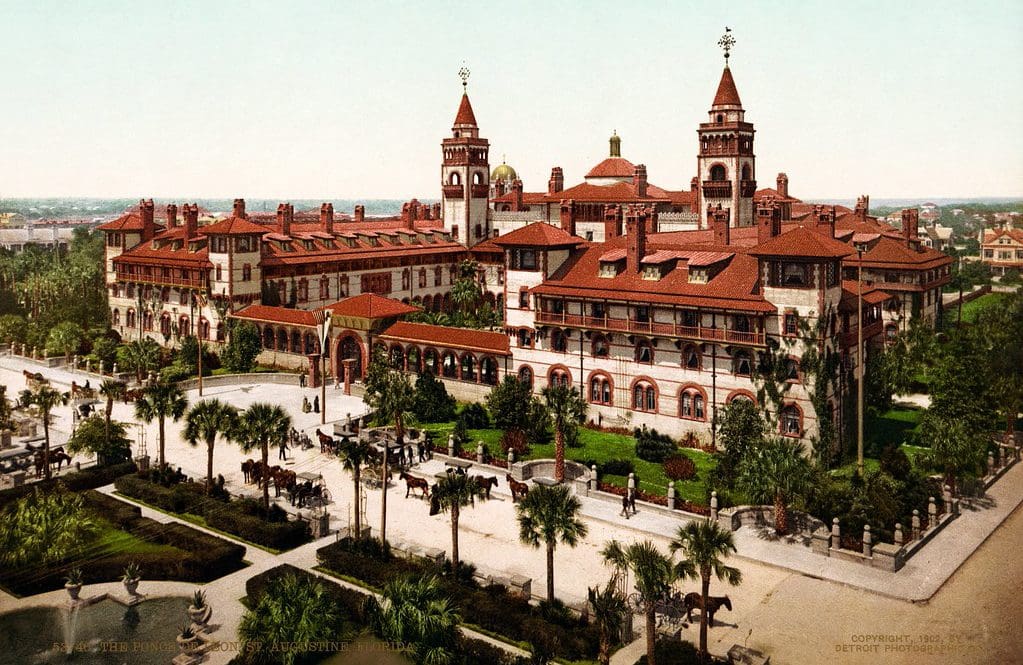
Ponce de Leon Hotel, St. Augustine, Florida
In the 1880s, Henry Flagler was developing St. Augustine as a winter escape for wealthy northerners, commissioning grand hotels like the Ponce de Leon and the Alcazar in a Spanish Revival mode. For many Americans, these buildings were the first encounter with stucco walls, tile roofs, arched loggias, and the romantic indoor-outdoor language that would later define Mediterranean luxury.
CALIFORNIA REVIVAL
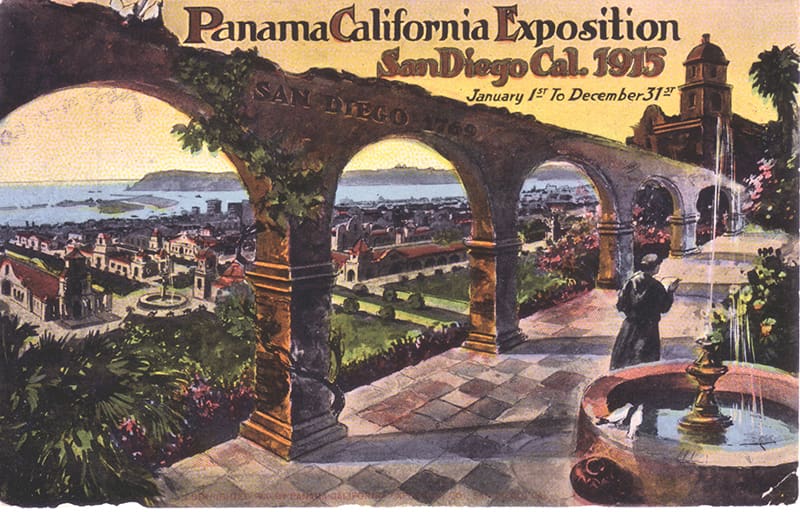
Panama–California Exposition, San Diego, 1915
The idea fully took hold in 1915, when the Panama–California Exposition in San Diego turned Spanish Colonial Revival into a national fantasy. From there it spread through Southern California, helped shape Santa Barbara after the 1925 earthquake, and informed places like Coral Gables, where Mediterranean architecture became shorthand for cultivated American luxury.
Today’s version is quieter. The heavy Tuscan-villa look of the late 20th century has given way to something more restrained — softer plaster, honed surfaces, pale stone, and rooms that feel sunlit rather than staged. In many ways, America is finally returning to the calm, architectural essence that Mediterranean design had all along.
The Foundation of a Quieter Luxury
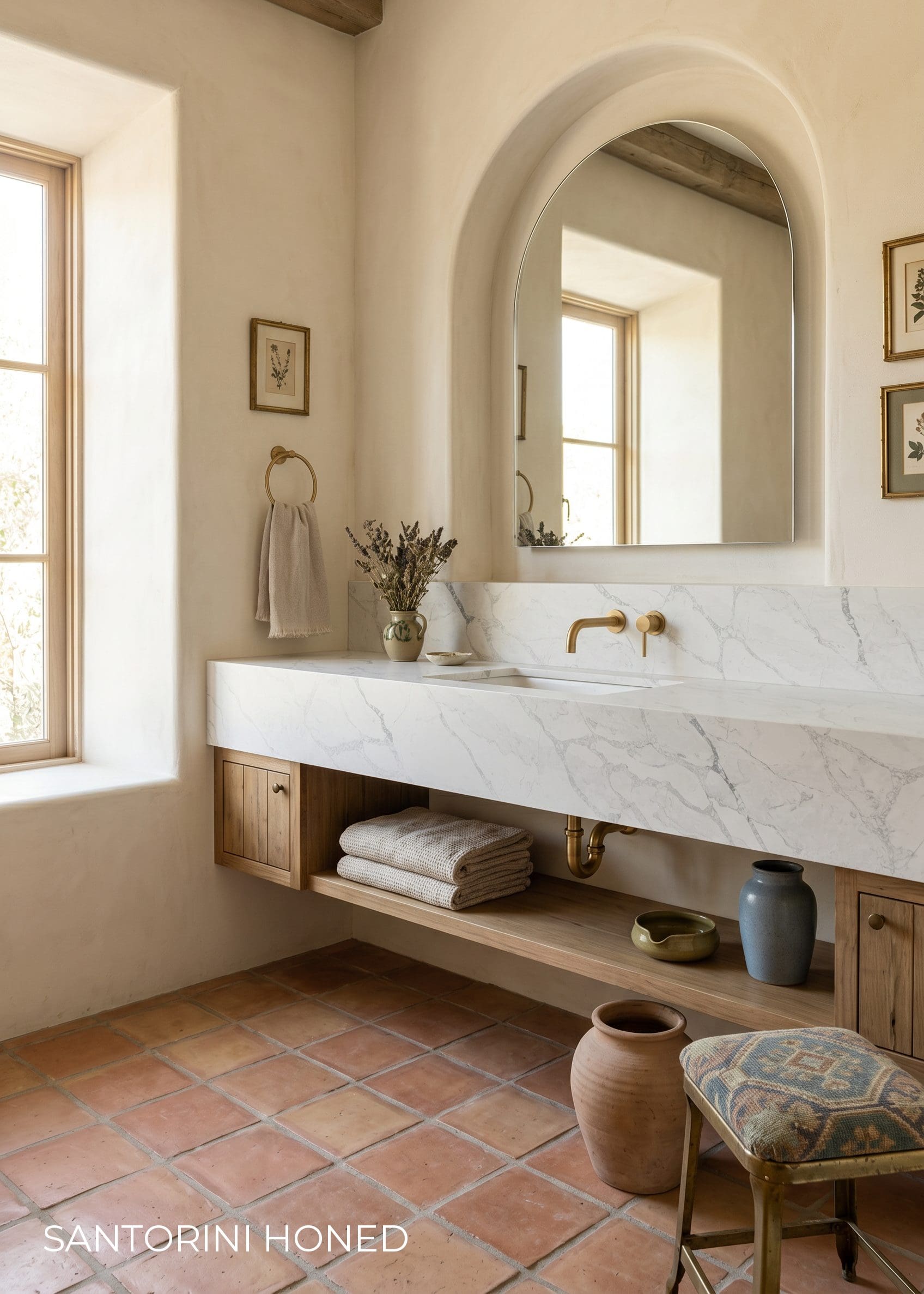
Mediterranean luxury works when the architecture and the objects in the room get to do the storytelling — the arch, the linen, the hand-glazed lamp, the olive tree in the corner — and the surfaces underneath them stay generous but restrained. That’s why the material choices matter so much here. The stone can’t compete; it has to carry. It needs to hold a wall of morning light without glare, absorb the shadow of a curved doorway without going flat, and quietly age into the room over the next thirty years. Engineered quartz and large-format porcelain do this exceptionally well — their consistency and softness let the eye rest — and a handful of natural stones with a whisper of movement bring in just enough hand of the earth to keep the room from feeling manufactured. Together, they build the calm, plastered, sunlit foundation the rest of the room gets to live on top of.
The Look, Installed
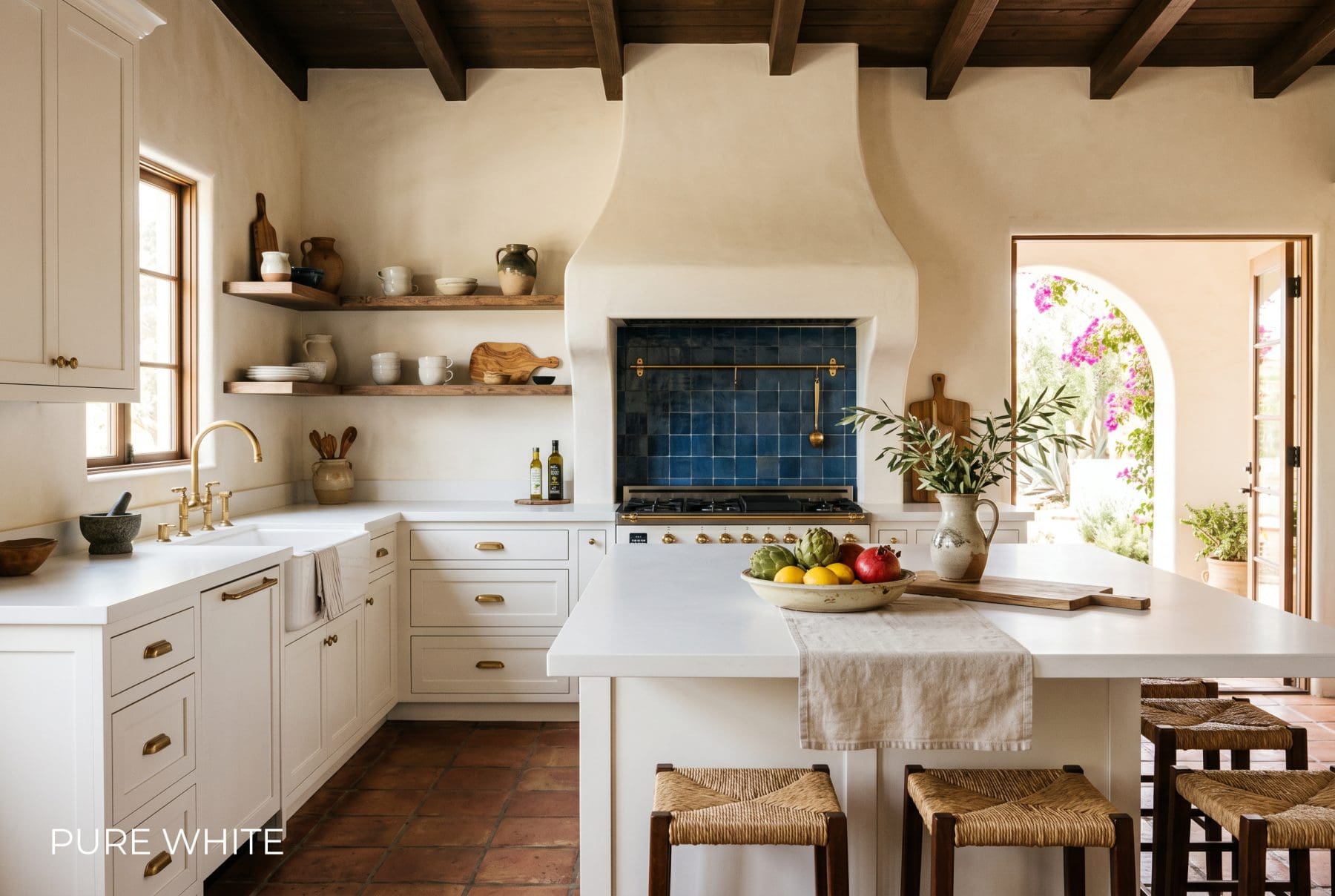
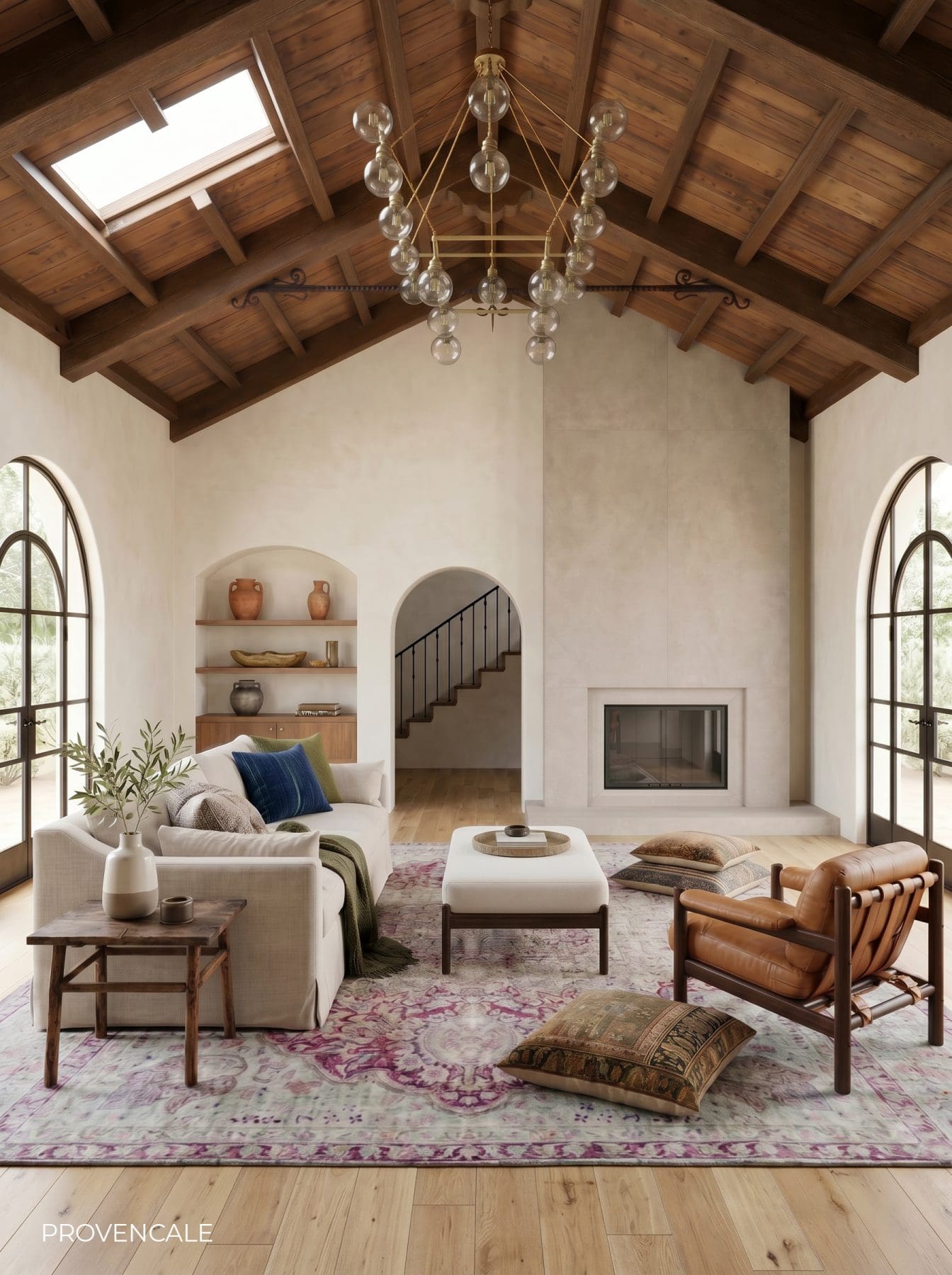
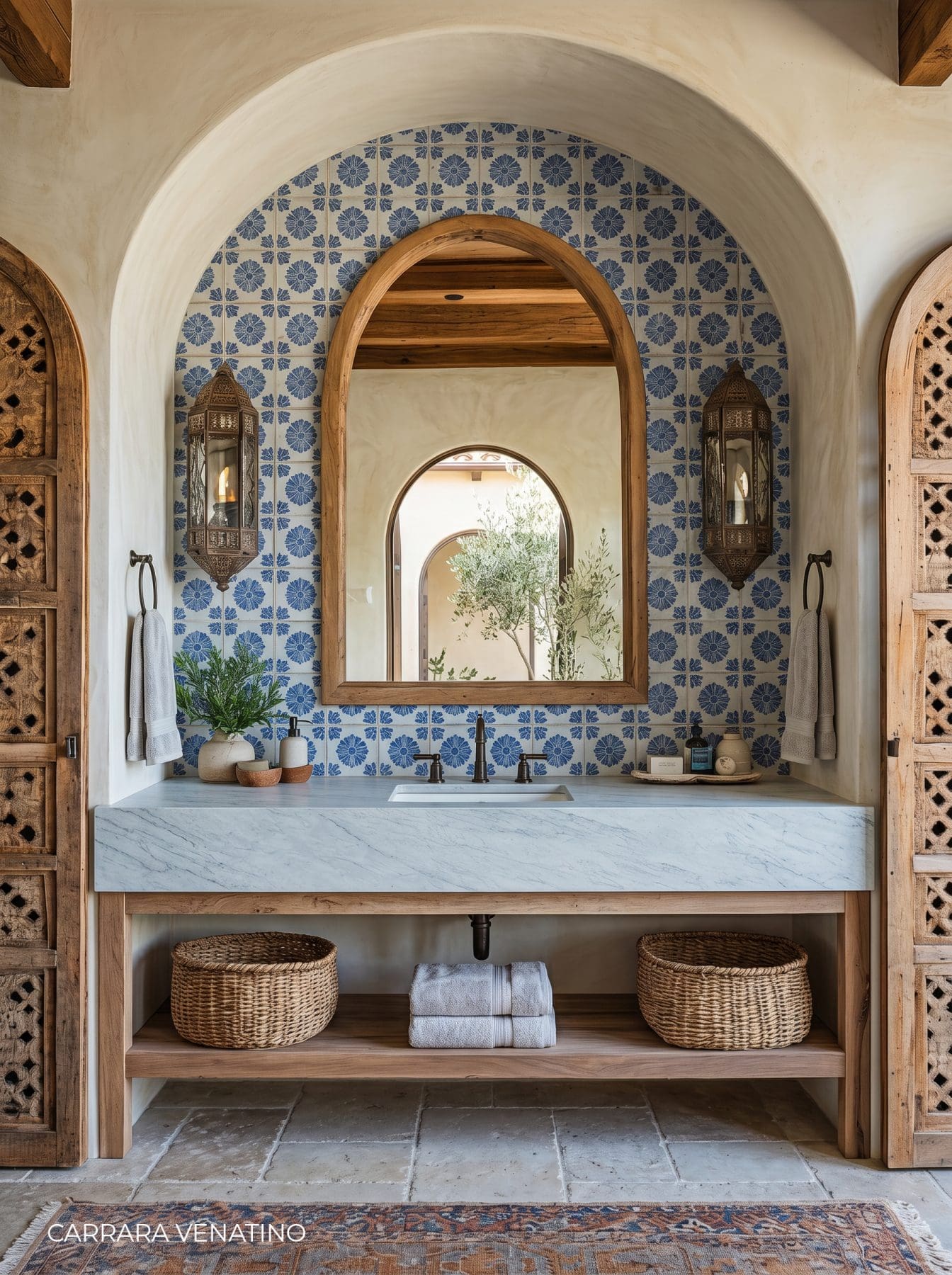
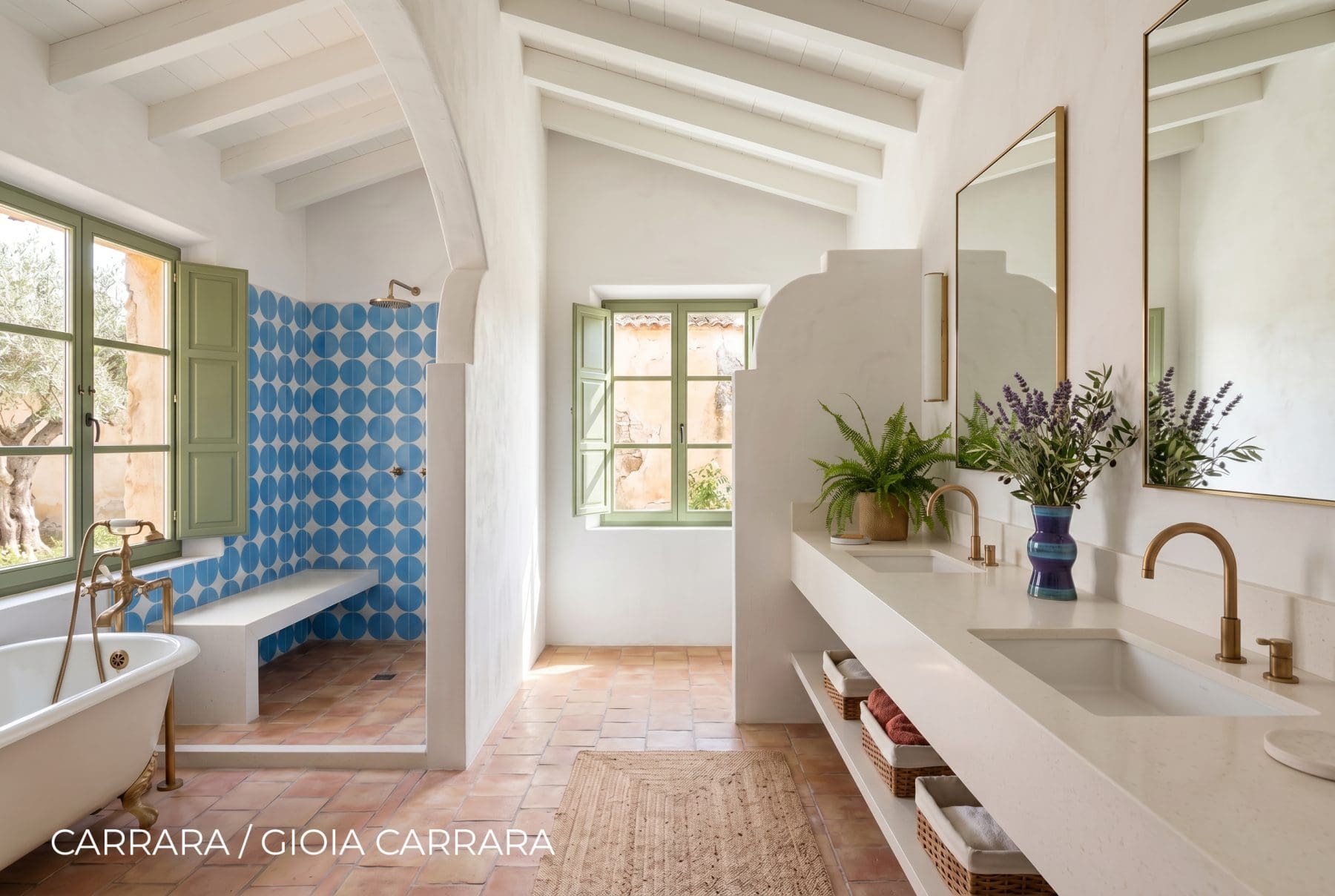
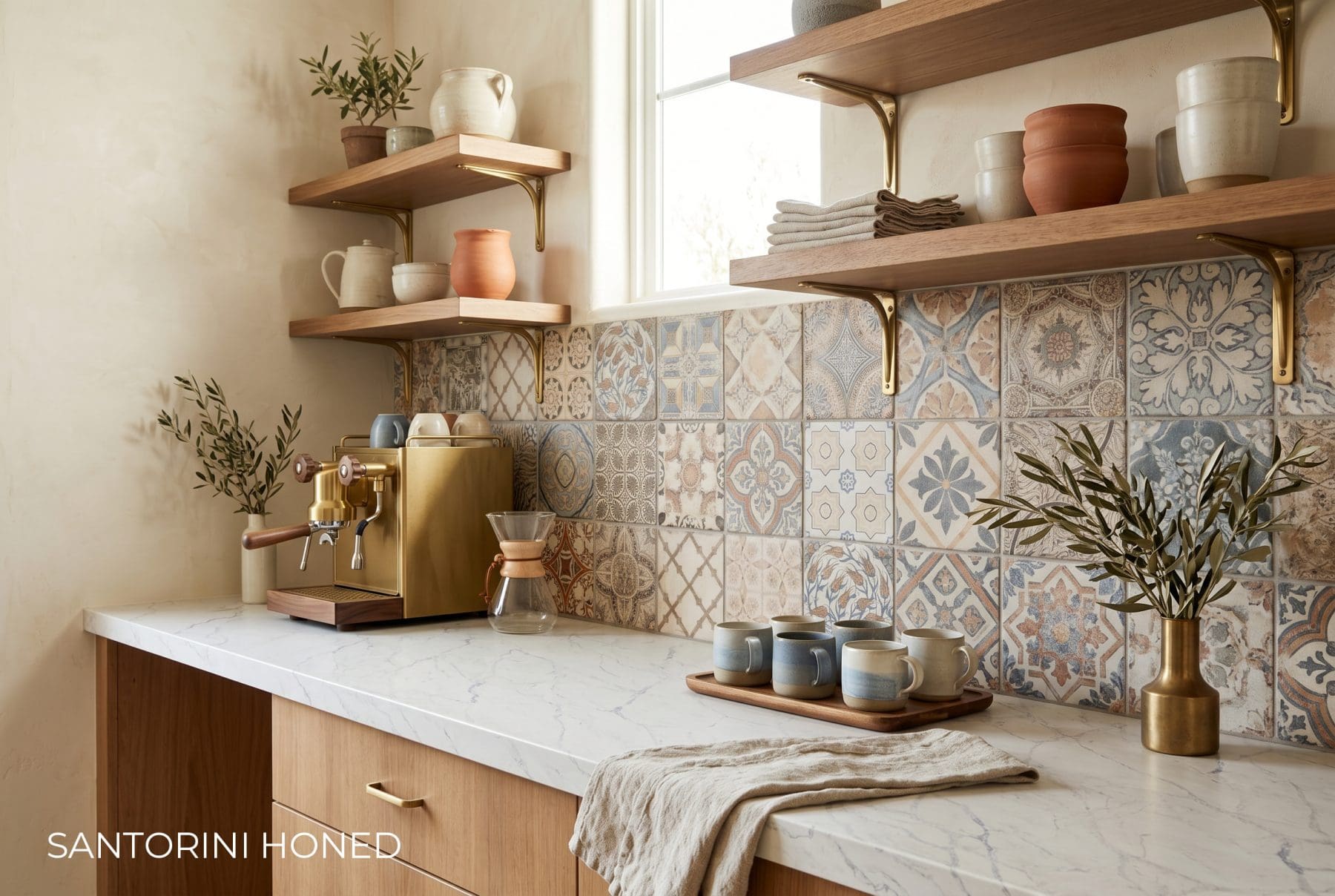
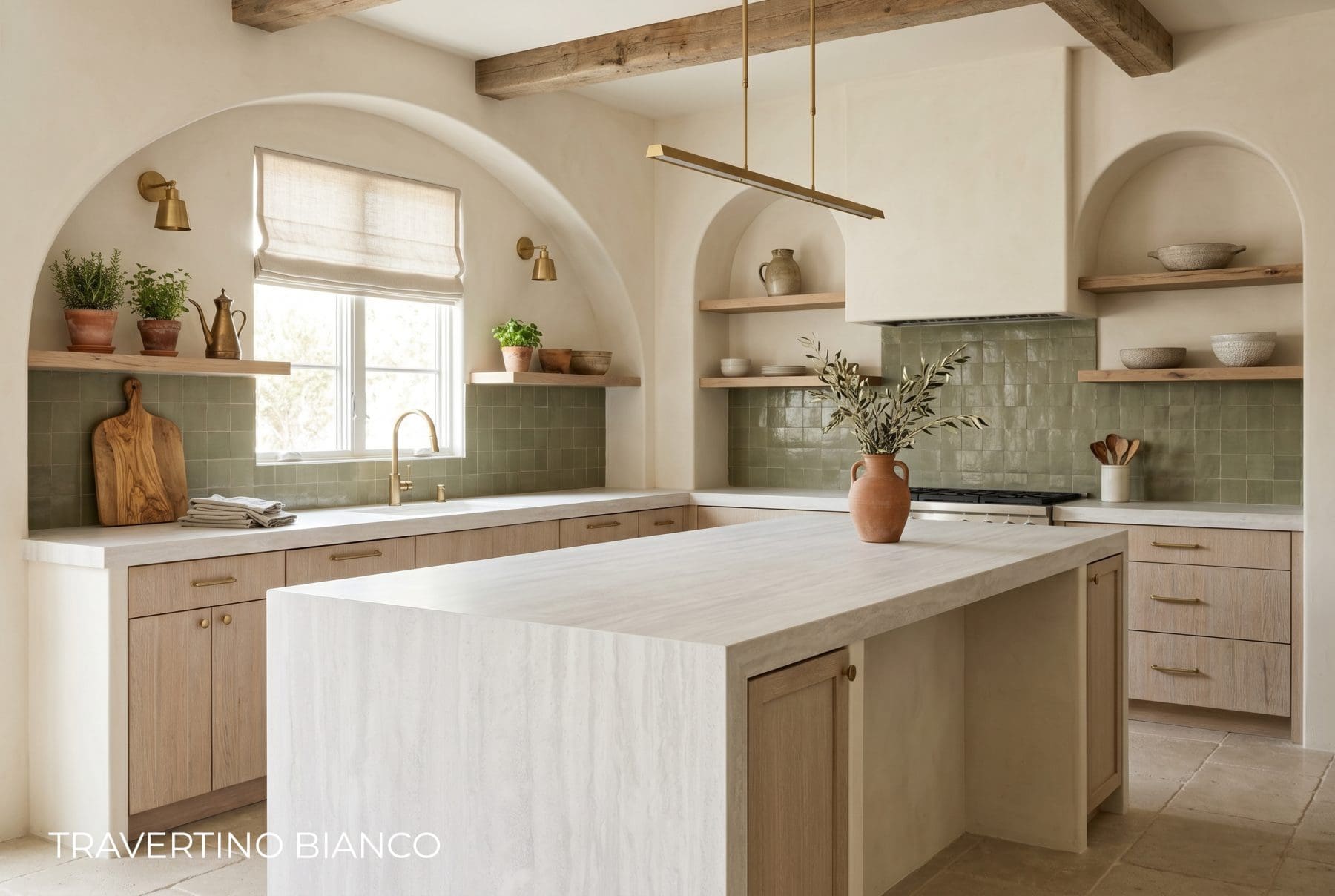
The Mediterranean Luxury Palette
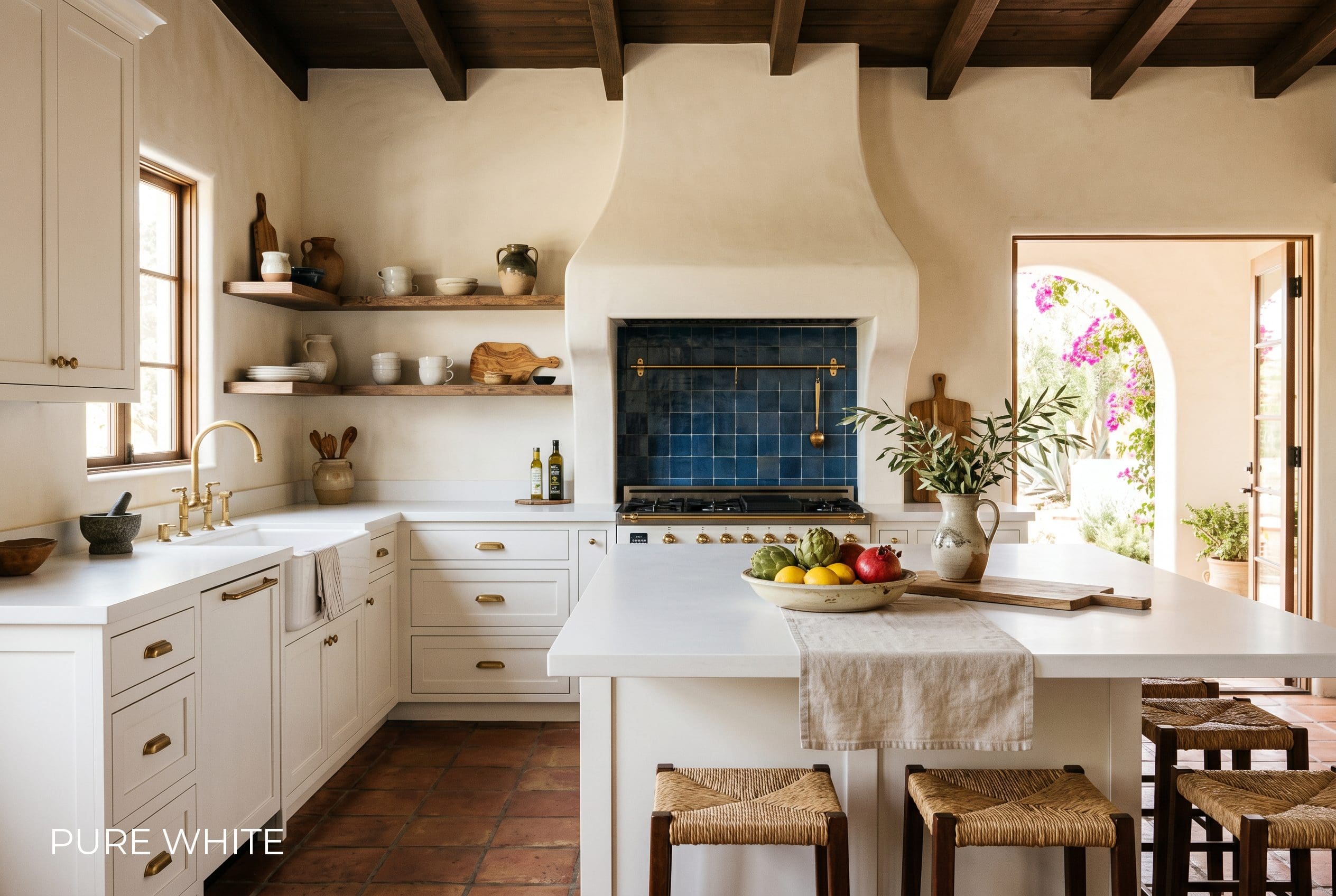
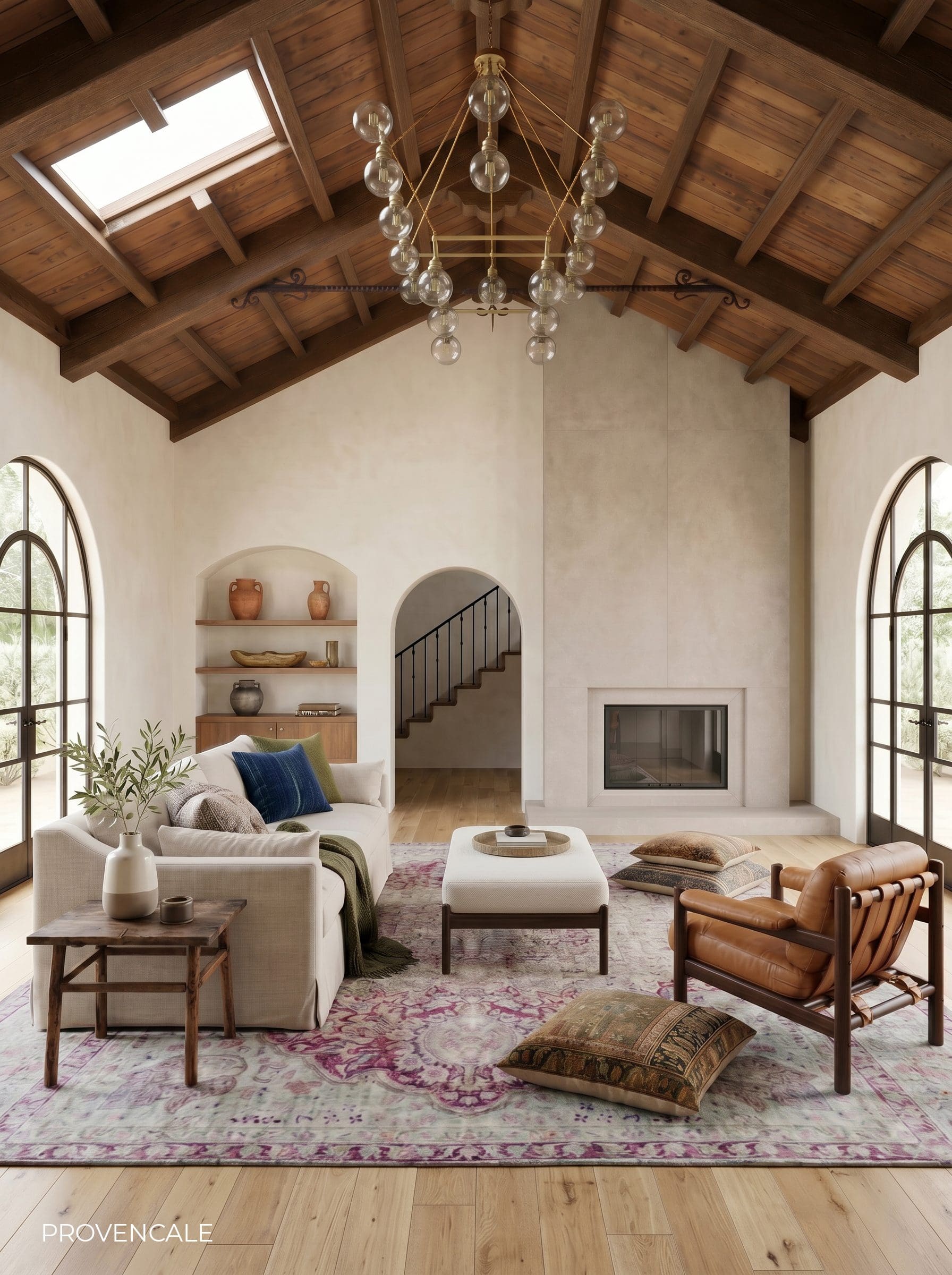
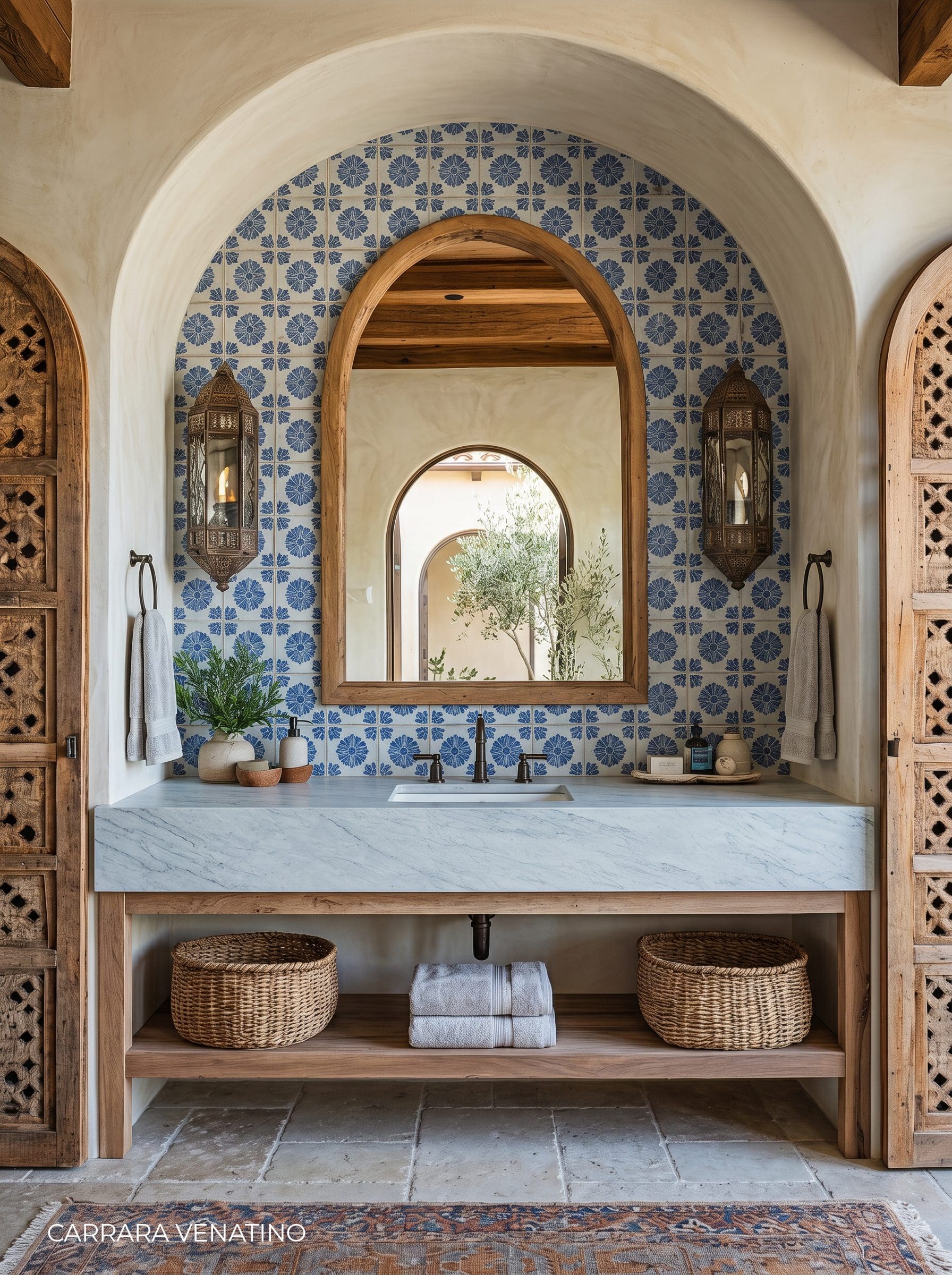
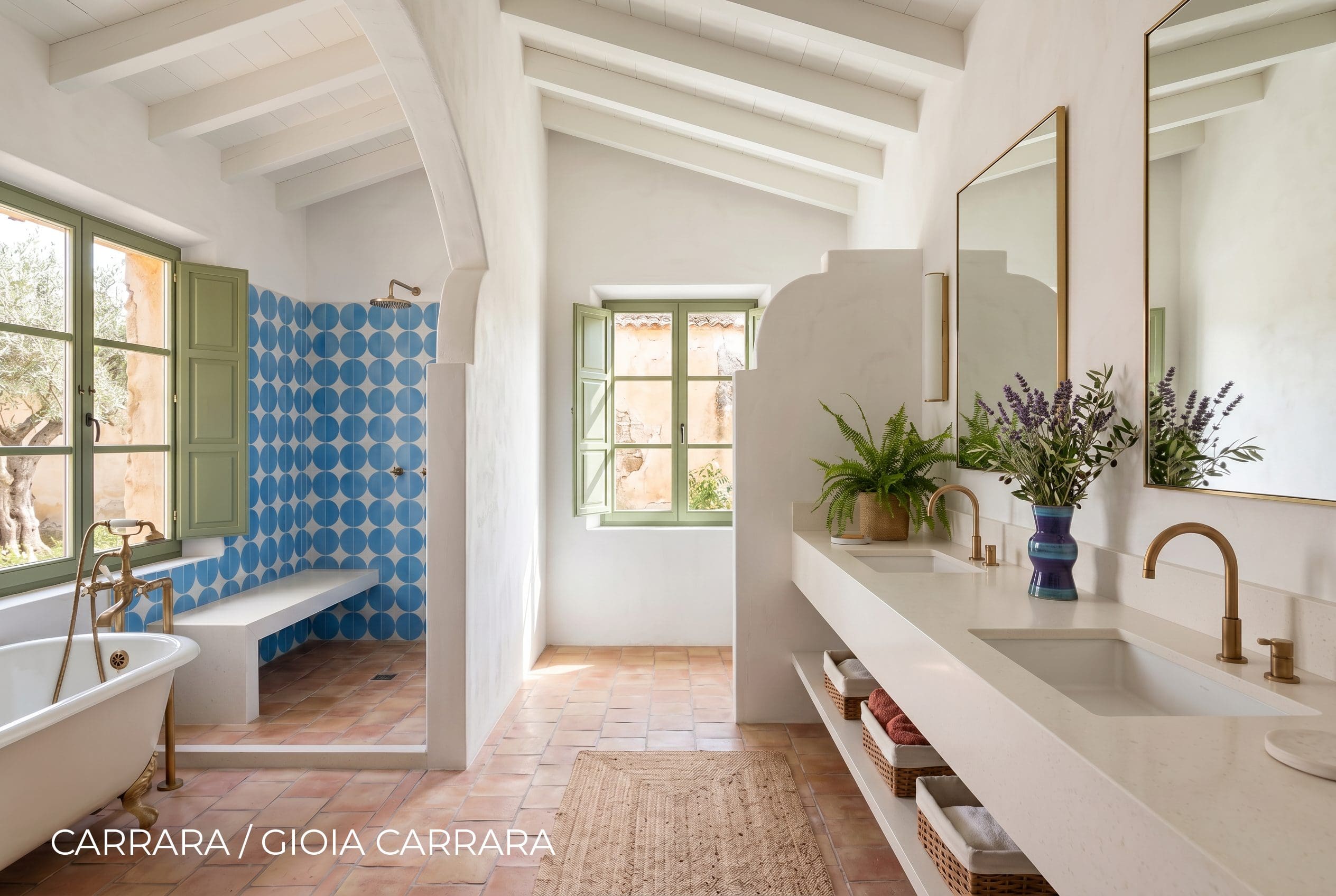
Mediterranean luxury comes together through surfaces that recede on purpose. Each option below is chosen for the way it complements rather than competes — soft whites, quiet warmth, and just enough movement to feel alive.

Pure White
Pompeii Quartz | Vicostone Quartz

Carrara
Pompeii Quartz | Vicostone Quartz
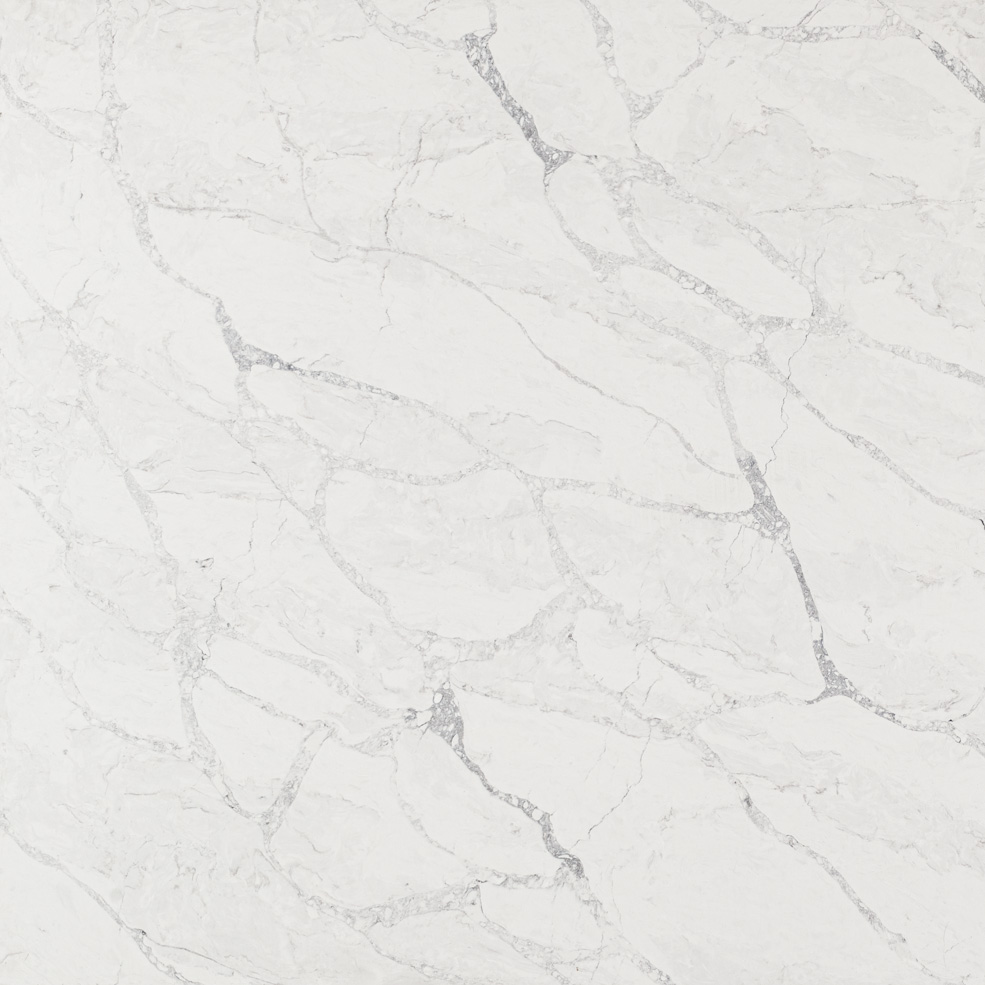
Santorini Honed/ Grey Monet
Pompeii Quartz | Vicostone Quartz

Provencale Matte
Infinity Porcelain

Travertino Bianco Matte
Infinity Porcelain