
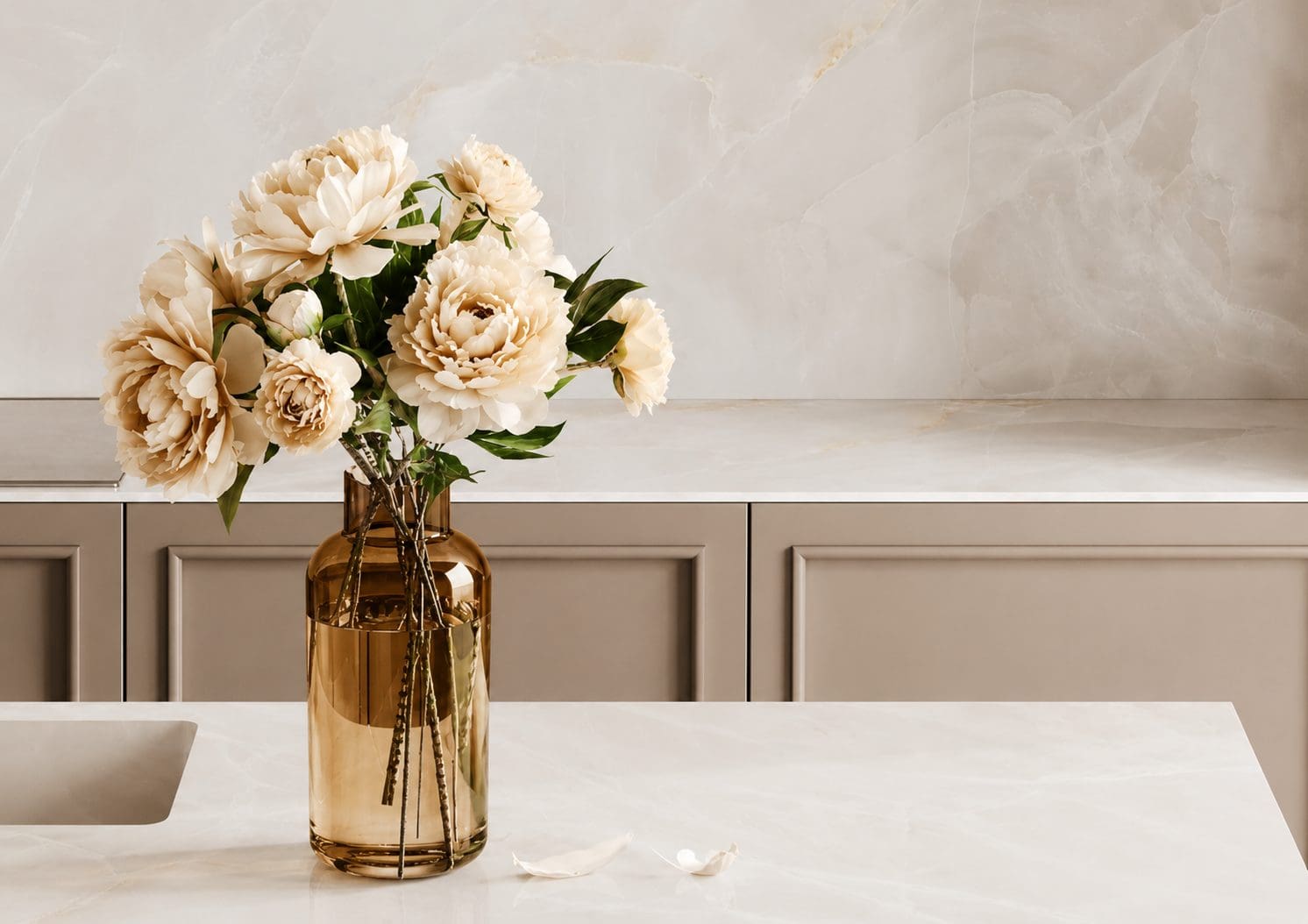
Porcelain has come a long way from its origins as a flooring and wall tile material. Today, large-format porcelain slabs are showing up in kitchens and bathrooms alongside granite and quartz, and the conversation about which material deserves the countertop has gotten genuinely interesting. Porcelain brings some impressive credentials to the table, but so do its competitors.
So are porcelain countertops durable enough to replace granite or quartz? The answer isn’t a simple yes or no. It depends on what durability means to you, how you use your kitchen, and what trade-offs you’re willing to accept. Here’s an honest look at how these three materials stack up.
What Makes Porcelain a Serious Countertop Contender
Porcelain countertop slabs are manufactured from refined clay fired at extremely high temperatures, producing a dense, hard surface that bears little resemblance to the ceramic tile of a few decades ago. Modern large-format porcelain slabs can reach up to 126 inches in length, allowing for seamless installations that rival natural stone in scale and visual impact.
The manufacturing process gives porcelain a level of consistency and control that natural stone can’t match. Colors, patterns, and textures are precisely engineered, which means a marble-look porcelain slab will be visually identical from piece to piece, something no quarry can guarantee. For homeowners who need multiple matching slabs or want a very specific aesthetic without natural variation, this is a meaningful advantage.
For a full overview of what porcelain countertops offer, the porcelain countertops guide at UMI Stone is a strong starting point.
Durability: How Porcelain Compares
Porcelain holds its own across most durability categories, but the comparison with granite and quartz reveals some important nuances worth understanding before you decide.
Scratch Resistance
Porcelain ranks around 7 on the Mohs hardness scale, putting it on par with quartzite and harder than most granite varieties. In practical terms, this means porcelain resists scratching from knives, cookware, and everyday kitchen use extremely well. You won’t be able to scratch it with a key or a utensil under normal conditions.
That said, porcelain has a notable vulnerability that granite and quartz don’t share: chipping. Because porcelain is a fired ceramic material, it can chip at edges and corners under sharp impact, a dropped cast iron pan at the wrong angle, for example. Once chipped, porcelain is very difficult to repair invisibly, which is why edge profiles and installation quality matter significantly with this material.
Granite and quartz are both more impact-resistant than porcelain. They can take a knock without the same risk of chipping, which is worth factoring in for busy households.
Heat Resistance
Porcelain is one of the most heat-resistant countertop materials available, capable of withstanding temperatures that would damage engineered quartz. You can place a hot pan directly on a porcelain surface without risk of scorching, discoloration, or surface damage. In this respect, porcelain outperforms quartz and matches or exceeds granite.
For serious cooks who regularly move hot cookware from stove to counter, porcelain’s heat tolerance is a genuine advantage worth weighing against its chipping vulnerability.
Stain and Chemical Resistance
Porcelain is non-porous, which means it doesn’t absorb liquids, stains, or bacteria. It requires no sealing and is resistant to the acidic etching that affects marble and travertine. Harsh cleaning products that would damage natural stone or degrade quartz resin are generally safe on porcelain surfaces.
In terms of stain and chemical resistance, porcelain is among the strongest performers of any countertop material. This makes it particularly well-suited to bathroom countertop applications where moisture, cleaning products, and cosmetics are a daily reality.
UV Resistance
One area where porcelain has a clear advantage over both granite and quartz is UV stability. Quartz resin can fade or discolor with prolonged sun exposure, which limits its suitability for outdoor kitchens and sun-drenched spaces. Porcelain maintains its color and surface integrity in direct sunlight indefinitely, making it one of the few countertop materials genuinely suited to outdoor applications.
How Porcelain Stacks Up Against Granite and Quartz
| Porcelain | Granite | Quartz | |
|---|---|---|---|
| Scratch Resistance | Excellent | Very Good | Very Good |
| Heat Resistance | Excellent | Excellent | Moderate |
| Impact/Chip Resistance | Moderate | Very Good | Very Good |
| Stain Resistance | Excellent | Good (with sealing) | Excellent |
| UV Resistance | Excellent | Good | Moderate |
| Sealing Required | No | Yes | No |
| Repairability | Difficult | Moderate | Moderate |
| Natural Character | Engineered | Natural | Engineered |
Outdoor Kitchens
Porcelain is one of the only countertop materials that handles prolonged sun exposure, temperature swings, and outdoor moisture without degrading. For covered outdoor kitchens and bar areas, it’s hard to beat.
Bathrooms
The non-porous surface, resistance to harsh cleaning products, and wide range of aesthetic options make porcelain an excellent bathroom countertop material. Its ability to mimic marble convincingly also appeals to homeowners who want that look without marble’s maintenance demands.
Large Seamless Installations
The availability of very large format porcelain slabs makes it possible to achieve long, uninterrupted countertop runs with minimal or no seaming. For contemporary kitchens where clean, seamless surfaces are a design priority, this is a real advantage.
High-Moisture Environments
Any space where moisture exposure is frequent and consistent is a strong application for porcelain. Its non-porous composition handles wet conditions without the staining risk that affects natural stone.
The Limitations Worth Knowing
Porcelain’s chipping vulnerability at edges is its most significant practical limitation, and it’s one that deserves honest consideration. Edge profiles on porcelain require careful selection and skilled fabrication, more complex profiles that work beautifully in granite or quartz can be structurally compromised in porcelain. Simple, clean edge profiles are generally the safer and more durable choice with this material.
Porcelain also lacks the natural depth and organic character of granite or quartzite. A marble-look porcelain slab is impressive, but it reads differently up close than the real thing. For homeowners who specifically value the authenticity of natural stone, the engineered precision of porcelain may feel flat by comparison.
Fabrication also requires specialized tools and expertise. Cutting and finishing porcelain slabs demands diamond-tipped equipment and an experienced hand. Working with a fabricator who has specific porcelain experience is more important here than with most other countertop materials.
For a full breakdown of the advantages and trade-offs, the porcelain countertops pros and cons guide is worth reading before making a final decision.
So, Is Porcelain Durable Enough?
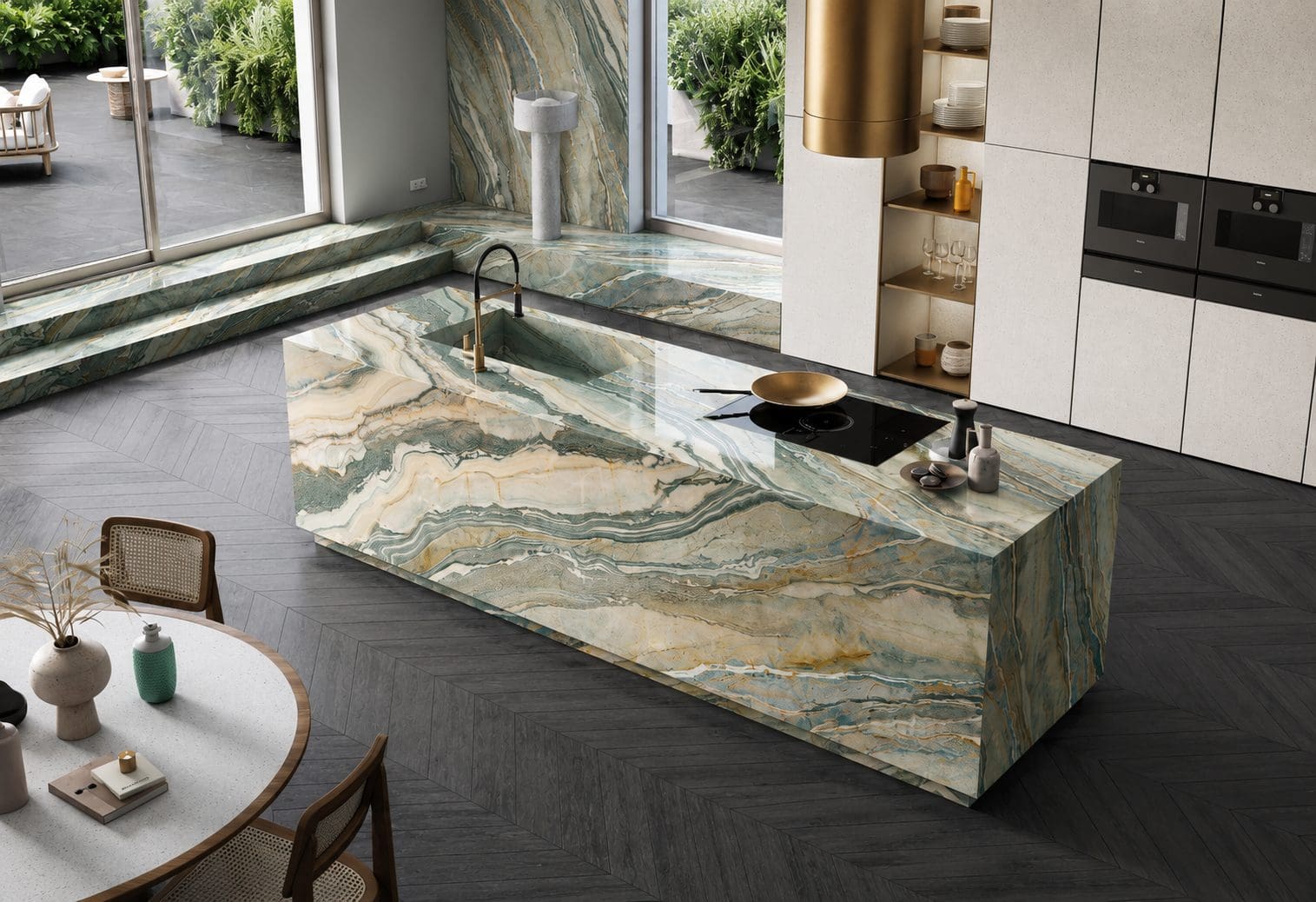
For most homeowners asking how durable porcelain countertops are, the answer is yes, but with one important caveat. Porcelain is exceptionally hard, stain-resistant, heat-tolerant, and low-maintenance. On paper, it competes with granite and quartz across nearly every performance category and outperforms both in UV resistance and heat tolerance.
The caveat is chipping. Porcelain’s brittleness under sharp impact is a real limitation that granite and quartz don’t share to the same degree. If your kitchen sees heavy use, lots of dropped items, or frequent movement of cast iron or heavy cookware, this is worth weighing carefully.
For homeowners who prioritize heat resistance, outdoor use, or seamless large-format installations, porcelain is not just durable enough, it may actually be the better choice.
Explore Porcelain and More at UMI Stone
At UMI Stone, we carry a curated selection of premium porcelain slabs alongside granite, quartz, quartzite, and other natural stone surfaces. Our team can help you compare materials in person, understand the real-world differences between them, and find the right fit for your project.
Visit a showroom near you or contact us today to start the conversation.
Frequently Asked Questions
Are porcelain countertops durable?
Yes. Porcelain is one of the hardest countertop materials available, ranking around 7 on the Mohs scale. It resists scratching, staining, heat, and UV exposure extremely well. Its main vulnerability is chipping at edges under sharp impact, which is worth factoring in for high-traffic kitchens.
Do porcelain countertops scratch easily?
No. Porcelain’s hardness makes it highly resistant to scratching from knives, cookware, and everyday kitchen use. Standard utensils and keys won’t scratch the surface under normal conditions.
Can porcelain countertops chip?
Yes, and this is porcelain’s most notable limitation. Because it’s a fired ceramic material, sharp impacts at edges and corners can cause chipping. Once chipped, porcelain is difficult to repair invisibly, which is why edge profile selection and fabricator experience matter significantly.
How does porcelain compare to quartz for countertops?
Porcelain outperforms quartz in heat resistance and UV stability, making it a stronger choice for outdoor kitchens and sun-exposed spaces. Quartz is more impact-resistant and less prone to chipping. Both are non-porous and require no sealing.
Does porcelain require sealing?
No. Porcelain is non-porous and never requires sealing. It resists staining, moisture, and bacteria without any surface treatments, making it one of the lowest-maintenance countertop options available.
Is porcelain good for outdoor countertops?
Yes, porcelain is one of the best countertop materials for outdoor use. Its UV stability, heat tolerance, and non-porous surface make it well-suited to outdoor kitchens where other materials, including quartz, can fade or degrade over time.

