

When it comes to upgrading your kitchen or bathroom, few choices have as much impact as your countertop material. Porcelain vs quartzite countertops is a common debate among homeowners and designers alike – and for good reason. Both deliver stunning style and impressive performance, yet they cater to different lifestyles and design goals.
Quartzite is a natural stone admired for its rugged durability, striking veining, and heat resistance. Porcelain, on the other hand, is a manufactured surface celebrated for its low-maintenance nature, stain resistance, and limitless design flexibility. Knowing how they compare will help you choose the perfect fit for your space. Let’s dive in!
What Is Quartzite?
Quartzite is formed when sandstone undergoes extreme heat and pressure deep within the Earth, transforming into a dense, durable natural stone. Its crystalline structure creates unique patterns and veining, meaning no two slabs are ever the same.
This material is known for its exceptional hardness, which is often harder than granite. This makes it ideal for kitchens that see a lot of activity. With proper sealing, quartzite resists stains, stands up to hot cookware, and can maintain its elegance for decades.
What Is Porcelain?
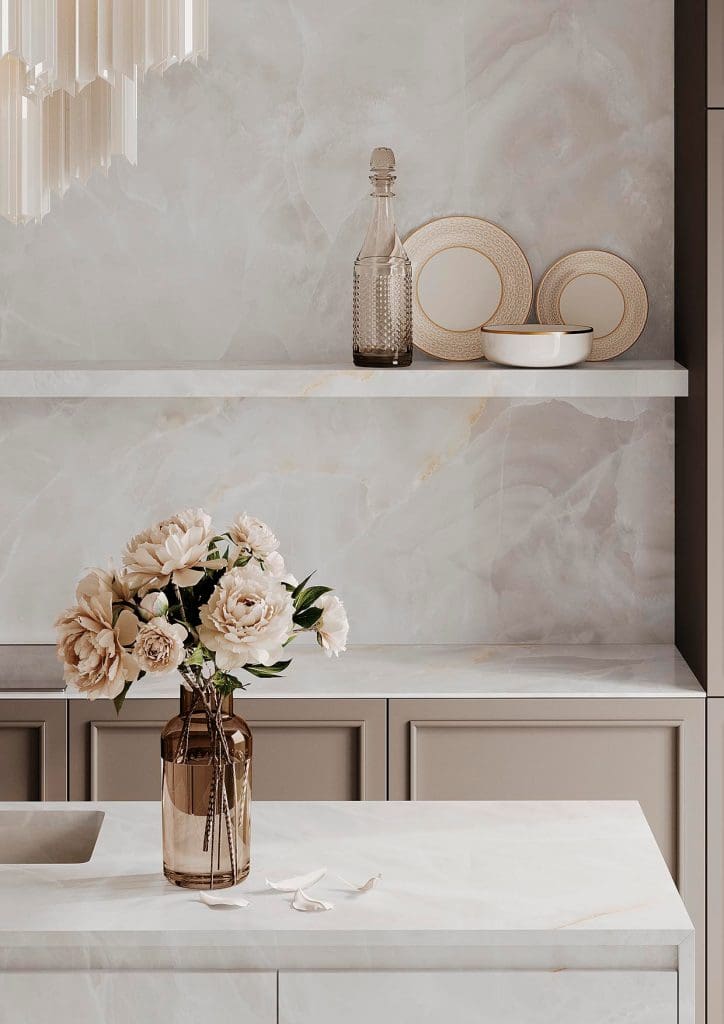
Porcelain countertops are made from refined clay and mineral powders, then fired at extremely high temperatures. This process results in a lightweight, ultra-dense surface that’s non-porous and resistant to moisture, stains, and UV damage.
Design-wise, porcelain is incredibly versatile. It can mimic the look of natural stone, wood, concrete, or even metallic finishes, giving you nearly unlimited style options. Its lighter weight also means it can be used for vertical applications, like full-height backsplashes and waterfall edges, without requiring heavy reinforcement.
Porcelain vs Quartzite
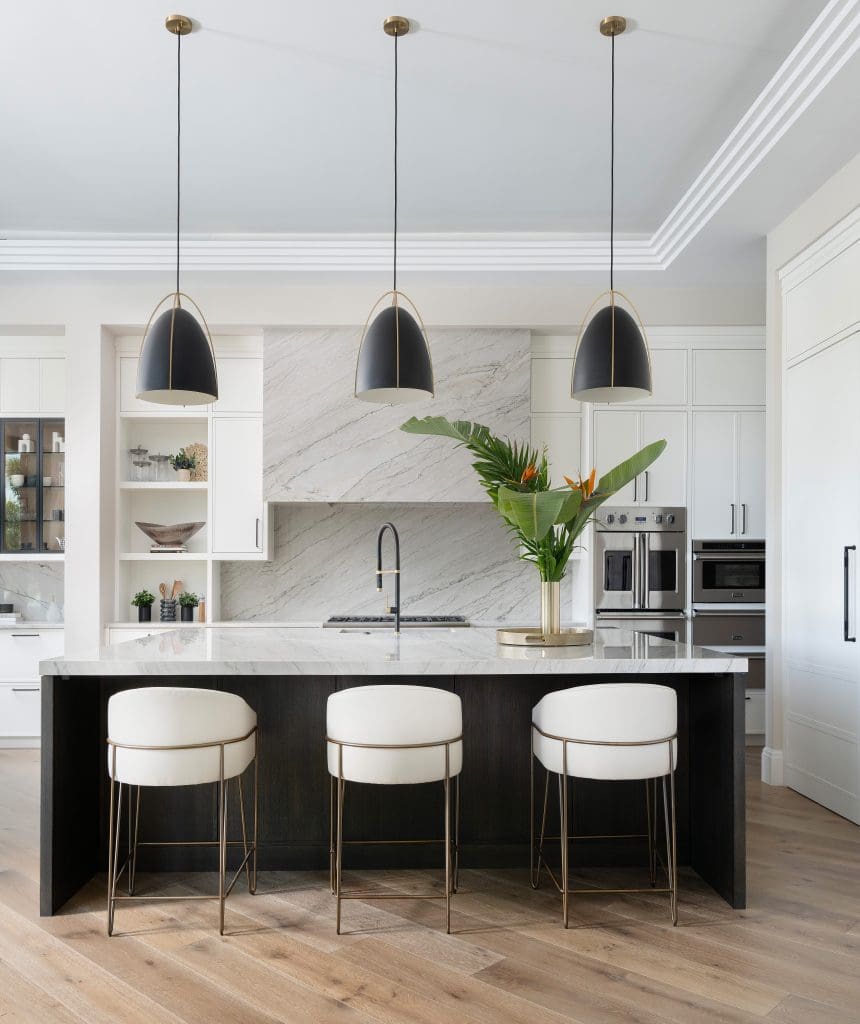
Here’s a breakdown of the biggest differences between porcelain and quartzite countertops.
Durability: Porcelain vs Quartzite Countertops
Both porcelain and quartzite are incredibly durable, but each excels in different areas. Here’s a closer look at the durability of porcelain and quartzite.
- Scratch Resistance: Quartzite’s dense mineral composition makes it one of the hardest natural stones, making it super ideal for heavy-use kitchens. Porcelain is also highly scratch-resistant, but its thinner edges may chip if struck with force.
- Heat Resistance: Quartzite withstands hot pans directly on the surface without damage. Porcelain also tolerates heat, but rapid temperature changes can cause thermal shock.
- Impact Resistance: Quartzite’s natural density helps it resist everyday knocks, while porcelain is strong but more vulnerable at the corners.
- UV Resistance: Porcelain shines in outdoor spaces with its ability to resist fading from sunlight. Quartzite may require sealing to maintain color outdoors.
- Longevity: With proper care, both materials can last for decades, retaining their beauty and structural integrity.
Maintenance and Care: Porcelain vs Quartzite Countertops
Your day-to-day upkeep will look different depending on which material you choose:
- Sealing Requirements: Quartzite generally needs sealing once or twice a year to keep stains at bay. Porcelain never needs sealing, making it virtually maintenance-free.
- Cleaning: Both materials can be cleaned easily with mild soap and water, though quartzite counters benefit from pH-neutral cleaners to protect their sealant.
- Stain Resistance: Porcelain’s non-porous surface resists coffee, wine, and oil stains with ease. Quartzite can resist stains well when sealed properly.
- Etching: Quartzite is more resistant to etching than marble, but still requires some care with acidic foods. Porcelain is almost completely impervious to etching.
- Repairs: Small chips in quartzite can often be polished or filled, while repairs on porcelain may be more challenging to make invisible.
Style and Design Flexibility: Porcelain vs Quartzite Countertops
When it comes to aesthetics, porcelain vs quartzite countertops offer different kinds of appeal, so it really depends on your personal style. Here’s a closer look at the primary differences between the aesthetics of porcelain and quartzite.
- Quartzite delivers one-of-a-kind natural beauty, with veins, swirls, and colors created by nature over millions of years. If you want a truly unique slab that feels organic and timeless, quartzite is your answer.
- Porcelain, however, gives you virtually unlimited design options. From hyper-realistic stone patterns to modern matte finishes and bold contemporary colors, you can tailor it to almost any style. Plus, porcelain comes in larger slab sizes, making it easier to create seamless surfaces for big islands or full-wall designs.
Cost: Porcelain vs Quartzite Countertops
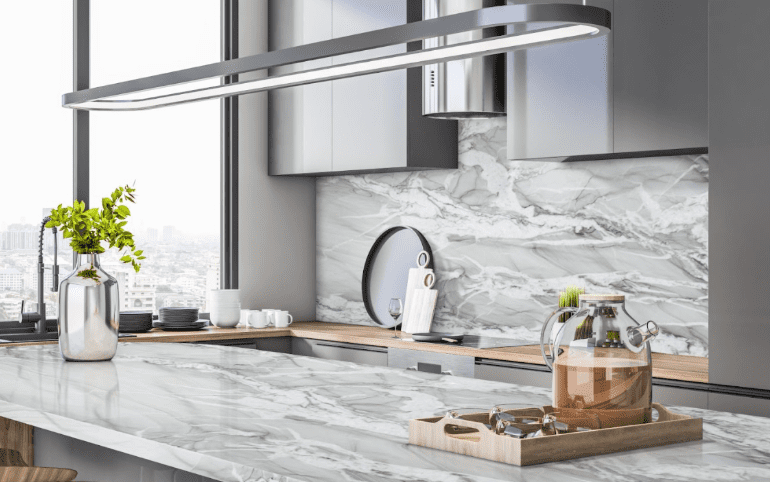
Pricing for porcelain vs quartzite countertops varies widely depending on the source, thickness, finish, and fabrication. Here’s a closer look at the cost considerations for quartzite and porcelain.
- Quartzite often commands a higher price due to quarrying, transportation, and the rarity of certain colors. Its natural origin also makes each slab unique, which can be a major selling point in high-end homes.
- Porcelain can be more affordable, especially in standard colors and finishes. However, premium porcelain designs, especially the ones that mimic rare stones, can rival or even exceed quartzite pricing. Both materials offer excellent long-term value thanks to their durability and lasting appeal.
Choosing the Right Countertop for Your Needs
Your decision between porcelain vs quartzite countertops comes down to priorities. So, which one of these options most describes you and your needs?
- Natural Stone Lovers: Choose quartzite for a one-of-a-kind surface with timeless character.
- Low-Maintenance Homes: Pick porcelain if you want a set-it-and-forget-it countertop.
- Lots of Cooking: Go with quartzite for superior heat and scratch resistance.
- Outdoor Kitchens: Select porcelain for its UV stability and weather resistance.
- Budget-Conscious Remodels: Consider porcelain for a high-end look at a potentially lower price.
- Long-Term Value: Both offer exceptional performance and style when properly installed.
Elevate Your Space With Porcelain or Quartzite Countertops from UMI Stone
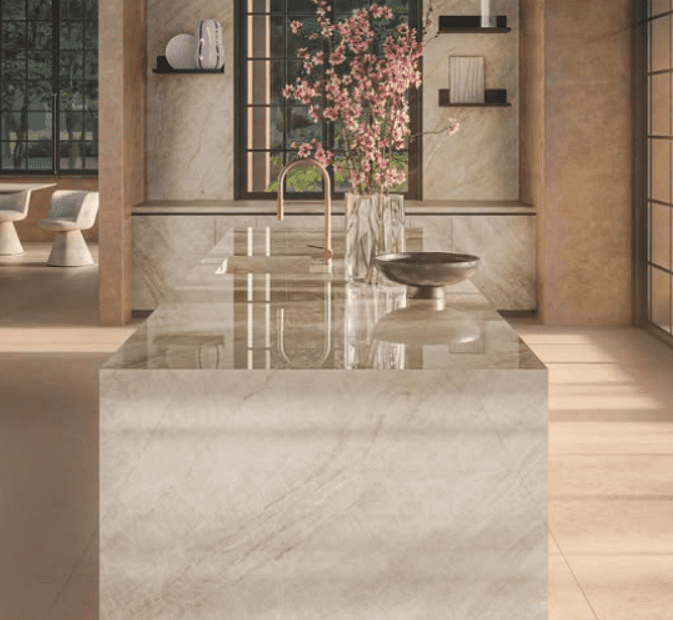
When weighing porcelain vs quartzite countertops, there’s no single “best” choice; only the best choice for your lifestyle and design vision. If you’re drawn to the natural beauty and enduring strength of a rare stone, quartzite will deliver exactly what you want for decades. If you prefer unmatched design variety and low-maintenance convenience, porcelain is a worthy contender.
At UMI Stone, we offer a wide selection of premium Porcelain Countertops and Quartzite Countertop Slabs to fit every taste and budget. Visit one of our showrooms to explore these stunning materials in person or contact us today to learn more!

