
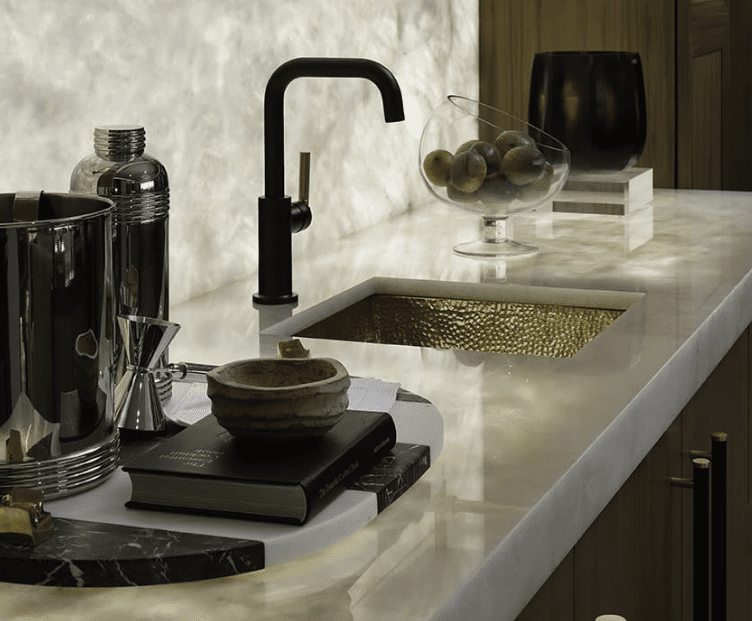
Quartzite has earned its place as one of the most sought-after natural stone surfaces available, and a big part of that appeal comes down to its remarkable color range. From soft, creamy whites that evoke the elegance of marble to dramatic dark tones and unexpected blues and greens, quartzite offers a palette that few other natural stones can match.
But with so many options, knowing where to start isn’t always easy. This guide walks through the most popular quartzite colors, what makes each one special, and how different palettes work across a range of kitchen and bathroom design styles.
Why Quartzite Color Matters More Than You Think
Before diving into specific varieties, it’s worth understanding what you’re actually looking at when you evaluate quartzite color. Unlike engineered surfaces where color is controlled during manufacturing, quartzite gets its tones from the minerals present during its geological formation. Iron oxides produce warm golds and rusts. Chlorite creates greens. The presence of different feldspar minerals contributes creams, pinks, and grays.
This means the color you see in quartzite is inseparable from its character as a stone. The veining, movement, and tonal variation aren’t printed on the surface, they run through the entire slab. That depth is precisely what makes quartzite countertop slabs so visually compelling and why no two installations ever look exactly alike.
White and Cream Quartzite Colors
White and cream quartzites are consistently among the most popular choices for kitchen countertops, and for good reason. They deliver the bright, luminous quality of marble with the hardness and durability that quartzite is known for. For homeowners who love the look of Calacatta or Carrara marble but want a more resilient surface for everyday use, white quartzite is the natural answer.
Taj Mahal Quartzite

Taj Mahal is one of the most beloved quartzite varieties on the market, and it’s not difficult to see why. It features a warm, creamy white background with soft gold and beige veining that gives it an organic, almost luminous quality. It reads as quietly luxurious rather than overtly dramatic, which makes it extraordinarily versatile.
Taj Mahal works beautifully paired with warm wood cabinetry, brass or gold hardware, and natural fiber textiles. It’s equally at home in a modern kitchen with clean lines as it is in a more traditional space with detailed millwork. For kitchen quartzite countertop colors, Taj Mahal consistently ranks among the top choices year after year.
White Macaubas Quartzite

White Macaubas offers a brighter, crisper white base than Taj Mahal, with delicate silver and grey veining that gives it a cooler, more refined character. It’s one of the closest quartzite options to classic white marble in terms of aesthetic, making it a popular choice for homeowners who want that look with the added confidence of a harder, more durable surface.
White Macaubas pairs naturally with white or grey cabinetry, polished nickel or chrome hardware, and marble-look tile backsplashes. It’s a particularly strong choice for bathrooms and spa-inspired spaces where a serene, monochromatic palette is the goal.
Grey Quartzite Colors
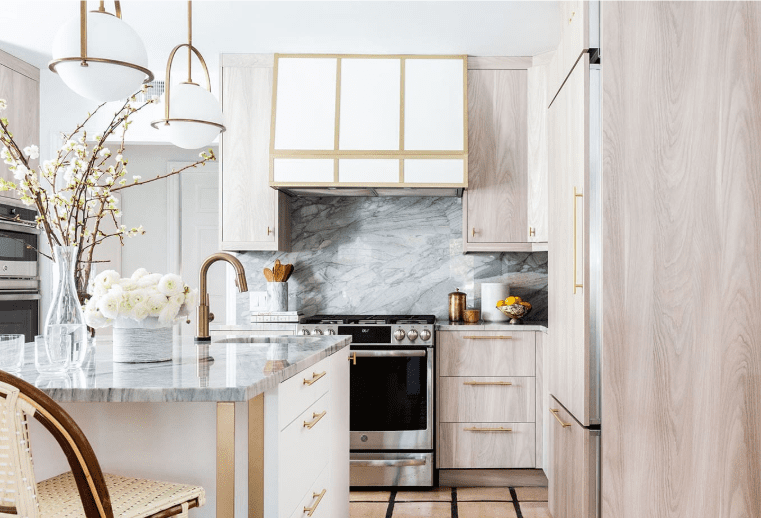
Grey quartzite has surged in popularity alongside the broader design world’s embrace of sophisticated neutrals. These stones offer a cooler, more contemporary feel than warm whites and creams, and they work particularly well in modern and transitional interiors where contrast and clean lines are part of the design language.
Ijen Quartzite
Ijen Quartzite is one of the more serene and distinctive grey quartzites available. Its soft blue-grey background is layered with subtle white and gold veining that creates a quiet, sophisticated movement across the surface. The interplay of cool and warm tones gives Ijen a depth that flat grey alternatives simply can’t replicate; it reads differently depending on the light and the finishes surrounding it.
It pairs beautifully with navy, sage, or charcoal cabinetry and complements both warm metal accents like brushed gold and cooler finishes like brushed nickel. For homeowners who want a grey countertop with genuine character and a hint of warmth woven in, Ijen consistently delivers.
Darker Grey Varieties
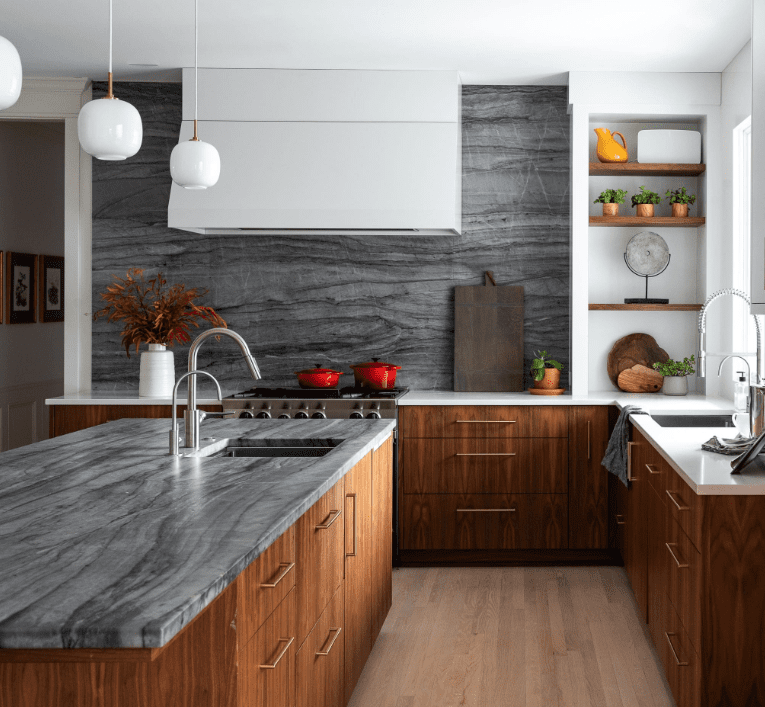
For a more dramatic interpretation of grey, deeper charcoal quartzites with bold white or silver veining create a striking high-contrast look that suits moody, contemporary interiors. These stones work particularly well on kitchen islands where the full scale of the slab’s movement can be appreciated, or as bathroom vanity tops where their intensity feels intentional and sophisticated.
Bold and Exotic Quartzite Colors
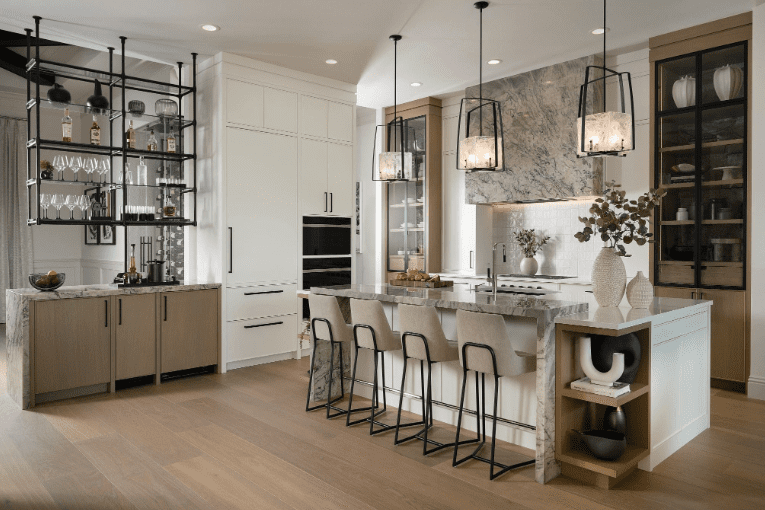
One of quartzite’s most exciting qualities is its range beyond the expected neutrals. Some of the most extraordinary quartzite slabs available feature colors and patterns that have no equivalent in the natural stone world, from vivid greens to striking blues to warm, rust-toned exotics.
Green Quartzite
Green quartzite has become one of the most talked-about options in contemporary kitchen design, driven by the broader trend toward nature-inspired interiors and earthy, organic color palettes. These stones range from soft sage and olive tones to deep forest greens, often with contrasting white or gold veining that adds visual complexity.
Green quartzite pairs particularly well with natural wood cabinetry, terracotta tile, and unlacquered brass hardware. On a kitchen island, a green quartzite slab can function as the design anchor for an entire room, eliminating the need for additional color or pattern elsewhere.
Blue Quartzite
Blue quartzite is among the rarest and most visually arresting options in the natural stone world. Ranging from pale, silvery blues to deep teal tones, these stones carry an unexpected quality that makes them genuinely unforgettable in a finished space. Like green quartzite, blue varieties tend to work best as statement pieces rather than full perimeter installations.
Warm and Rust-Toned Quartzites
Warm quartzites in gold, amber, caramel, and rust tones offer a richness that white and grey stones can’t replicate. These varieties complement the current design appetite for warmer, more grounded interiors and pair naturally with dark wood cabinetry, terracotta accents, and bronze or copper hardware.
Choosing the Right Quartzite Color for Your Space
With so many options available, narrowing down the right quartzite color comes down to a few practical considerations.
Cabinetry tone: White and cream quartzites work with virtually any cabinet color. Grey and cooler varieties complement blues, greens, and whites. Bold exotic stones tend to be most effective with neutral cabinetry that lets the stone take center stage.
Natural light: In brighter, south-facing spaces, darker and more dramatic quartzites can be used confidently. In rooms with limited natural light, lighter varieties help maintain a sense of openness.
Overall palette: Quartzite’s durability means you’re likely living with your choice for a very long time. Choosing a color that works with your broader palette, rather than a single trend, is always the smarter long-term decision.
The best way to make this decision is to see full slabs in person. Samples and photographs don’t capture the scale of the veining, the depth of the color, or the way the stone responds to changing light throughout the day.
The Right Color Finds You
There’s a certain point in the stone selection process that every homeowner eventually reaches, the moment a slab stops being a material option and starts being the obvious answer. It doesn’t always happen with the color you expected. Sometimes it’s a warm gold quartzite you never would have considered on paper. Sometimes it’s a green so deep and layered it reframes everything else in the room.
That moment is hard to manufacture through samples and photographs. It happens in person, in front of a full slab, when the scale of the veining and the depth of the color finally make sense together. At UMI Stone, we carry a carefully curated selection of premium quartzite in a wide range of colors and patterns, including the most popular quartzite varieties available today.
Visit a showroom near you and find the one that finds you.

