
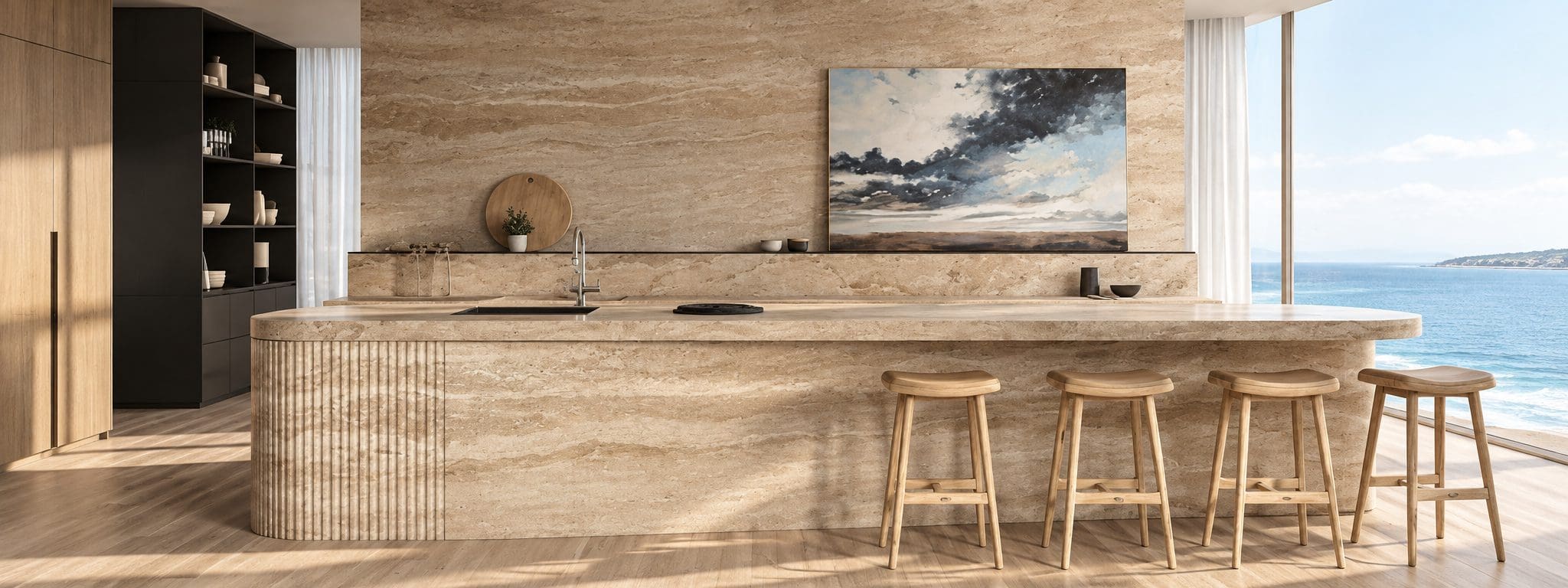
Beige travertine countertops are one of those materials that reward the homeowner who approaches them thoughtfully. The warm, earthy palette of ivory, cream, and gold that defines beige travertine is genuinely beautiful, but it doesn’t pair well with everything. The natural voids in the stone’s surface, its subtle veining, and the soft tonal variation that shifts from slab to slab give it a distinctive character that needs to be worked with intentionally rather than treated as a generic neutral.
The design challenge here is specificity. Beige travertine is warm, not cool. Its undertones lean toward gold and ivory, not grey and silver. Materials that fight those undertones (cool greys, stark whites without warmth, overly busy patterns) create a kitchen or bathroom that feels slightly unresolved. Materials that work with them create something that looks effortlessly cohesive.
This guide walks through every major pairing decision, room by room, so you can build a complete space around your travertine countertops with confidence.
Cabinet Pairings for Beige Travertine Countertops
Cabinets set the overall tone of the kitchen more than any other element, and the relationship between cabinet color and beige travertine determines whether the space feels classic, organic, modern, or dramatic.
White and Cream Shaker Cabinets
White and cream shaker cabinets are the most classic pairing for beige travertine, and they work because the warmth in the cabinet finish complements the warmth in the stone rather than fighting it. The key is choosing the right white. A stark, blue-toned bright white can make beige travertine look dingy by comparison. An off-white, linen, or warm cream cabinet (Benjamin Moore White Dove or similar) harmonizes naturally with the stone’s ivory and gold undertones.
This pairing suits traditional, transitional, and farmhouse kitchens particularly well. It’s clean and timeless, lets the travertine remain the focal material, and provides enough contrast to define the countertop clearly without creating tension.
Oak and Warm Wood Cabinets
Warm wood cabinetry in oak, white oak, or similar light-to-medium tones is arguably the strongest pairing for beige travertine available right now. The organic quality of the wood grain and the natural texture of the travertine speak the same design language; both materials are earthy, tactile, and authentic in a way that manufactured surfaces aren’t.
This pairing creates a tonal, layered kitchen that feels warm and grounded without being heavy. It suits organic modern, transitional, and Scandinavian-influenced interiors, and it photographs beautifully. If you’re drawn to a kitchen that feels natural and unpretentious, wood cabinetry with beige travertine is the direction.
Beige or Greige Flat-Panel Cabinets
Pairing beige travertine with beige or greige cabinetry creates a monochromatic, tone-on-tone kitchen that feels deliberately modern and calm. This approach requires some care (the tones need to be close enough to feel intentional rather than accidentally similar), but when executed well, it produces a sophisticated, enveloping aesthetic that’s particularly strong in contemporary and minimalist interiors.
The variation in the travertine’s natural texture and veining provides the visual interest in this scheme, which means the slab selection matters more here than in higher-contrast pairings. A travertine with clear movement and tonal variation reads more intentionally against a monochromatic cabinet than a very flat, uniform stone would.
Dark Espresso or Charcoal Cabinets
Dark cabinetry against beige travertine creates the highest contrast of any pairing in this guide, and it’s a compelling option for homeowners who want drama. Deep espresso, charcoal, or dark forest green cabinets set against warm beige stone creates a striking combination where the travertine’s warmth reads as luminous against the dark cabinet ground.
This pairing suits transitional and contemporary kitchens where visual impact is a design goal. The travertine does the warmth work; the dark cabinets provide the depth and anchoring. Hardware in unlacquered brass or aged bronze completes the palette with appropriate richness.
Backsplash Pairings for Beige Travertine Countertops
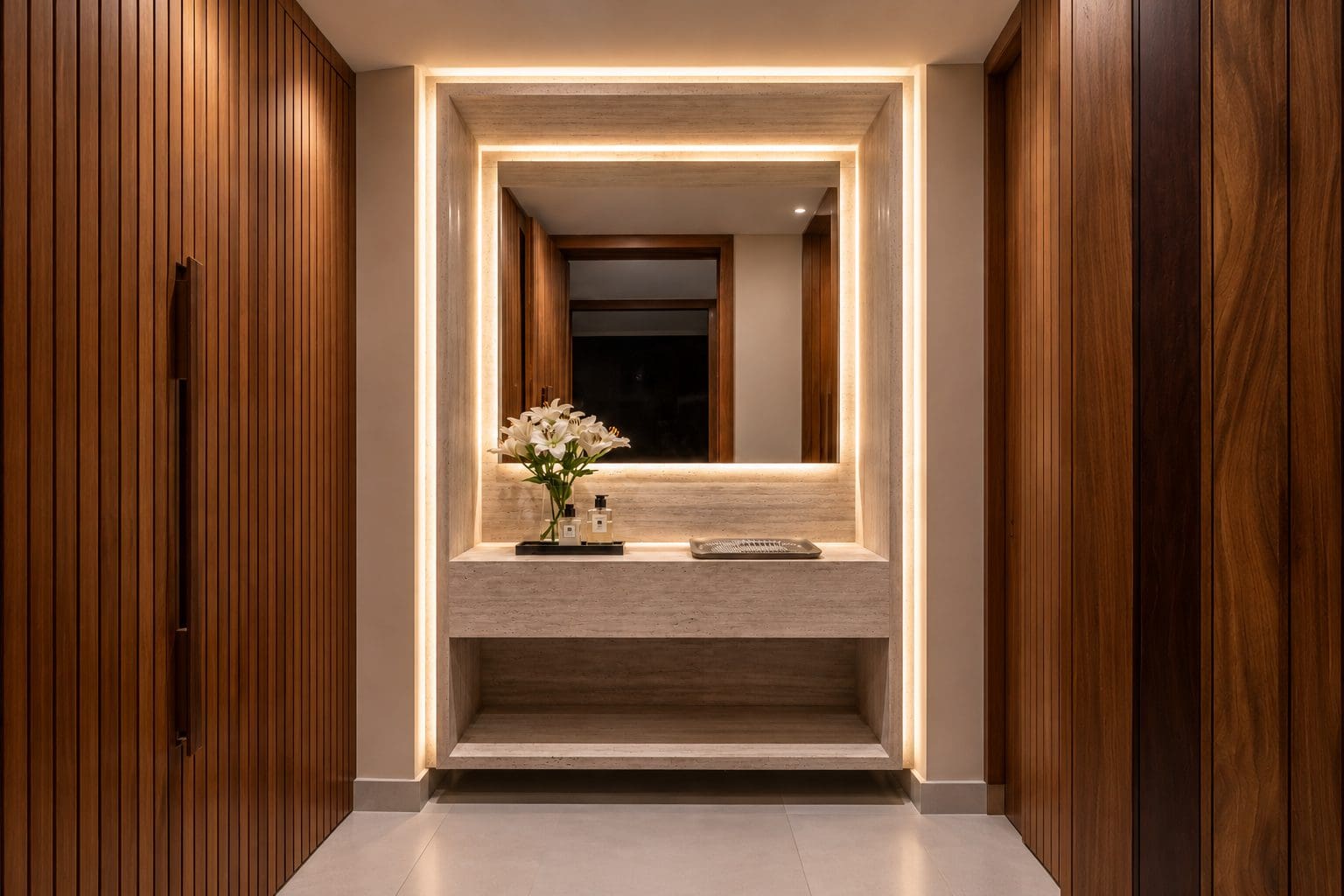 The backsplash sits between the countertop and the cabinets, making it a critical mediating element. With beige travertine, the most important rule is restraint: the countertop already has natural texture and variation, and a busy backsplash pattern competes rather than complements.
Travertine tile or mosaic is the most seamless option, creating a tone-on-tone flow from countertop to wall that gives the kitchen a cohesive, old-world quality. This approach works beautifully in Mediterranean, farmhouse, and traditional kitchens where material consistency reinforces the overall design intent. For inspiration on how natural stone backsplashes work in kitchen environments, UMI Stone’s editorial coverage is a useful reference.
White subway tile remains one of the most reliable backsplash choices with beige travertine. A warm white subway tile in a classic brick lay gives the travertine room to lead while providing a clean, defined backdrop. The key is selecting a subway tile with warm undertones rather than a cool, bright white that creates color tension with the stone.
Natural stone tile in a coordinating neutral, soft limestone, honed marble in cream, or a stone-look porcelain, creates material coherence without the strict tone-on-tone approach. This option works well when the cabinet color introduces enough visual variety that the backsplash doesn’t need to do additional design work.
What to avoid: highly patterned tile, bold color, or anything with cool grey or blue tones as the dominant note. Beige travertine’s warmth can easily be undermined by a backsplash that introduces competing color or pattern.
Floor Pairings for Beige Travertine Countertops
The floor anchors the room and determines how grounded or open the overall palette feels. Beige travertine at the countertop level works with several floor directions.
Travertine tile floors create a fully cohesive material story, particularly in Mediterranean and traditional kitchens where the stone wraps from floor to countertop. This is a commitment to a singular material language, and it works best when the design intent is clear and consistent throughout the space.
Light wood or oak floors are one of the most popular and successful pairings with beige travertine countertops. The warmth of both materials reinforces each other, and the contrast between the smooth wood grain and the stone’s natural texture creates a layered quality that feels organic and considered. This pairing is particularly strong in transitional and organic modern kitchens.
Dark hardwood floors provide the greatest contrast and anchor the space with visual weight that lighter floors don’t deliver. Against dark floors, beige travertine countertops read as warm and luminous, giving the kitchen a sophisticated layering of light and dark that works especially well with white or cream cabinetry.
Neutral porcelain tile in large-format grey or warm greige tones is a practical and design-forward floor option that complements beige travertine without competing. The scale of the tile format matters: larger tiles create a more seamless, contemporary backdrop, while smaller formats introduce more visual texture to the floor plane.
Hardware and Fixture Guidance
Hardware is a finishing detail that either reinforces the palette or creates subtle discord. With beige travertine, the warm undertones of the stone guide the selection clearly.
Oil-rubbed bronze is one of the most natural companions for beige travertine. Its dark, warm patina complements the stone’s earthy tones and suits traditional, farmhouse, and Mediterranean kitchen aesthetics particularly well.
Unlacquered brass brings warmth and richness to the palette without the darkness of bronze. It reads as luxurious alongside beige travertine and works well in transitional and organic modern kitchens where the design intent is elevated but not formal.
Brushed nickel offers a cleaner, more restrained alternative for homeowners who want a transitional feel without leaning too warm. It won’t fight the travertine, but it won’t reinforce its warmth the way bronze or brass will.
Matte black creates the strongest contrast in the hardware category. Used with dark cabinetry and beige travertine, it adds a contemporary edge that keeps the warm stone from feeling too traditional.
Design Styles That Suit Beige Travertine Countertops
Beige travertine is a versatile material within the warm, natural end of the design spectrum, but it has a clear set of styles where it feels most at home.
Traditional and transitional kitchens are the most natural fit, where the stone’s historical associations with fine craftsmanship and its warm, refined palette suit the design language.
Farmhouse kitchens benefit from trav
ertine’s earthy, textural quality, particularly with shaker cabinetry, apron-front sinks, and open shelving.
Mediterranean and Tuscan-inspired interiors are where travertine feels most deeply at home. The material’s architectural history in these traditions gives spaces designed in these styles an authenticity that’s hard to replicate with anything else.
Organic modern and earthy interiors are where beige travertine is gaining significant contemporary traction. Paired with warm wood, natural fiber textiles, and minimal hardware, it delivers exactly the grounded, authentic quality that this design movement prioritizes.
A Note on Care and Slab Selection
Beige travertine countertops require sealing upon installation and periodic resealing to maintain stain resistance. For countertop use specifically, filled travertine (where the stone’s natural voids have been filled with grout or resin) is strongly recommended. Unfilled travertine works well for flooring and backsplashes, but the open voids in an unfilled slab are difficult to keep clean in a food-preparation environment.
Because travertine varies naturally from slab to slab, viewing the actual slab you’re purchasing is important. Photographs and small samples don’t reliably capture how the stone reads at full scale. The bathroom travertine countertop and kitchen countertop guides at UMI Stone are useful references for seeing how the material performs across different applications. For a complete look at the advantages and considerations of travertine, the travertine countertops pros and cons guide is worth reading before your final decision.
Explore Travertine at UMI Stone
At UMI Stone, we carry a curated selection of premium travertine surfaces alongside the full range of natural stone options available for kitchens and bathrooms. Our team can help you assess undertones, compare slab options, and build a complete pairing plan around your travertine selection.
Visit a showroom near you to see the stone in person, or contact us today to start the conversation.

