
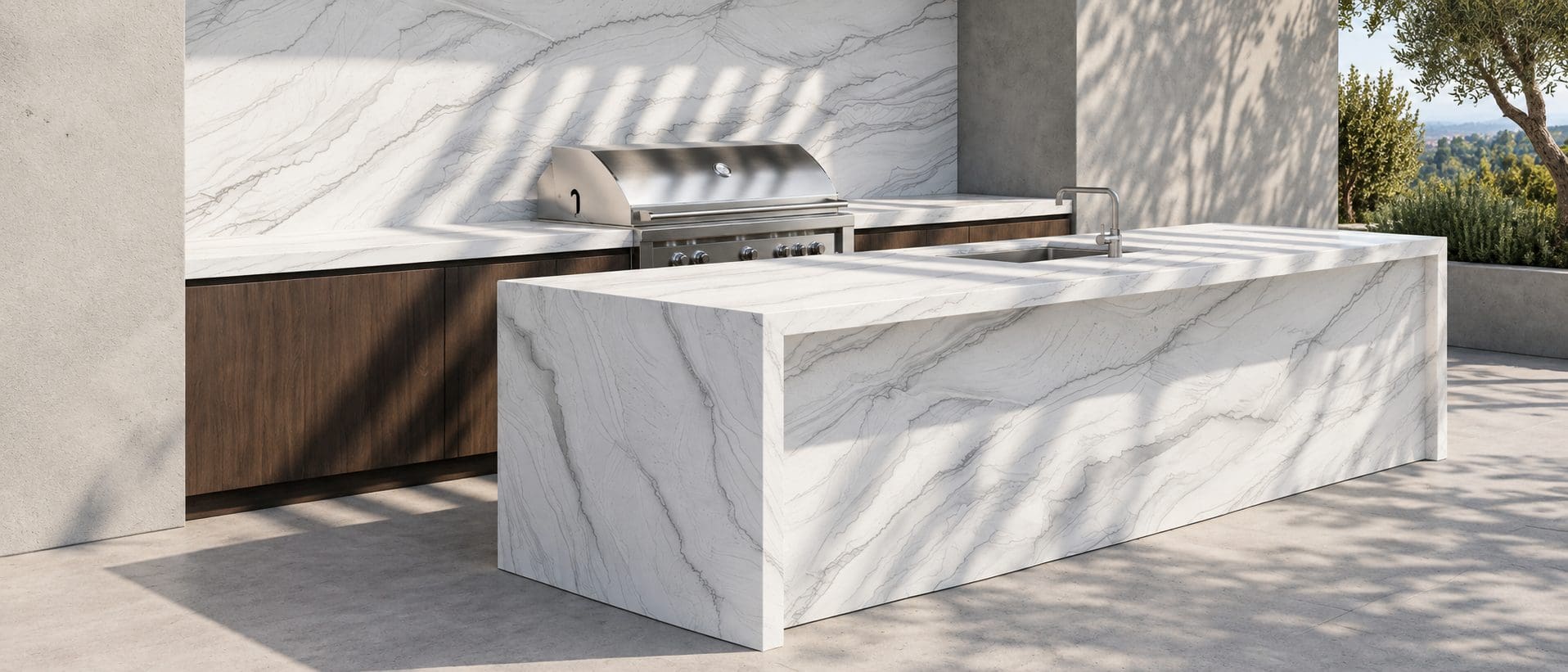
There are exterior materials that look good when a house is new and others that look better as time passes. Natural stone belongs firmly in the second category. A stone facade doesn’t just hold up against the elements, it deepens in character, accumulates the kind of weathered dignity that synthetic materials can only approximate, and signals something about the permanence and quality of the home behind it.
Natural stone has been used for exterior construction for thousands of years, and its continued presence in high-end residential and commercial architecture isn’t nostalgia. It’s a recognition that no manufactured cladding product has yet matched stone’s combination of durability, visual depth, and long-term value. For homeowners, builders, and designers seeking an exterior material that performs as well as it looks, natural stone remains the benchmark.
This guide covers the best stone types for house exteriors, how to think about climate performance and format options, and how different stones translate across a range of architectural styles and applications.
Why Natural Stone Endures as an Exterior Material
The case for natural stone on a house exterior begins with durability and ends with character. Between those two points lies everything else that makes it worth the investment.
Stone is one of the most weather-resistant materials available for exterior use. Properly selected and installed, it resists UV degradation, moisture infiltration, temperature extremes, and physical impact far better than most cladding alternatives. A well-maintained stone facade can last the lifetime of the building — and beyond.
Beyond performance, natural stone gives every home a genuinely unique exterior. No two slabs are identical, which means no two stone-clad homes look exactly alike. The natural variation in color, veining, and texture that makes each stone special indoors becomes a defining feature of the home’s exterior identity. For homeowners investing in curb appeal and long-term resale value, that distinctiveness carries real weight.
The full range of natural stone options at UMI Stone reflects how much variety exists within this single material category, from understated limestone to dramatic quartzite with bold veining.
Best Types of Natural Stone for House Exteriors
Different stones bring different strengths to an exterior application. Here’s how the most commonly specified options compare.
Granite
Granite is the hardest and most weather-resistant natural stone used for exterior cladding. Its igneous origin (formed from cooled magma under intense pressure) gives it a density and structural integrity that handles freeze-thaw cycles, rain, wind, and UV exposure with minimal maintenance. It’s one of the few natural stones that can be used confidently in virtually any climate without significant sealing demands.
Granite’s palette ranges from near-black to warm beige to dramatic greens and blues, with a wide range of textures available depending on finish selection. For exterior applications, flamed or bush-hammered finishes provide excellent traction and weather resistance while giving the stone a deliberately rugged, architectural quality.
Quartzite
Quartzite has emerged as one of the most compelling exterior stone options in contemporary architecture, and for good reason. Its hardness rivals granite while its aesthetic, with marble-like veining and a refined, sophisticated character, is more closely associated with luxury interiors than tough exterior cladding. That combination is precisely what makes it so appealing for high-end residential exteriors.
Quartzite is exceptionally UV stable, containing no synthetic resins that can yellow or degrade in direct sunlight. Its density and low porosity make it a strong performer in most climate conditions, and its range of colors, from bright whites to deep greys and dramatic greens, gives it a design range that few exterior stones match.
Limestone
Limestone brings a refined, almost sculptural quality to exterior applications that harder stones can’t fully replicate. Its soft, warm tones and relatively smooth surface give it a traditional, European character that suits classical, transitional, and formal architectural styles particularly well.
Limestone is more porous than granite or quartzite and benefits from sealing in exterior applications, particularly in wet or polluted environments where acid rain can cause surface etching over time. In dry climates and covered applications, it performs with considerably less maintenance demand. Its versatility across architectural styles and its warm palette make it one of the most specified natural stones for upscale residential facades.
Travertine
Travertine’s warm cream, ivory, and gold tones integrate naturally into exterior environments, particularly in hot, dry climates where its earthy character and heat tolerance are genuine advantages. It has been used in exterior construction for millennia and remains one of the most recognizable facade materials in Mediterranean and Tuscan-inspired architecture.
In freeze-thaw climates, travertine requires careful consideration. Its natural porosity means moisture infiltration and freeze-thaw cycling can cause damage over time without consistent, high-quality sealing. In covered or sheltered exterior applications, these risks are considerably reduced. For exterior use in challenging climates, honed or tumbled finishes are preferred over polished, which can become slippery when wet.
Slate
Slate offers a layered, textured character that sets it apart from all other natural stone exterior options. Its distinctly stratified surface and cool, dark palette (deep charcoals, blue-greys, and near-blacks) make it a natural fit for contemporary, craftsman, and modern farmhouse architectural styles where texture and visual contrast are design priorities.
Slate is dense and weather-resistant, handling wet climates and moderate freeze-thaw conditions better than more porous stones. Its natural cleft surface provides excellent grip and drains water effectively, making it a practical as well as beautiful choice for exterior cladding.
Gray Natural Stone for Exterior Applications
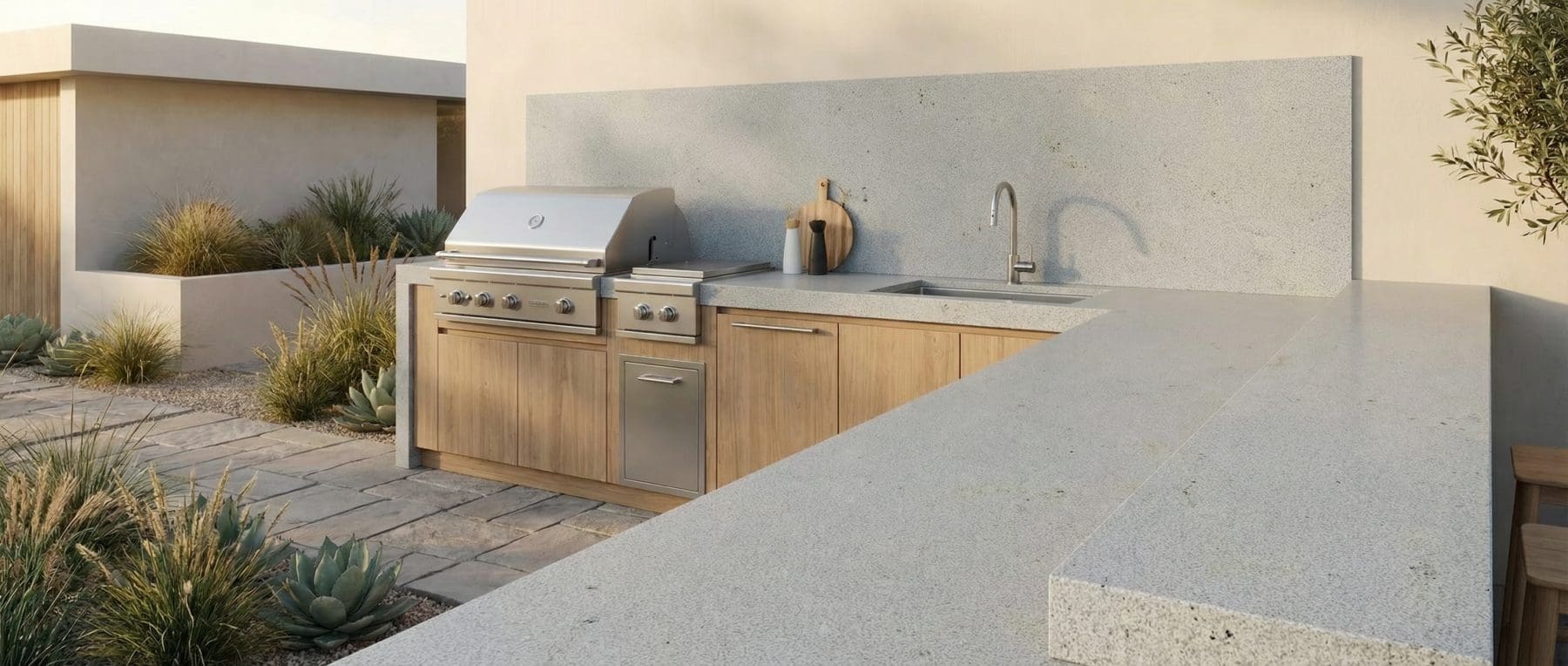
Kashmir Indoor/Outdoor Granite
Gray is consistently one of the most requested exterior stone tones, and it’s easy to understand why. Gray natural stone for house exteriors works across a remarkable range of architectural styles, from sleek contemporary to traditional craftsman, without forcing a commitment to a single aesthetic direction. It reads as sophisticated without being stark, and its neutral character means it complements virtually any roof color, window trim, and landscaping palette.
Quartzite and granite are the strongest performers in gray for exterior use. Both offer the density and weather resistance that exterior applications demand, and both are available in a wide spectrum of grey tones, from soft silver-grey with subtle veining to deep charcoal with dramatic movement. For homeowners specifically seeking gray natural stone for the exterior of their house, these two materials cover the full range of what the palette can do.
Climate Considerations
Climate is one of the most consequential factors in exterior stone selection, and getting it right matters more outdoors than anywhere else.
Freeze-thaw climates favor denser, lower-porosity stones. Granite and quartzite are the most reliable choices where temperature swings and moisture infiltration are regular realities. Limestone and travertine can perform well with rigorous sealing discipline, but the risk of freeze-thaw damage is meaningfully higher.
Hot and dry climates suit a wider range of stones. Travertine and limestone perform particularly well in warm, arid environments where moisture infiltration is less of a concern. Quartzite and granite are also excellent choices for these climates.
Coastal and salt-air environments require low-porosity stone that resists moisture infiltration and salt crystallization within the stone’s pores. Granite and quartzite are the most dependable options. Limestone and travertine can work in coastal settings with very consistent maintenance, but the stakes of neglecting sealing are higher.
For a full overview of how natural stone performs in exterior environments, the outdoor materials guide at UMI Stone covers performance characteristics in detail.
Full Masonry vs. Stone Veneer Cladding
Not all exterior stone applications involve the same installation format, and understanding the difference between full masonry and stone veneer helps homeowners and builders make the right structural and budgetary decisions.
Full masonry uses solid stone blocks or thick slabs as the primary structural or cladding element, with significant weight and depth. It’s the most durable and permanent option, with a visual depth and authenticity that thinner applications can’t fully replicate. Full masonry is most common in high-end new construction where the structural system is designed to accommodate its weight.
Stone veneer cladding uses thinner stone panels applied to an existing structural substrate. It’s lighter, more flexible, and more accessible for renovation projects where adding full masonry weight isn’t structurally or economically practical. Quality natural stone veneer, properly installed, delivers a highly authentic appearance and meaningful durability.
For most residential renovation and accent applications, stone veneer is the practical choice. For new construction where stone is a primary design intention, full masonry investment pays dividends in longevity and authenticity.
Design Applications for Exterior Natural Stone
Natural stone’s design applications on a house exterior extend well beyond full facades, and some of its most compelling uses are targeted and strategic rather than comprehensive.
Full facades make the strongest architectural statement, wrapping the entire exterior in a continuous stone surface that defines the home’s character from every angle. This approach works best when the stone is selected to complement the home’s architectural style and the surrounding landscape.
Lower-level accents use stone on the ground floor or base of the home while pairing it with other materials above, creating a visual anchor that grounds the structure. This is one of the most common and successful ways to introduce natural stone into an existing home’s exterior without full cladding.
Entry surrounds frame the front door and entry experience with stone, creating an immediate sense of quality and permanence at the home’s primary arrival point. Even a modest quantity of well-chosen stone at the entry transforms the curb appeal of a home.
Chimney wraps are one of the most visually effective accent applications. A stone-clad chimney, particularly in quartzite or granite with bold movement, becomes a sculptural feature that adds architectural interest to the roofline.
Retaining walls benefit from natural stone’s weight, durability, and natural drainage characteristics. Properly installed stone retaining walls are as functional as they are beautiful, and they integrate naturally into landscaping in a way that manufactured alternatives rarely do.
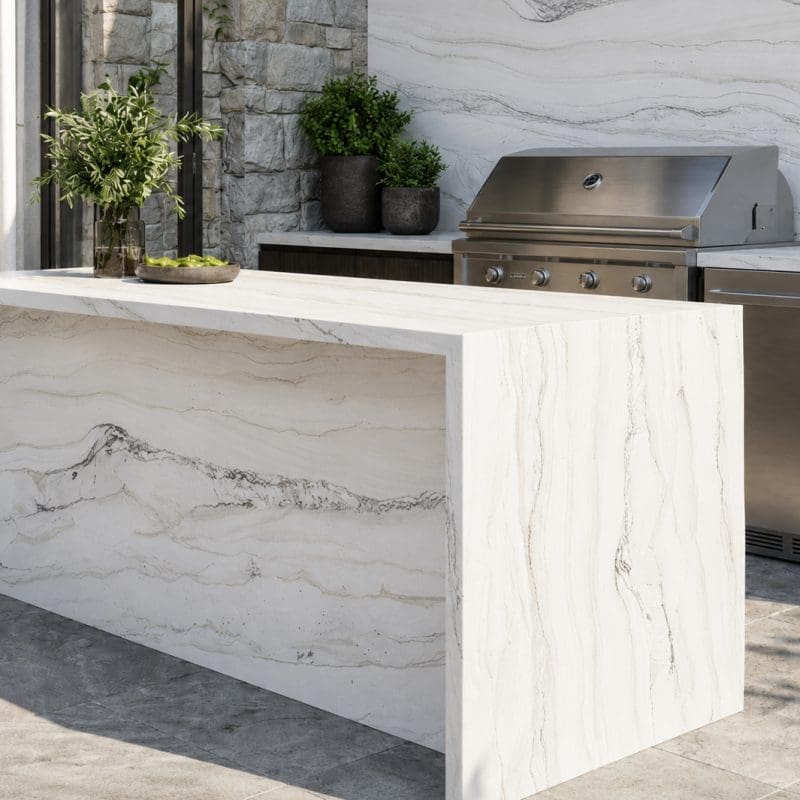
Outdoor kitchen surrounds are a natural extension of the interior stone selection conversation, connecting the home’s exterior material language to the outdoor living space. For inspiration on how natural stone performs in outdoor kitchen environments specifically, the outdoor kitchen countertops guide at UMI Stone is a useful starting point.
Understanding the Cost of Natural Stone for House Exteriors
Natural stone is a premium exterior material, and the investment reflects that. Costs vary widely depending on the stone type selected, the installation format, the complexity of the facade, and regional factors including material availability and labor rates.
Granite and quartzite tend to sit at the higher end of the natural stone price range for exterior applications, reflecting their hardness and the skill required to cut and install them. Limestone and travertine are often more accessible price points while still delivering the authenticity and performance that natural stone provides.
What’s worth keeping in mind is the long-term math. Natural stone exteriors require minimal replacement, minimal repainting, and minimal upkeep compared to wood, fiber cement, or synthetic alternatives. The initial investment is higher; the lifetime cost of ownership is often lower.
Explore Natural Stone for Exteriors at UMI Stone
At UMI Stone, we carry a curated selection of premium natural stone suited to both interior and exterior applications, including granite, quartzite, limestone, and travertine in a range of colors, finishes, and formats. Our team can help you identify the right stone for your climate, architectural style, and project scope.
Visit a showroom near you to see full slabs in person, or contact us today to start the conversation.
Frequently Asked Questions
What is the best natural stone for house exteriors?
The best exterior stone depends on your climate, architectural style, and budget. Granite and quartzite are the most durable and weather-resistant options for most climates. Limestone and travertine offer warmer aesthetics and work well in temperate and dry climates. Slate suits contemporary and craftsman styles with excellent weather resistance in wet conditions.
Is natural stone for house exteriors expensive?
Natural stone is a premium exterior material with costs that vary significantly by stone type, format, and region. While the upfront investment is higher than many alternatives, the long-term durability and minimal maintenance requirements often make it a competitive lifetime value proposition.
What natural stone works best in freeze-thaw climates?
Granite and quartzite are the most reliable choices for freeze-thaw climates due to their density and low porosity. Limestone and travertine carry more risk in these conditions and require rigorous sealing discipline to perform well.
Can quartzite be used on house exteriors?
Yes. Quartzite is one of the strongest performers for exterior use, combining exceptional hardness, UV stability, and a refined aesthetic that works across contemporary and traditional architectural styles.
What is gray natural stone for house exteriors?
Gray is one of the most popular exterior stone tones. Granite and quartzite are the strongest gray options for exterior use, available in a wide spectrum from soft silver-grey to deep charcoal, with the density and weather resistance that outdoor applications require.
What is the difference between full masonry and stone veneer for exteriors?
Full masonry uses solid stone as the primary structural or cladding element, offering maximum durability and visual depth. Stone veneer uses thinner panels applied to an existing substrate, making it lighter, more flexible, and more practical for renovations. Both can deliver a highly authentic natural stone appearance.

