
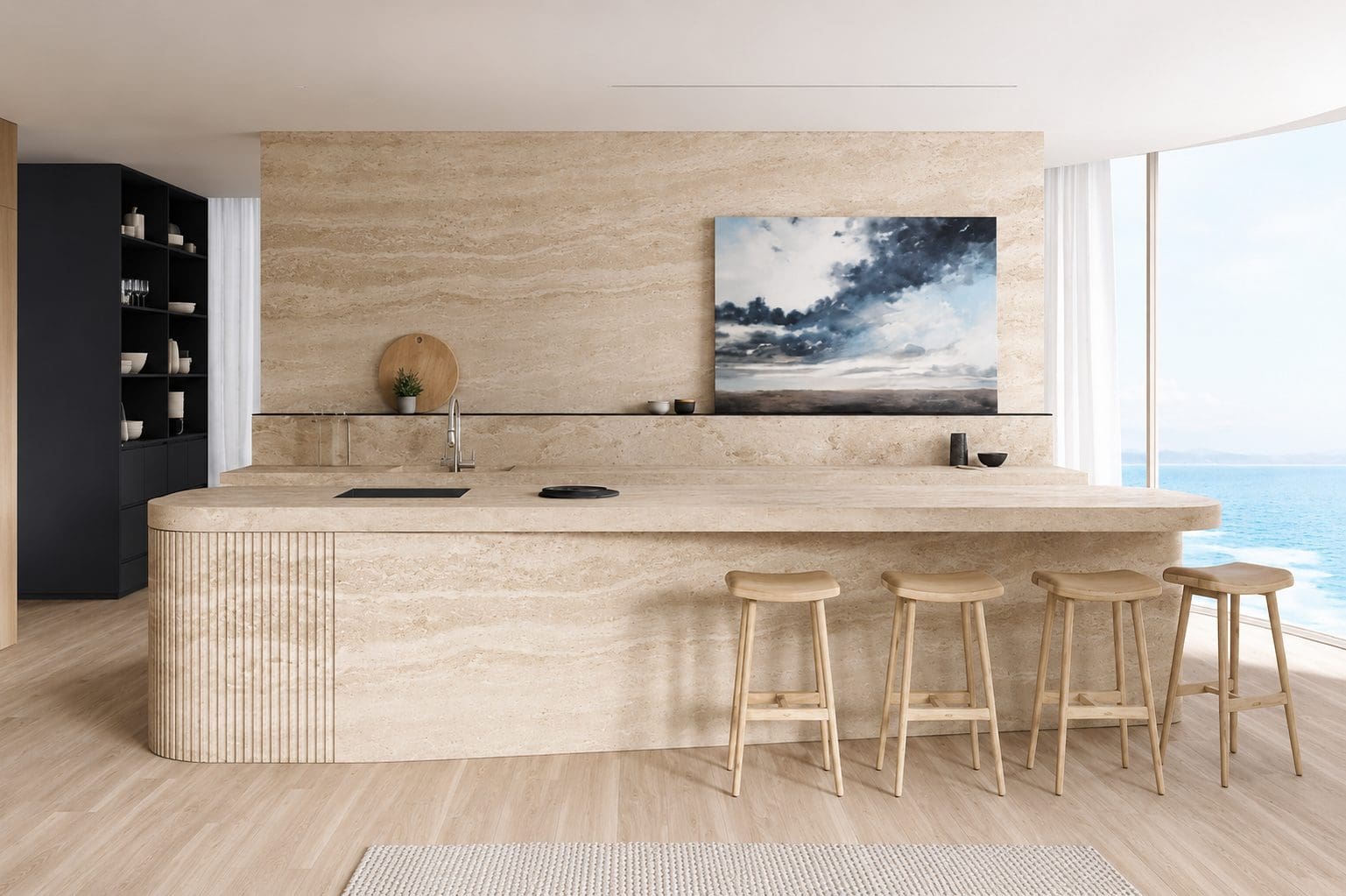
Travertine has a way of making a kitchen feel grounded and unhurried. Its warm, earthy tones and naturally textured surface bring an organic richness that more uniform materials simply can’t replicate. But beauty alone doesn’t make a countertop material worth choosing, and travertine comes with a specific set of performance characteristics that every homeowner should understand before committing.
So is travertine good for kitchen countertops? The honest answer is that it depends on how you cook, how you clean, and what you’re willing to do to maintain it. This article breaks down the full picture so you can make a confident decision.
What Makes Travertine Appealing in a Kitchen
Travertine is a sedimentary limestone formed around natural hot springs, where mineral-rich water deposits calcium carbonate over time. The result is a stone with warm cream, ivory, gold, and walnut tones that no manufactured surface has successfully replicated. Its naturally pitted surface, filled during fabrication with grout or resin, gives it a tactile quality and visual depth that set it apart from harder, more uniform stones.
For a deeper look at the material itself, our Travertine Countertops Pros and Cons: A Complete Buyer’s Guide covers everything you need to know before selecting travertine for any application.
In kitchens, travertine works particularly well in spaces that lean toward the warm, organic, and collected. Mediterranean, Tuscan, farmhouse, and transitional kitchens are natural fits. It pairs beautifully with warm wood cabinetry, terracotta tile, oil-rubbed bronze hardware, and natural fiber textiles. In the right context, travertine doesn’t just work in a kitchen, it defines it.
The Performance Reality: What You Need to Know
The appeal of travertine is clear. The performance considerations require a more careful look.
Porosity and Staining Risk
Travertine’s most significant limitation as a kitchen countertop is its porosity. Like marble, it’s a calcium-based stone with an open structure that readily absorbs liquids if left unsealed or if the sealant degrades. Wine, coffee, oil, and acidic food spills all pose staining risks, and in a kitchen where these substances are a daily reality, the margin for error is narrower than with harder, less porous stones.
Proper sealing upon installation provides meaningful protection, but it isn’t a permanent solution. Sealant wears down over time and needs to be reapplied regularly, typically every one to two years depending on use. Homeowners who are diligent about this maintenance step can manage travertine’s porosity effectively. Those who prefer a set-and-forget surface will find it more demanding than they’d like.
Etching from Acidic Substances
Beyond staining, travertine is vulnerable to etching, a chemical reaction that occurs when acidic substances come into contact with the calcium in the stone. Lemon juice, vinegar, tomatoes, wine, and many common cleaning products can all leave dull marks on a polished or honed travertine surface. In a kitchen where these ingredients are used regularly, etching is a real and ongoing consideration.
This doesn’t disqualify travertine from kitchen use, but it does mean paying attention to how the surface is used and cleaned day to day. Cutting boards, prompt spill cleanup, and pH-neutral cleaners are non-negotiables.
Softness and Scratching
Travertine is softer than granite or quartzite, which makes it more susceptible to scratching from knives, cast iron cookware, and other abrasive objects. Over time, a polished travertine surface in an active kitchen will show wear. A honed or brushed finish is generally more forgiving in this respect, as it already has a matte quality that makes minor surface wear less visible.
Heat Resistance
On the positive side, travertine handles heat reasonably well as a natural stone. It won’t scorch or blister the way some engineered surfaces might. That said, trivets are still a sensible habit for protecting the sealant and avoiding thermal shock on particularly hot cookware.
Where Travertine Works Best in a Kitchen
Understanding where travertine performs well within a kitchen layout helps homeowners use the material strategically rather than blanket-applying it everywhere.
Lower-traffic Prep Areas
Travertine holds up better in areas that see less direct cooking activity. A perimeter countertop used primarily for food prep and storage is a more manageable application than a surface directly adjacent to the cooktop.
Kitchen Islands Used for Gathering
Islands that function more as social hubs than heavy prep surfaces are an excellent application for travertine. The lower daily exposure to acidic spills and heavy use makes the maintenance demands more manageable, and the island’s visual prominence lets the stone’s beauty take center stage.
Paired with More Durable Materials
Some homeowners use travertine selectively alongside a harder, lower-maintenance stone on high-use sections. Pairing travertine on a decorative island or breakfast bar with granite or quartzite on the primary work surface is a practical approach that gets the aesthetic benefit of travertine without relying on it where performance pressure is highest.
How Travertine Compares to Other Natural Stone Options
Travertine shares its calcium-based composition with marble, and the two materials behave similarly in terms of porosity, etching risk, and maintenance demands. Marble, however, offers more dramatic veining and a wider range of high-contrast color options. Travertine’s appeal is more textural and tonal than visual impact.
Granite and quartzite are harder, less porous, and more resistant to both etching and staining. They demand less from their owners in a busy kitchen environment and offer a longer maintenance-free window between sealing treatments. For homeowners who prioritize durability and low maintenance, these materials are stronger kitchen countertop choices than travertine.
That said, neither granite nor quartzite offers the warm, earthy character that travertine brings to a kitchen. If that aesthetic is what you’re after, no amount of durability comparison changes the equation. The full range of natural stone options at UMI Stone is worth exploring to understand how different materials compare side by side.
For a more structured comparison of how different stones perform in kitchen environments, the best stone for kitchen countertops guide is a useful reference.
So, Is Travertine Good for Kitchen Countertops?
Yes, with the right expectations and a commitment to proper care. Travertine rewards homeowners who appreciate its natural character, are willing to maintain it thoughtfully, and understand that a surface developing patina over time is a feature rather than a failure.
It’s not the right choice for homeowners who want zero-maintenance performance or who cook heavily with acidic ingredients without much patience for surface care. For those homeowners, a harder natural stone or engineered quartz will serve daily life better.
But for the homeowner who values warmth, authenticity, and the kind of beauty that only nature produces, travertine in the right kitchen context is genuinely hard to surpass.
Explore Travertine at UMI Stone
At UMI Stone, we carry a curated selection of premium travertine surfaces in a range of finishes and tones. Our team can walk you through the material’s performance characteristics, help you compare it against other natural stone options, and find the right fit for your kitchen and lifestyle.
Visit a showroom near you or contact us today to start exploring.
Frequently Asked Questions
Is travertine good for kitchen countertops?
Travertine can be a great kitchen countertop choice for the right homeowner. It offers natural warmth, heat resistance, and a distinctive character that no other material replicates. It does require regular sealing and careful maintenance, so it works best for homeowners who are willing to give it the care it needs.
Does travertine stain easily?
Travertine is naturally porous, which means it can absorb liquids and stain if spills aren’t cleaned up promptly or if the sealant has degraded. Proper sealing upon installation and resealing every one to two years significantly reduces staining risk.
Does travertine need to be sealed for kitchen use?
Yes. Sealing is essential for travertine in a kitchen environment. It should be sealed upon installation and resealed regularly depending on use. Without a proper sealant, travertine is vulnerable to staining and etching from everyday kitchen substances.
Can travertine be etched by acidic foods?
Yes. Like marble, travertine is a calcium-based stone that reacts to acidic substances like lemon juice, vinegar, tomatoes, and wine. This reaction can leave dull marks on the surface. Using cutting boards, cleaning spills promptly, and avoiding acidic cleaners helps minimize etching over time.
How does travertine compare to granite for kitchen countertops?
Granite is harder, less porous, and more resistant to staining and etching than travertine. It requires less frequent sealing and holds up better in high-use kitchen environments. Travertine offers a warmer, more organic aesthetic that granite can’t replicate, but granite is generally the more practical choice for busy kitchens.
What finish is best for travertine kitchen countertops?
Honed or brushed finishes tend to perform better in kitchens than polished finishes. They show fewer scratches and etching marks over time and have a more forgiving surface quality that suits everyday kitchen use.
How long does travertine last as a kitchen countertop?
With proper sealing and care, travertine countertops can last decades. The stone itself is highly durable; it’s the surface finish and sealant that require ongoing attention. Professional refinishing can restore a travertine surface if it develops significant wear or etching over time.

