
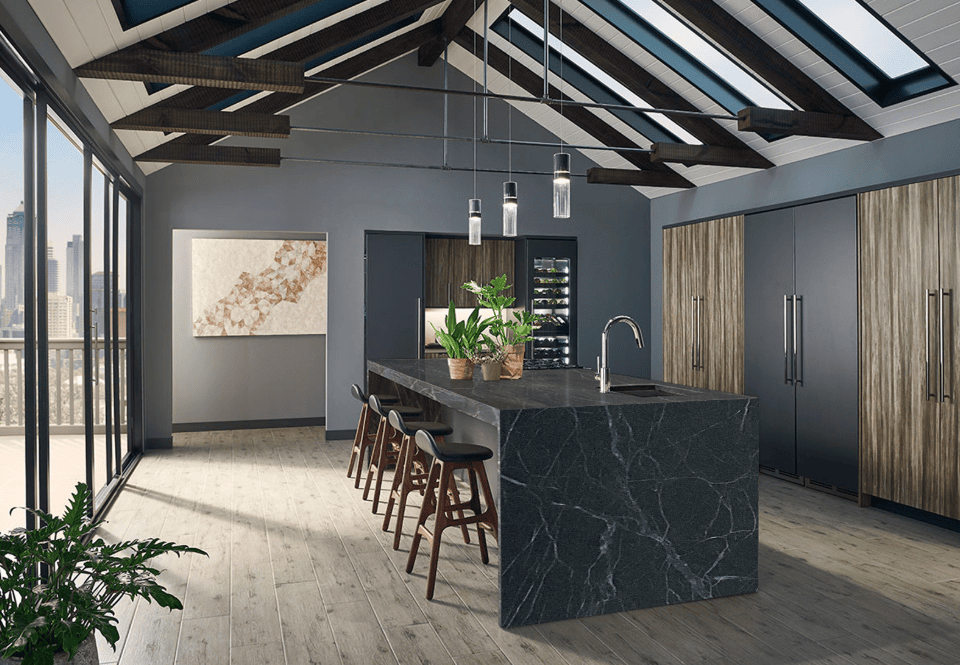
Soapstone is one of those materials that tends to inspire strong feelings. Homeowners who have it love it with an almost evangelical loyalty. Those who’ve never lived with it often overlook it entirely in favor of more familiar options like granite or quartz. The truth is that soapstone occupies a genuinely unique position in the natural stone world, and understanding what it actually offers, and what it demands in return, is the best way to decide whether it belongs in your home.
This guide walks through the soapstone countertops pros and cons honestly, so you can make a confident decision without surprises down the road.
What Is Soapstone?
Soapstone is a metamorphic rock composed primarily of talc, the softest mineral on the Mohs scale, along with varying amounts of chlorite, magnesite, and other minerals. The higher the talc content, the softer and more tactile the stone. Architectural-grade soapstone used for countertops typically contains less talc than the softer varieties used for carving, giving it better durability while retaining the smooth, matte surface feel the material is known for.
It’s been used in kitchens, laboratories, and fireplaces for centuries. Old farmhouse sinks, antique wood-burning stoves, and science lab countertops have all traditionally been made from soapstone, which gives you a sense of the material’s range and longevity.
Today, soapstone countertops are experiencing a resurgence in both traditional and contemporary interiors, valued for their understated elegance, natural performance characteristics, and the patina they develop over time. Explore the full range of soapstone countertop design possibilities to see how the material performs across different interior styles.
The Pros of Soapstone Countertops
Soapstone has some genuinely compelling advantages that set it apart from most natural stone alternatives. Here’s what makes it worth a serious look.
Naturally Non-Porous
One of soapstone’s most practical advantages is that it’s naturally non-porous, without any sealing required. Unlike granite, marble, or quartzite, which need periodic sealing to prevent staining, soapstone’s dense composition resists liquid absorption on its own. Spills sit on the surface rather than soaking in, which makes it one of the most hygienic natural stone surfaces available for food preparation areas.
This is a significant distinction from most natural stones, and it’s one of the primary reasons soapstone has historically been used in laboratory settings where chemical resistance and sanitation matter.
Exceptional Heat Resistance
Soapstone handles heat better than virtually any other countertop material, natural or engineered. You can set a hot pot directly on the surface without fear of scorching, cracking, or discoloration. The stone has been used as a heat sink and thermal mass in wood-burning stoves and fireplaces for generations, which speaks to just how well it manages extreme temperatures.
For avid cooks who spend serious time at the stove, this quality is genuinely liberating. No trivets, no paranoia, no surface damage from a moment of inattention.
Striking, Distinctive Appearance
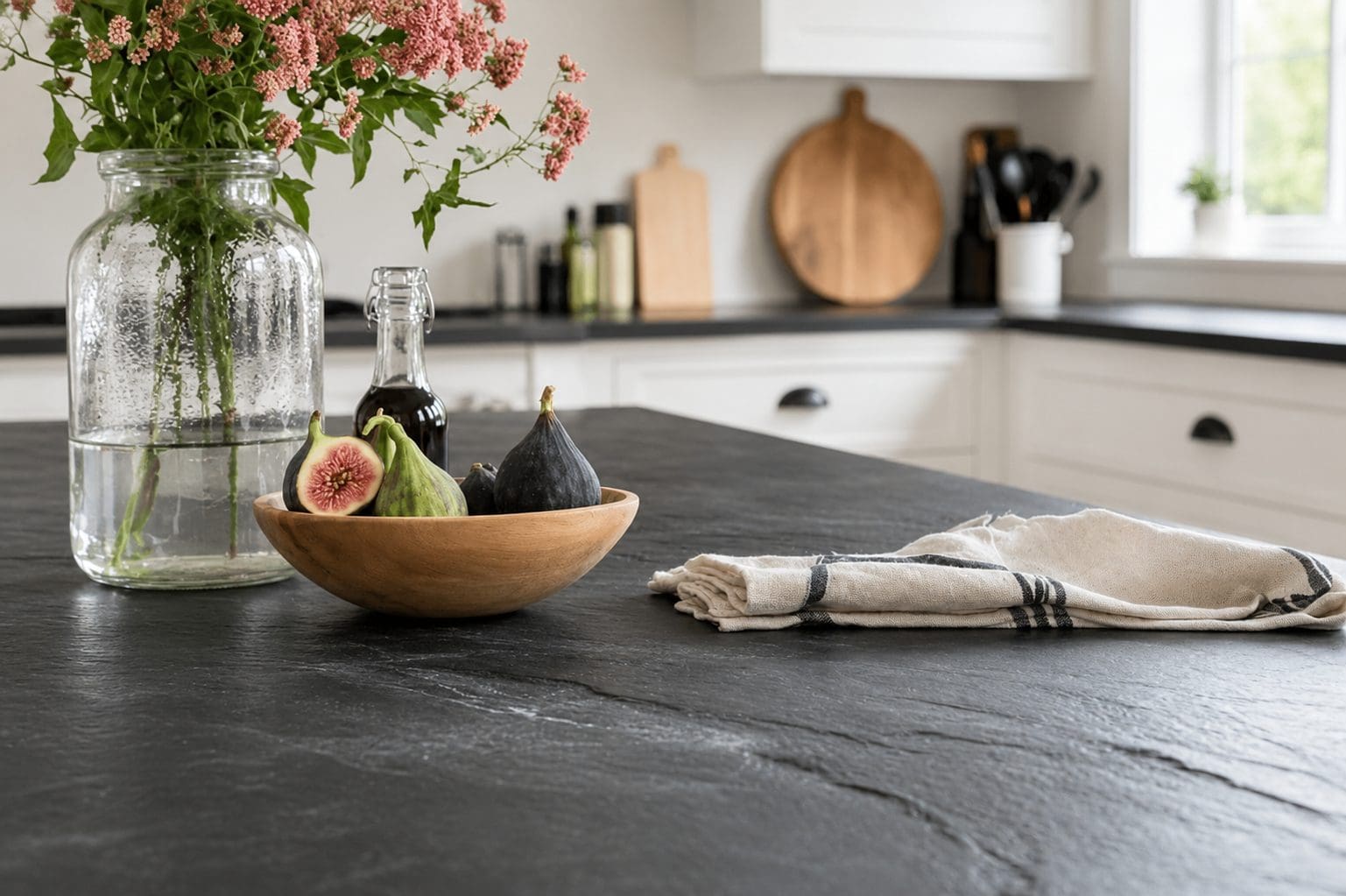
Soapstone has a look that no other material fully replicates. Its deep grey, blue-grey, or greenish tones give it a moody, earthy richness that feels both timeless and current. The surface has a soft, almost velvety quality that distinguishes it immediately from harder, colder stones.
It pairs beautifully with warm wood cabinetry, unlacquered brass hardware, farmhouse sinks, and the kind of lived-in kitchen aesthetic that feels genuinely designed rather than assembled. In contemporary spaces, darker soapstone varieties create a sophisticated, low-contrast look that’s hard to achieve with any other natural stone.
No Sealing Required
Beyond its non-porous nature, soapstone requires no periodic sealing, no special cleaners, and no complex maintenance routine. Daily cleaning with soap and warm water is all it takes to keep the surface in good condition. For homeowners who want a natural stone surface without the upkeep demands of marble or even granite, soapstone is one of the most genuinely low-maintenance options available.
Develops a Beautiful Patina
Soapstone develops a natural patina over time as the stone oxidizes and oils from everyday use penetrate the surface. This darkening effect, which can be accelerated by applying mineral oil, gives the stone a richer, deeper tone that many homeowners find more beautiful than the original surface.
This is a feature, not a flaw, but it does require a particular mindset. Homeowners who embrace the idea of a surface that evolves with their home will love it. Those who prefer their countertops to look identical ten years from now may find it unsettling.
The Cons of Soapstone Countertops
No material is without trade-offs, and soapstone is no exception. Here’s what to keep in mind before committing.
Susceptibility to Scratching
Soapstone’s relatively soft composition means it scratches more easily than harder natural stones like granite or quartzite. Knives, keys, and abrasive materials can all leave marks on the surface. In a busy kitchen, this is a real consideration.
The silver lining is that scratches in soapstone are easy to address. Light sanding with fine-grit sandpaper buffs them out, and the natural patina development means that minor surface wear tends to blend in over time rather than standing out. It’s a forgiving material in that respect, the imperfections become part of the character rather than detractors from it.
Limited Color Range
Soapstone’s palette is naturally narrow. Most varieties fall within a range of grey, blue-grey, and greenish-grey tones, occasionally with subtle white veining. For homeowners who want the warmth of a cream quartzite or the drama of a white Calacatta marble, soapstone simply isn’t going to deliver. Its beauty is quiet and understated, and that restraint is both its strength and its limitation depending on what you’re after.
Explore the available soapstone countertop colors at UMI Stone to get a full sense of the palette before deciding.
Requires Mineral Oil Treatment
While soapstone doesn’t need sealing, many homeowners and fabricators recommend applying mineral oil periodically to even out the patina development and deepen the stone’s color. This isn’t a complicated or expensive process, but it is an additional maintenance step that other low-maintenance surfaces don’t require.
Without oiling, the patina can develop unevenly, with areas that receive more handling darkening faster than less-touched sections. Some homeowners embrace this natural variation; others prefer the more consistent look that regular oiling provides.
Higher Cost and Limited Availability
Soapstone is less widely available than granite, quartz, or marble, which can affect both pricing and selection. Premium architectural-grade soapstone is quarried in limited quantities from specific regions, and not every stone distributor carries a meaningful selection. Working with a distributor who sources quality soapstone and can show you full slabs in person is important for making a confident choice.
How Soapstone Compares to Other Natural Stones
Soapstone sits in an interesting position relative to other popular countertop materials. Compared to marble, it offers better stain resistance and requires no sealing, but it sacrifices the dramatic veining and bright tones that make marble so visually striking. Compared to granite, it’s softer and more susceptible to scratching, but its natural non-porosity gives it a maintenance advantage. Compared to quartzite, it’s warmer and more tactile but less hard-wearing in high-traffic environments.
The homeowner soapstone suits best is one who values authenticity, appreciates materials that develop character with age, and is drawn to its quiet, distinctive aesthetic. It’s not trying to look like marble or mimic any other stone. It’s entirely its own thing, and that confidence is a big part of its appeal.
Is Soapstone Right for Your Kitchen or Bathroom?
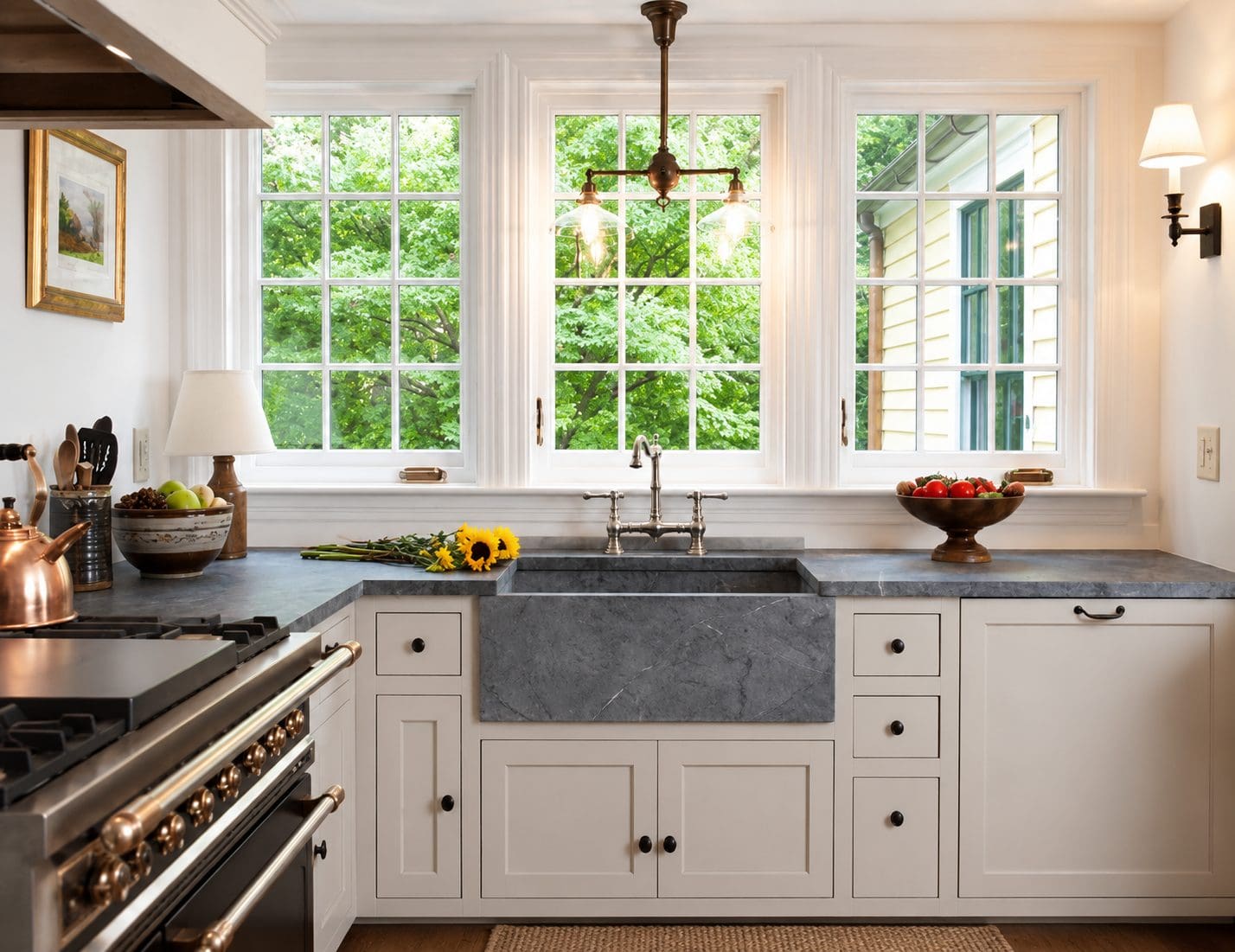
After weighing the soapstone countertops pros and cons, the decision comes down to how well the material’s specific qualities match your lifestyle and design priorities.
If you cook seriously and want a surface that handles heat without compromise, soapstone is hard to beat. If you’re drawn to its moody, distinctive aesthetic and appreciate the idea of a surface that deepens and improves with age, it will reward you generously. If you need a countertop that looks pristine with zero effort and holds up to a busy household with minimal attention, a harder stone like quartzite or granite may be a better fit.
Explore Soapstone at UMI Stone
At UMI Stone, we carry a curated selection of premium soapstone surfaces for kitchens, bathrooms, and beyond. Our team can help you understand the full range of available colors and finishes, compare soapstone against other natural stone options, and find the right surface for your project.
Visit a showroom near you or contact us today to start the conversation.

