
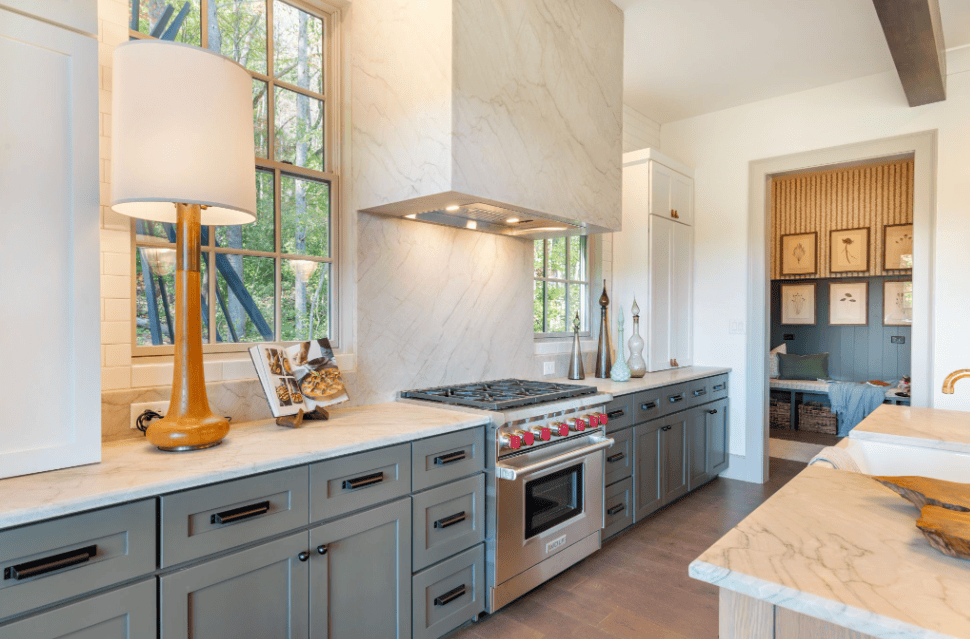
When homeowners start exploring quartzite countertops, color and veining tend to get all the attention. Thickness is the detail that often gets left for later, somewhere between the fabricator quote and the final installation. That’s a mistake worth avoiding. Quartzite countertop thickness shapes how the stone looks, how it performs, how much support it needs, and ultimately what it costs. Getting it right from the start saves headaches down the road.
This guide covers everything you need to know about quartzite countertop thickness so you can walk into the selection process with a clear picture of your options.
Why Thickness Matters with Quartzite Specifically
Quartzite is one of the hardest and densest natural stones used for countertops, ranking around 7 on the Mohs hardness scale. That hardness is a significant part of its appeal. But density also means weight, and the thickness of a quartzite slab has real implications for installation, structural support, and fabrication that softer stones handle differently.
Unlike engineered surfaces that are manufactured to consistent tolerances, natural quartzite slabs can have slight variations in thickness across a single piece. A quality fabricator accounts for this during templating and installation, but it’s worth understanding that natural stone requires a different level of care and expertise than manufactured alternatives.
Standard Quartzite Countertop Thickness Options
Quartzite countertops are available in two standard thicknesses: 2 centimeters (roughly 3/4 inch) and 3 centimeters (roughly 1-1/4 inches). These are the measurements of the raw slab before any edge work or finishing is applied.
2 cm Quartzite
2 cm quartzite is lighter and typically less expensive than its thicker counterpart. It works well in certain applications, particularly bathroom vanities and lower-traffic areas where the countertop spans are shorter and structural demands are less intense.
The trade-off is support. A 2 cm quartzite slab requires a plywood substrate beneath it for structural integrity, particularly over spans like dishwashers or open cabinet sections. Without that backing, the slab is more vulnerable to cracking under stress. The added cost of the substrate can offset some of the savings on the thinner material, so it’s worth running the full project numbers before assuming 2 cm is the more economical choice.
3 cm Quartzite
3 cm is the standard for most residential kitchen countertop installations, and it’s the thickness most fabricators recommend for quartzite specifically. The additional mass gives the slab the structural confidence to span cabinetry without a plywood underlayment in most configurations. It also has a visual weight and presence that reads as premium, the edge of a 3 cm quartzite slab has a solidity that thinner profiles simply don’t convey.
For a material as visually extraordinary as quartzite, 3 cm does the stone justice. The added thickness lets bold veining and color variation be seen not just on the surface but through the edge, which becomes particularly important when dramatic edge profiles or waterfall details are part of the design.
How Thickness Affects the Overall Look
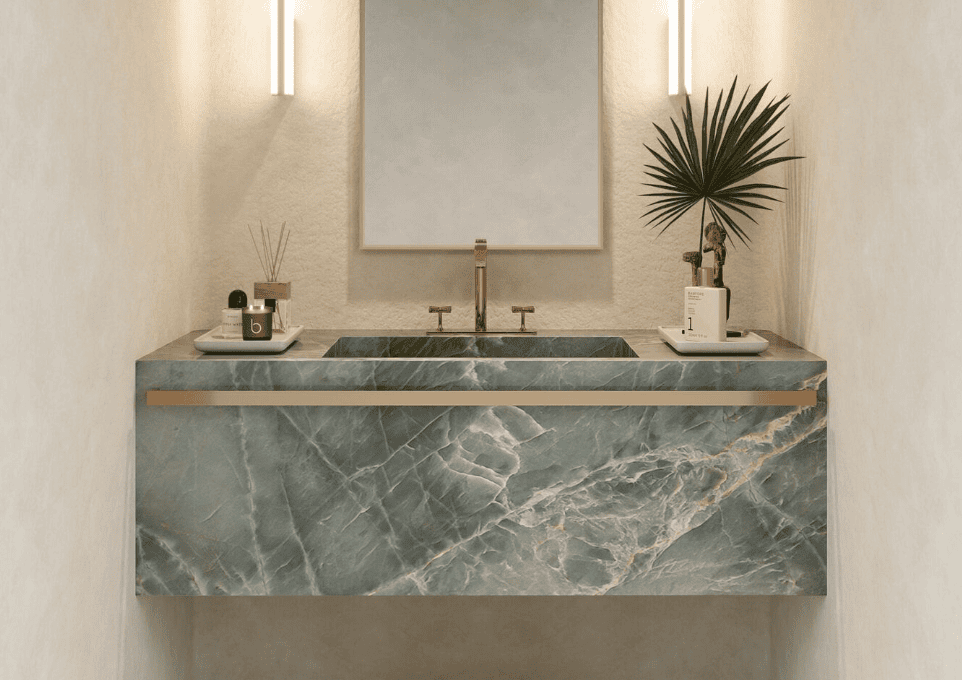
Thickness isn’t just a structural consideration. It plays a direct role in the finished aesthetic of your countertop, particularly at the edges and in applications where the slab’s profile is visible from multiple angles.
Edge Profiles
The edge of a countertop is where thickness becomes most visible in everyday use. A 3 cm slab with a simple eased or straight edge reads as clean and modern. The same slab with an ogee, dupont, or waterfall profile takes on a more traditional or dramatic character. Thicker slabs give fabricators more material to work with, which expands the range of edge options available.
For quartzite specifically, showing the full depth of the stone through a thick edge is one of the details that separates an exceptional installation from an ordinary one. The color variation and natural character of the stone often extend through the thickness of the slab, and a visible edge profile puts that on display.
Laminated Edges
For homeowners who want the visual impact of an even thicker profile without sourcing an unusually heavy slab, fabricators can laminate an additional strip of quartzite along the edge to create the appearance of a 6 cm slab. This is a popular technique for kitchen islands where the edge is a prominent visual element and a thicker profile adds to the sense of luxury and permanence.
Waterfall Edges
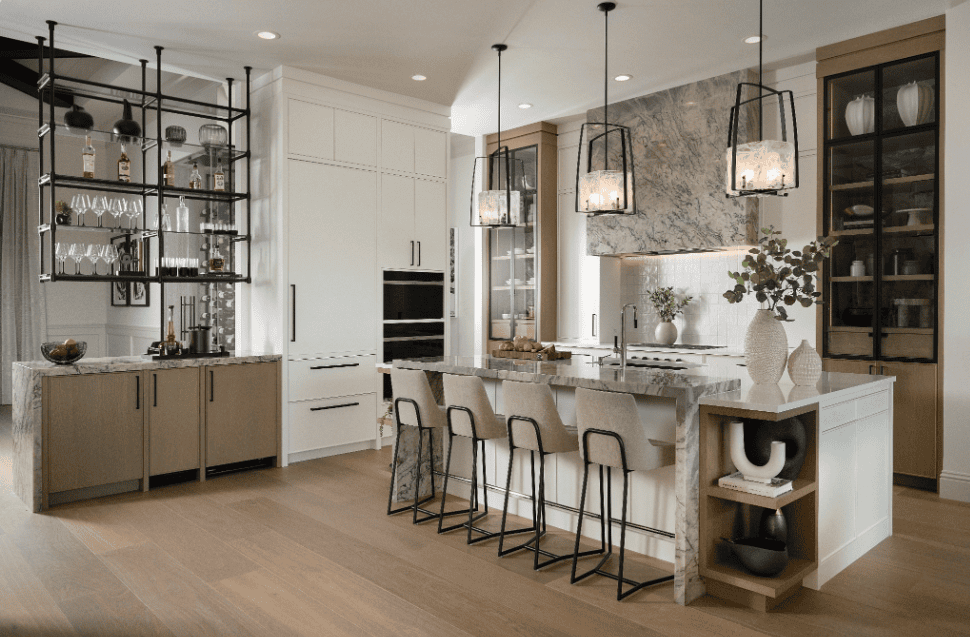
A waterfall edge, where the countertop slab continues vertically down the side of an island to the floor, is one of the most striking applications in contemporary kitchen design. For quartzite, this detail is particularly powerful because the stone’s natural veining and movement can be seen continuously from the horizontal surface through the vertical face. A 3 cm slab provides the structural integrity and visual weight that makes a waterfall edge feel intentional and substantial.
Overhangs and Structural Considerations
Countertop overhangs, the section of the slab that extends beyond the cabinet below, require careful attention with natural stone. Quartzite’s density means that unsupported overhangs beyond a certain length put real stress on the slab, and getting this wrong can result in cracking over time.
As a general guideline, overhangs up to 12 inches are typically manageable for 3 cm quartzite with appropriate support from the cabinet structure below. Beyond that, corbels, brackets, or steel supports are usually recommended. Your fabricator should assess overhang spans during the templating process and advise on support requirements specific to your layout and the quartzite variety you’ve selected.
For kitchen islands designed for seating, this conversation is especially important. A generous overhang for bar stools is a common request, and planning the support structure early prevents costly modifications later.
Thickness and Cost
Thicker slabs cost more, both in material and in the labor required to handle and fabricate them. 3 cm quartzite will typically run higher than 2 cm for the same variety, and the weight of the material can also affect delivery and installation costs.
That said, the cost difference needs to be weighed against the full picture. A 2 cm slab often requires a plywood substrate that adds to the overall project cost. It may also limit edge profile options, which can affect the finished look. For most kitchen installations, 3 cm quartzite represents the better long-term value when the full scope of the project is considered.
Matching Thickness to Your Project
The right quartzite countertop thickness depends on where the stone is being installed, how the space will be used, and what the design calls for.
Kitchen perimeter countertops: 3 cm is the standard and the right choice for most kitchens. The structural demands, visual expectations, and edge profile options all point in this direction.
Kitchen islands: 3 cm, particularly when waterfall edges, dramatic profiles, or substantial overhangs are part of the design. The island is often the most visible surface in the room and deserves the full weight of the material.
Bathroom vanities: 2 cm can work well here, particularly in smaller bathrooms where spans are shorter and the lighter weight is easier to manage. 3 cm is still a strong choice for master bathrooms where a more substantial aesthetic is the goal.
Outdoor kitchens: Quartzite’s UV stability and heat resistance make it one of the better natural stone options for outdoor applications when selected with an exterior-rated finish or treatment. 3 cm is recommended for outdoor countertops where exposure to the elements adds additional structural demands.
Working with a Fabricator
Quartzite requires an experienced fabricator. Its hardness makes it more challenging to cut and finish than softer stones, and the natural variation in slab thickness demands careful templating. When you’re selecting a fabricator for a quartzite project, it’s worth asking specifically about their experience with the material and reviewing examples of previous quartzite installations.
The relationship between thickness, edge profile, overhang, and support isn’t something to sort out after the slab is ordered. These decisions should be made together, early in the process, so the fabrication plan reflects the full scope of what you’re building.
Explore Quartzite at UMI Stone
Understanding quartzite countertop thickness is one part of a larger decision that deserves careful consideration from start to finish.
At UMI Stone, we carry a premium selection of quartzite slabs in a range of colors, patterns, and thicknesses. If you’re also weighing quartzite against engineered quartz, our quartz countertop thickness guide offers a useful point of comparison.
Visit a showroom near you or contact us today to talk through your project with our team.
Frequently Asked Questions
What is the standard thickness for quartzite countertops?
The two standard options are 2 cm (roughly 3/4 inch) and 3 cm (roughly 1-1/4 inches). For most residential kitchen installations, 3 cm is the preferred standard due to its added structural integrity and more substantial appearance.
Is 2 cm quartzite too thin for a kitchen countertop?
It can work, but it requires a plywood substrate for support and limits some edge profile options. For high-use kitchens, 3 cm is generally the stronger and more practical choice. 2 cm is better suited to bathroom vanities and lower-traffic applications.
Does thicker quartzite cost more?
Yes, 3 cm quartzite costs more in both material and fabrication. However, 2 cm slabs often require a plywood underlayment that can offset some of those savings, so it’s worth comparing total project costs rather than material price alone.
How much overhang can quartzite support without additional bracing?
As a general guideline, overhangs up to 12 inches are typically manageable for 3 cm quartzite with proper cabinet support below. Beyond that, corbels, brackets, or steel supports are usually recommended. Your fabricator should assess this during templating.
Can quartzite be used for waterfall edges?
Yes, and it’s one of the most stunning applications for quartzite. A 3 cm slab provides the structural integrity and visual weight needed for a waterfall edge, and quartzite’s natural veining creates a continuous flow of pattern from the horizontal surface through the vertical face.
Does quartzite thickness affect edge profile options?
Yes. Thicker slabs give fabricators more material to work with, expanding the range of available edge profiles. Decorative options like ogee, dupont, and waterfall edges are best suited to 3 cm slabs.
Is quartzite a good choice for outdoor countertops?
Quartzite is one of the better natural stone options for outdoor use thanks to its UV stability and heat resistance, but the slab’s finish must also be suitable for exterior applications. Some resins or surface finishes may be affected by prolonged sun and weather exposure. UMI carries select quartzite options with finishes designed for outdoor applications. For these installations, 3 cm is recommended to handle the additional structural demands that come with exposure to the elements.

