
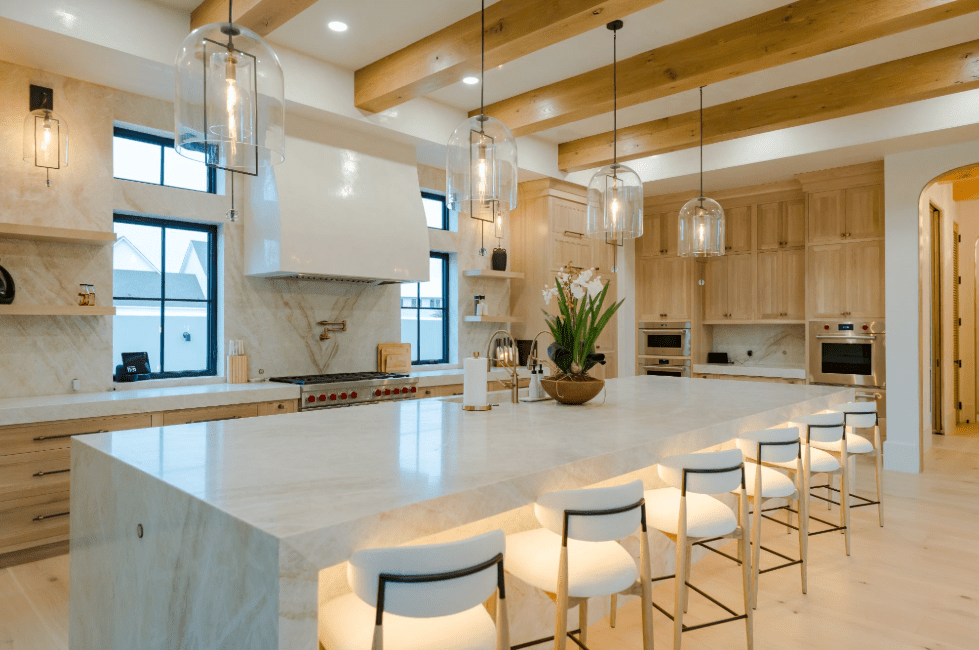
Few materials can compete with quartzite when it comes to combining natural beauty with real-world performance. It has the refined, veined elegance that homeowners love about marble, paired with a hardness and resilience that makes it genuinely practical for busy kitchens and bathrooms. But not all quartzite looks the same. The stone comes in a remarkable range of colors, patterns, and characters, and understanding your options is the first step toward choosing a surface you’ll love for decades.
In this guide, we’ll walk through the most popular types of quartzite countertops, highlight what makes each one special, and share design ideas to help you bring your vision to life.
What Is Quartzite and Why Does It Perform So Well?
Before diving into the varieties, it helps to understand what makes quartzite such a compelling countertop material. Quartzite is a natural metamorphic rock that begins as sandstone and transforms under intense heat and pressure deep within the Earth. That process fuses the quartz grains together into a surface that ranks around 7 on the Mohs hardness scale, harder than granite and significantly harder than marble.
The result is a stone that holds up beautifully to the demands of everyday life. Quartzite is highly durable, resisting scratches, heat, and the etching that plagues marble when exposed to acidic substances. It requires periodic sealing but otherwise demands relatively little from its owners in exchange for a lifetime of stunning performance.
Popular Types of Quartzite Countertops by Color
One of the most appealing aspects of quartzite is the breadth of its color palette. From soft, creamy whites to dramatic charcoals, there’s a variety to suit virtually every design direction.
White and Cream Quartzite
White quartzite is among the most sought-after types of quartzite countertops, and it’s easy to see why. These lighter varieties deliver a bright, airy quality that opens up a space and pairs effortlessly with both light and dark cabinetry. Veining ranges from barely-there wisps to bold, sweeping movement depending on the specific stone.
White quartzite works especially well in kitchens where you want to create a clean, timeless backdrop. Pair it with warm wood tones for an organic, transitional feel, or with crisp white cabinetry for a seamless, contemporary look. A matching or complementary marble-look tile backsplash can elevate the entire aesthetic.
Gray Quartzite
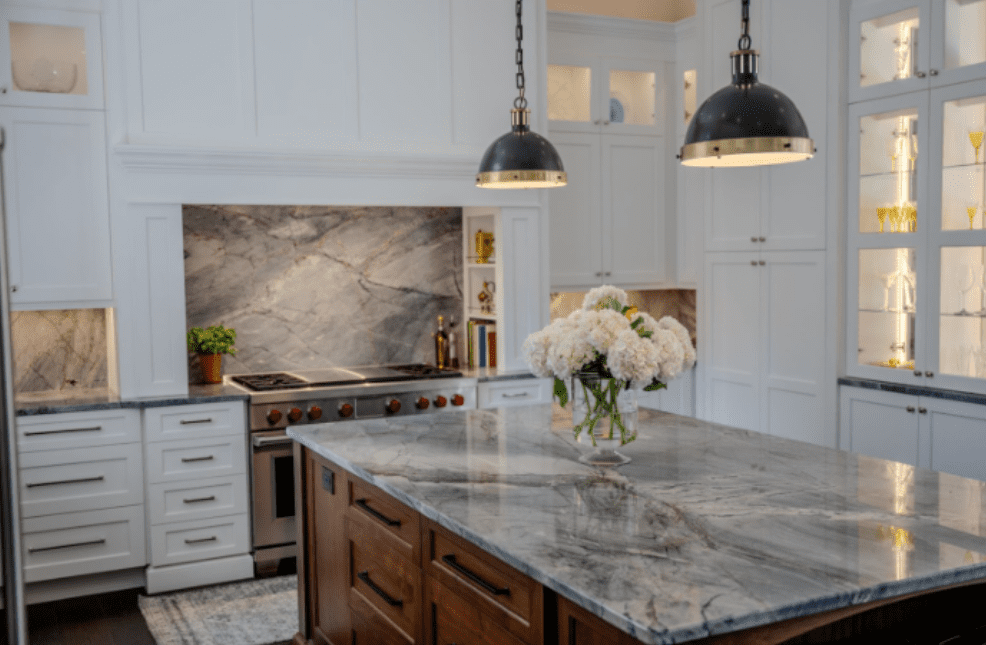
Gray quartzite has surged in popularity alongside the broader design world’s embrace of sophisticated neutrals. These stones offer incredible versatility, soft silver-gray varieties read as quietly elegant, while deeper charcoal options make a bold statement. Many gray quartzite slabs feature dramatic white or gold veining that gives them an almost painterly quality.
Gray tones work beautifully in both contemporary and transitional interiors. They pair naturally with navy, sage, and warm white cabinetry, and they complement matte black or brushed gold hardware without competing for attention. For bathrooms, gray quartzite vanity tops create a spa-like serenity that’s hard to replicate with any other material.
Beige and Warm-Toned Quartzite
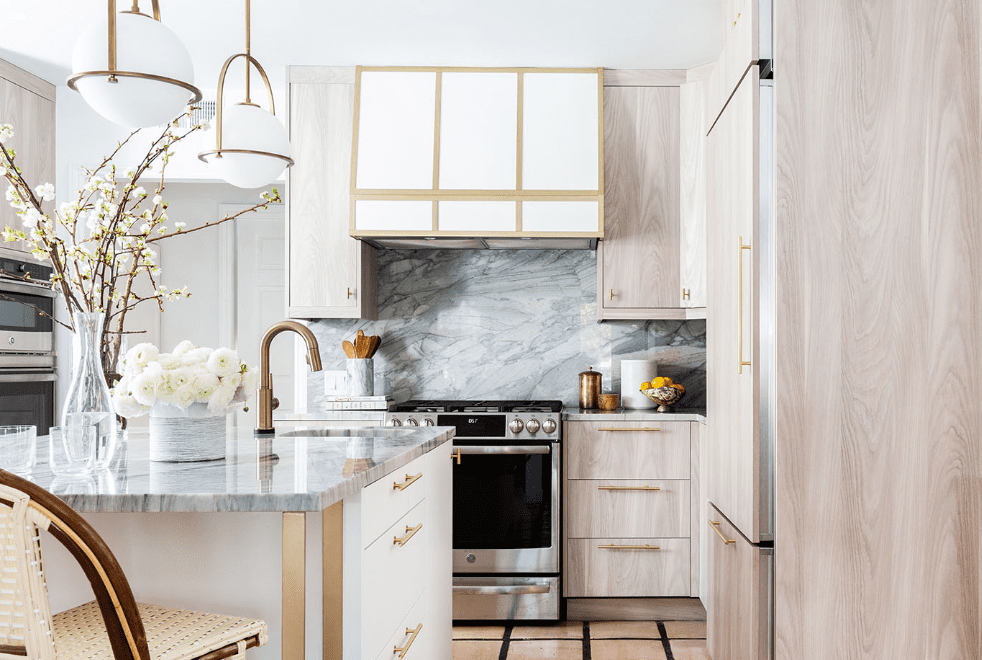
For homeowners who prefer warmth over cool contrast, beige and tan quartzite varieties offer a welcoming richness. These stones often feature golden, caramel, or taupe tones running through their veining, which makes them feel grounded and organic.
Warm-toned quartzite pairs naturally with wood cabinetry, earthy tile backsplashes, and bronze or brass hardware. They’re a particularly strong choice for transitional and traditional kitchen styles where comfort and elegance need to coexist.
Dramatic and Exotic Quartzite
Some of the most breathtaking types of quartzite countertops fall into a category all their own, slabs with bold color variation, sweeping veining, or unexpected hues like blue, green, or rust. These stones are true statement pieces, often best featured on kitchen islands or as focal points in master bathrooms.
If you’re drawn to this end of the spectrum, it’s worth visiting a showroom to view full slabs in person. The scale and movement of exotic quartzite is something that simply can’t be fully appreciated in small samples.
Key Benefits of Quartzite Countertops
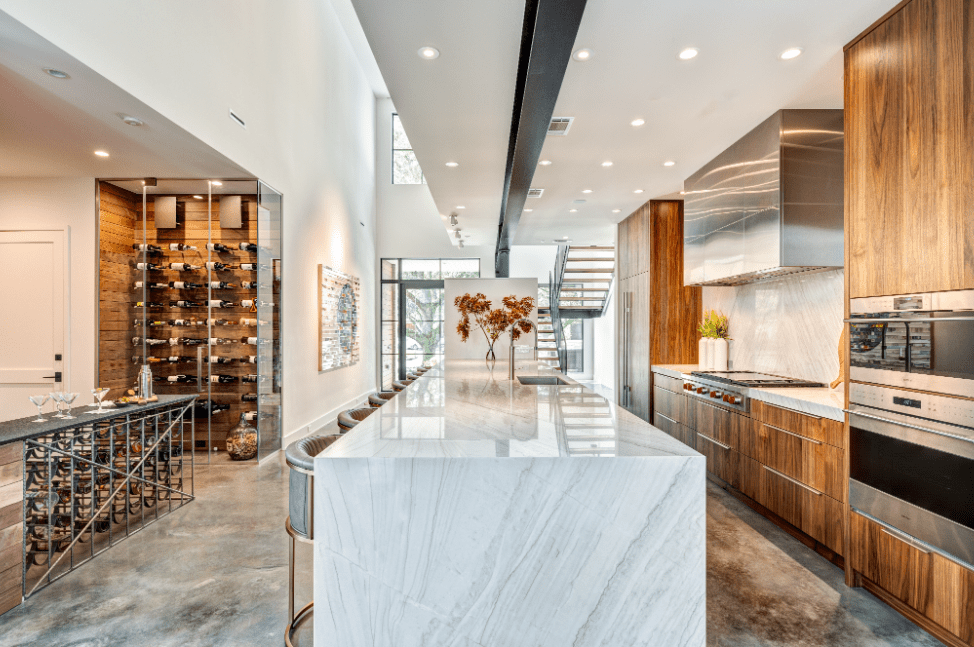
Regardless of which color or pattern you choose, all types of quartzite share a core set of performance advantages that make them worth serious consideration.
- Exceptional Hardness: Quartzite’s density makes it highly resistant to scratching and chipping from normal kitchen use.
- Heat Resistance: Unlike engineered quartz, natural quartzite handles heat well. Hot pots and pans won’t damage the stone itself, though trivets are still a good habit.
- Etching Resistance: Quartzite holds up far better than marble when exposed to acidic foods and beverages.
- Unique, Natural Character: No two slabs are identical. Your countertop will be genuinely one of a kind.
- Long-Term Value: With proper care, quartzite countertops can last a lifetime and contribute meaningfully to your home’s resale appeal.
Design Ideas for Quartzite Countertops
Choosing the right quartzite is only part of the equation. How you pair it with the other elements in your kitchen or bathroom determines how well it sings.
With White Cabinetry: White or light gray quartzite creates a seamless, luminous look. Add visual interest through hardware finishes and backsplash texture rather than contrast.
With Dark Cabinetry: Lighter quartzite with bold veining creates a dramatic contrast against navy, black, or deep green cabinets. This pairing is one of the most striking in contemporary kitchen design.
With Wood Tones: Warm-toned quartzite complements natural wood beautifully. Consider a waterfall edge on an island to showcase the slab’s full movement.
In Bathrooms: Quartzite’s elegance translates seamlessly to bathroom vanities. Carry the material into the shower surround for a cohesive, high-end look that feels deliberately designed.
Caring for Your Quartzite Countertops
Quartzite is relatively low-maintenance, but it does require some consistent care to stay at its best. Seal the surface upon installation and plan to reseal every one to two years, depending on use. For daily cleaning, warm water and mild dish soap are all you need. Clean up spills promptly, and avoid harsh chemical cleaners or anything abrasive. With this simple routine, your quartzite countertops will reward you with beauty that improves with age.
Find Your Perfect Quartzite at UMI Stone
With so many types of quartzite countertops available, the best way to make your decision is to see the options in person. At UMI Stone, we carry a curated selection of premium quartzite slabs across the full color spectrum. Our knowledgeable team can help you compare varieties, understand the unique character of each stone, and find the perfect fit for your project. Visit a showroom near you or contact us today to get started.

