
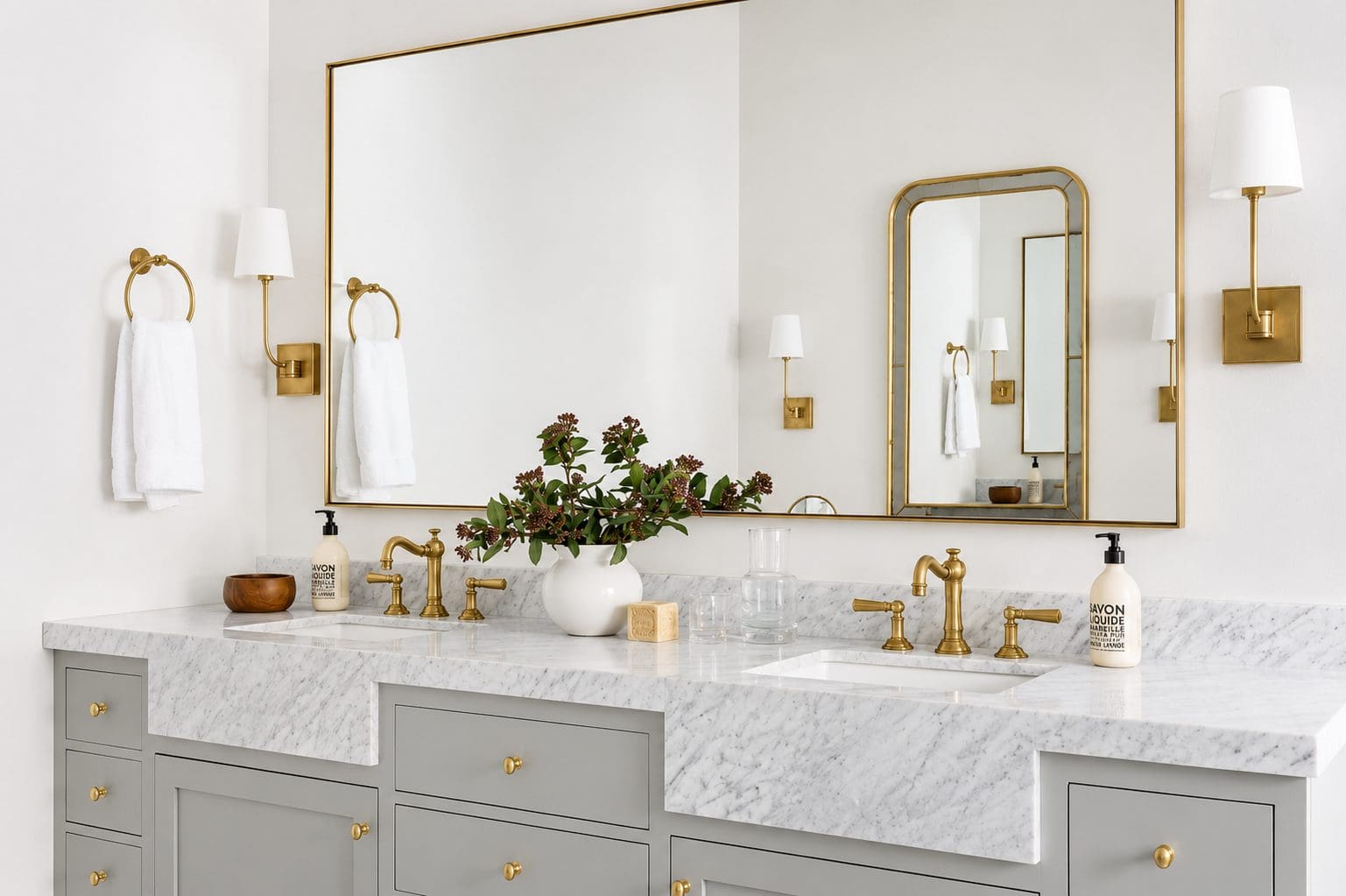
Of all the natural stones available to designers and homeowners today, few offer the design range of gray marble. It can be soft and classical, bold and contemporary, restrained and minimalist, or warm and transitional; sometimes all within the same slab, depending on how it’s cut, finished, and placed. That adaptability is what keeps gray marble at the center of serious interior design conversations year after year, and why it continues to appear in projects ranging from historic renovations to cutting-edge new construction.
This isn’t a material chasing a trend. Gray marble is a permanent fixture in the design vocabulary for the simple reason that it works across more contexts than almost anything else available in natural stone.
The Spectrum of Gray Marble
The first thing to understand about gray marble is that “gray” covers an enormous amount of ground. At one end sits the soft, luminous white-grey marble countertop: a light stone with delicate veining that reads as bright and airy, occupying a space between the crispness of white marble and the quieter warmth of cream. These lighter varieties have a classical quality that feels timeless in both traditional and contemporary settings.
At the other end sits dark grey marble countertops: deep charcoal stones with bold, high-contrast veining that deliver a completely different kind of presence. Where light gray marble whispers, dark gray marble commands. Used on a kitchen island or bathroom vanity, a dark charcoal slab becomes the room’s defining element rather than its backdrop.
Between these poles lies a rich spectrum of mid-tones, warm greys with golden or taupe undertones, cool silvers with blue casts, and layered stones that shift from light to dark within a single slab. Because marble is a natural stone, no two slabs are identical. That variation is precisely what makes natural marble so compelling at scale: a gray marble installation doesn’t look like a surface, it looks like a considered choice.
Gray Marble Across Design Styles
Gray marble’s tonal range gives it a rare ability to feel at home in nearly any interior context, from the most traditional to the most rigorously contemporary.
Traditional Interiors
In traditional kitchens and bathrooms, gray marble has long been a cornerstone material. Lighter white-grey marble countertops with soft, flowing veining complement detailed millwork, raised-panel cabinetry, and classic hardware finishes without competing for attention. The stone’s natural character adds warmth and richness that manufactured surfaces can’t replicate, and its association with centuries of fine architecture gives traditionally styled spaces an authenticity that feels earned rather than assembled.
Contemporary Interiors
Contemporary design finds its gray marble expression at the darker, more dramatic end of the spectrum. Dark gray marble countertops against flat-front cabinetry, integrated appliances, and matte black hardware create a visual language of precision and confidence. The stone’s natural movement adds the organic warmth that keeps purely minimalist spaces from feeling cold, while its depth and contrast reinforce the high-impact aesthetic that contemporary interiors demand.
Transitional Interiors
Gray marble may be most naturally at home in transitional design, where the goal is to blend classical and contemporary elements without tipping too far in either direction. The grey marble countertop kitchen is one of the most enduring transitional design choices available precisely because gray sits comfortably between warm and cool, formal and relaxed, timeless and current. It’s a material that doesn’t force a commitment to a single aesthetic era, which gives transitional spaces the flexibility they need.
Minimalist Interiors
For minimalist interiors where the design strategy is reduction rather than addition, gray marble provides visual interest without introducing color or pattern that competes with the space’s intentional restraint. A honed grey marble surface in a monochromatic kitchen or bathroom contributes texture and depth without announcing itself, exactly what minimalist design requires from its materials.
Applications Beyond the Countertop
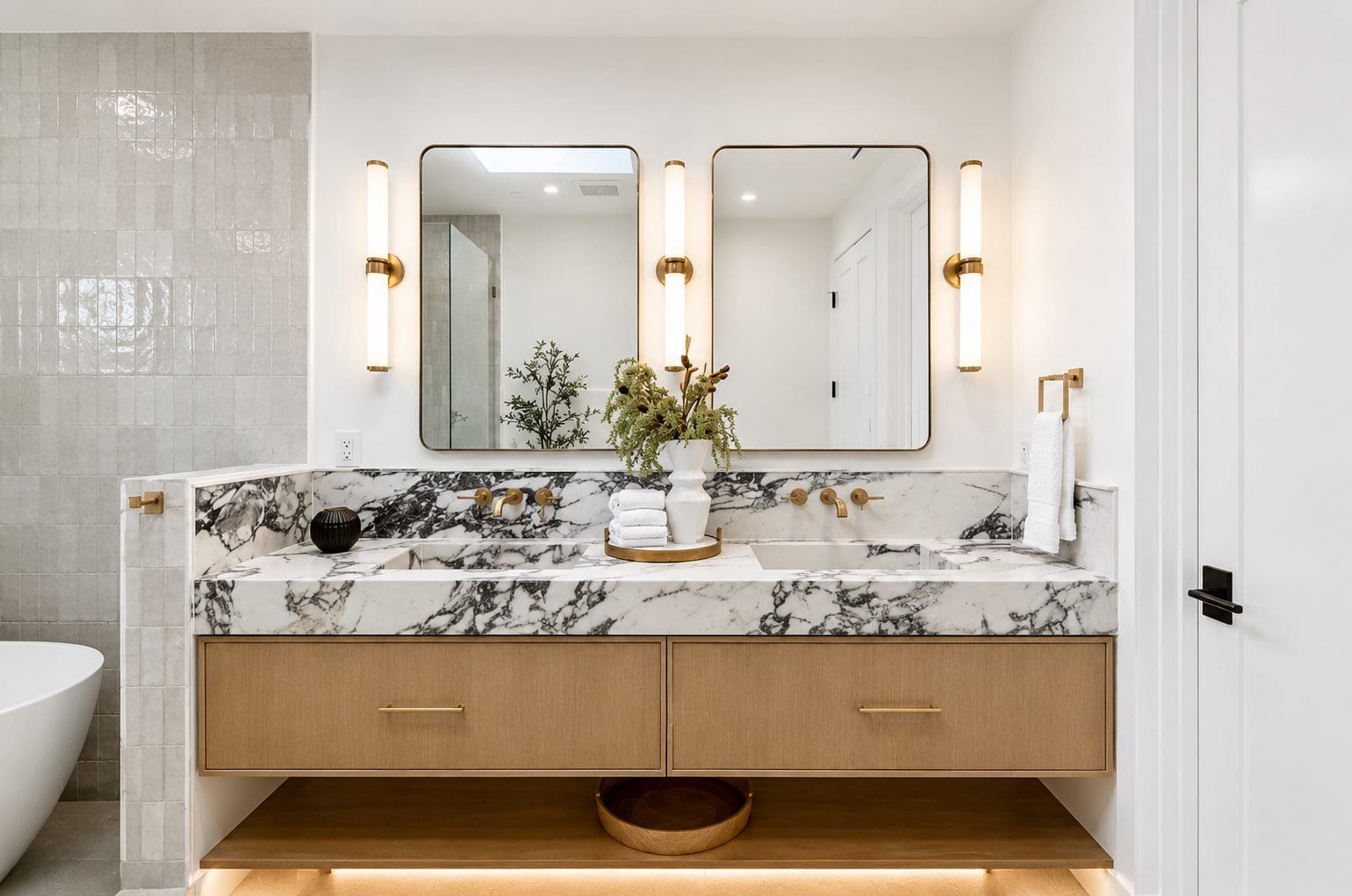
Gray marble’s versatility extends well beyond kitchen countertops, and some of its most compelling uses happen in spaces where other materials wouldn’t have the same impact.
Bathroom Vanities
The marble bathroom vanity is one of the most reliably beautiful applications for gray marble. A grey marble countertop in a bathroom creates an immediate sense of luxury and calm, and the stone’s natural variation gives even a simple vanity installation a one-of-a-kind quality. Paired with wall-mounted fixtures and understated cabinetry, a gray marble vanity top becomes the room’s defining detail.
Kitchen Islands
The island is often the most prominent surface in a kitchen, and it’s where gray marble’s visual character has the most room to be appreciated. A grey marble countertop kitchen island in a darker, more dramatic variety creates a striking focal point against lighter perimeter surfaces. A lighter grey marble island in a more tonal kitchen adds depth without disrupting the palette.
Fireplace Surrounds
Gray marble on a fireplace surround carries centuries of precedent, and it remains one of the most elegant applications for the material. The stone’s reflective surface responds beautifully to firelight, and its neutral palette integrates naturally into virtually any living room design.
Feature Walls
Full-height gray marble feature walls, particularly in bookmatched installations, create architectural moments that no paint color or wallcovering can replicate. In a bathroom, a bookmatched gray marble wall behind a freestanding tub is a statement that defines the entire room.
Finish Options: How Polish Changes Everything
The finish applied to a gray marble slab changes its character more dramatically than most homeowners expect, and it’s worth understanding the options before making a final selection.
Polished
A polished finish amplifies gray marble’s depth and veining with a high-gloss, reflective surface. It’s the most formal and luxurious presentation of the stone, bringing out the full intensity of dark varieties and the luminosity of lighter ones. Polished gray marble in a kitchen or bathroom reads as unambiguously premium.
Honed
A honed finish produces a smooth, matte surface without the reflective sheen of polished marble. It softens the stone’s presence considerably, creating a quieter, more organic quality that suits casual and contemporary interiors particularly well. Honed grey marble countertops also tend to show fewer water spots and fingerprints than polished surfaces, which is a practical consideration for daily use.
Leathered
A leathered finish adds subtle surface texture to the stone, enhancing its natural character while reducing glare. It’s a less common choice but a distinctive one, particularly for darker gray marble varieties where the texture adds an additional layer of visual interest.
Understanding marble countertop durability across different finishes helps set the right expectations before installation, particularly in high-use kitchen environments.
Pairing Gray Marble with Cabinets, Hardware, and Materials
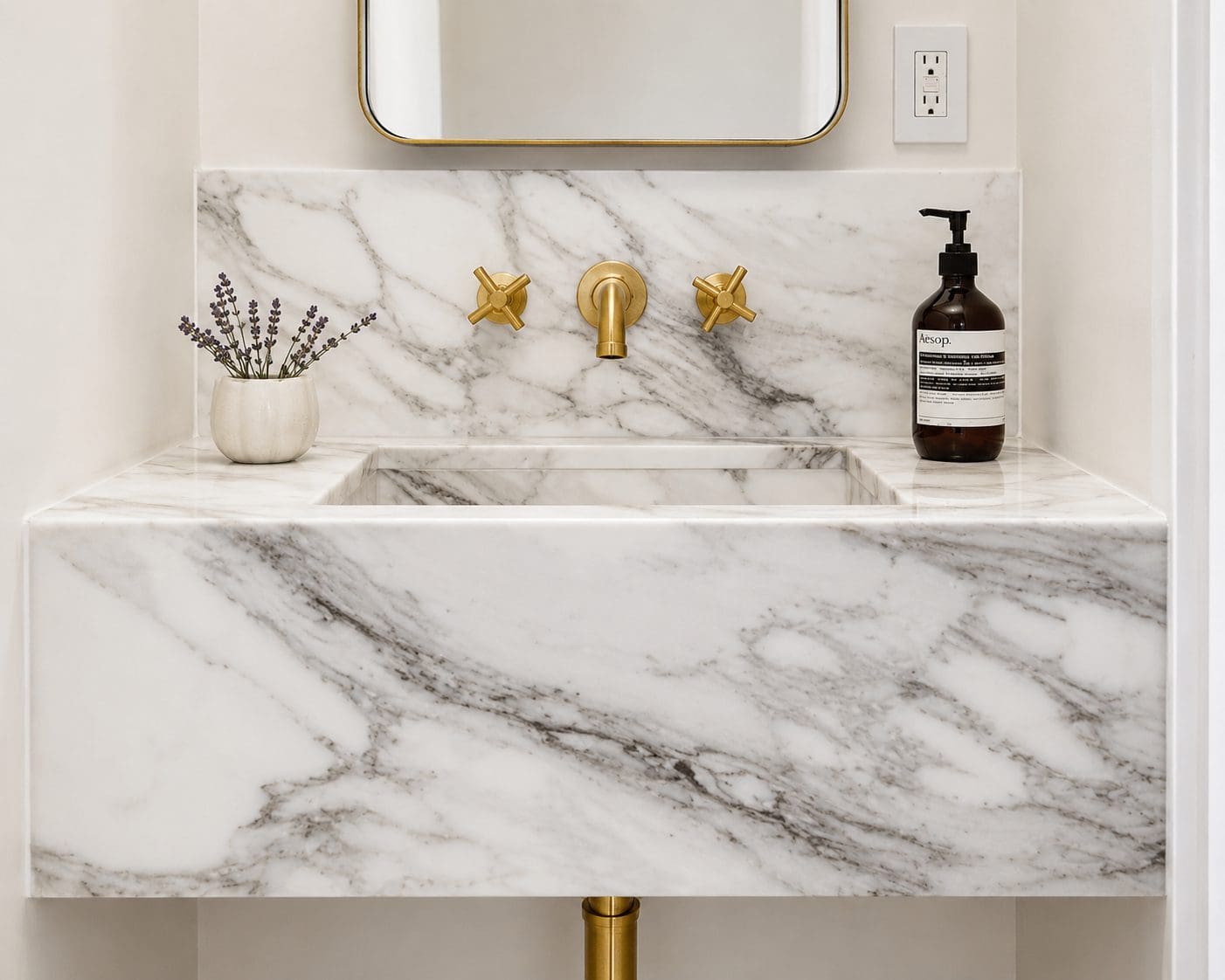
Gray marble’s neutrality is its superpower as a design partner. It accommodates a wider range of cabinet colors, hardware finishes, and complementary materials than almost any other natural stone.
White Cabinetry
A classic pairing that lets the marble’s veining take center stage. Light grey marble countertops against white cabinets create a clean, timeless combination. Dark grey marble against white cabinetry delivers high contrast and contemporary drama.
Navy and Deep Blue Cabinetry
One of the most compelling contemporary pairings. Gray marble with cool blue undertones reads as sophisticated and intentional against deep navy, while warmer grey varieties add balance to the boldness of blue.
Warm Wood Tones
Gray marble with warm undertones, golds, taupes, or hints of brown in the veining, pairs naturally with natural wood cabinetry. The combination creates a grounded, organic quality that feels both elevated and livable.
Dark Cabinetry
For a tonal, enveloping aesthetic, pairing light grey marble countertops against charcoal or black cabinetry creates a layered richness that rewards closer inspection. It’s one of the most sophisticated combinations in contemporary kitchen design, and one where the contrast of black and white marble elements can be leveraged for maximum effect.
Hardware
Brushed gold and unlacquered brass warm up the cooler tones in gray marble beautifully. Matte black hardware reinforces the stone’s depth and works particularly well with darker varieties. Polished nickel and chrome complement lighter, cooler grey marbles with a crisp, refined quality.
Gray Marble at Every Scale
What ultimately distinguishes gray marble from most other countertop and surface materials is its ability to perform at every scale of design decision: from the sweep of a full-height feature wall to the detail of a single vanity top, from the drama of a dark charcoal island to the quiet refinement of a light grey bathroom surround. The full range of natural stone options available through UMI Stone reflects how many ways this material can be interpreted, and how much the right slab selection matters to the final result.
Gray marble rewards the homeowner who takes time to see it in person. Photographs and samples don’t capture the scale of the veining, the depth of the color, or the way the stone shifts in different light conditions throughout the day.
Explore Gray Marble at UMI Stone
At UMI Stone, we carry a carefully curated selection of premium gray marble in a range of tones, veining patterns, and finishes. Whether you’re drawn to the soft luminosity of a light white-grey slab or the commanding presence of a deep charcoal variety, our team can help you find the stone that fits your vision and your space.
Visit a showroom near you to see these stones at full scale, or contact us today to start the conversation.

