
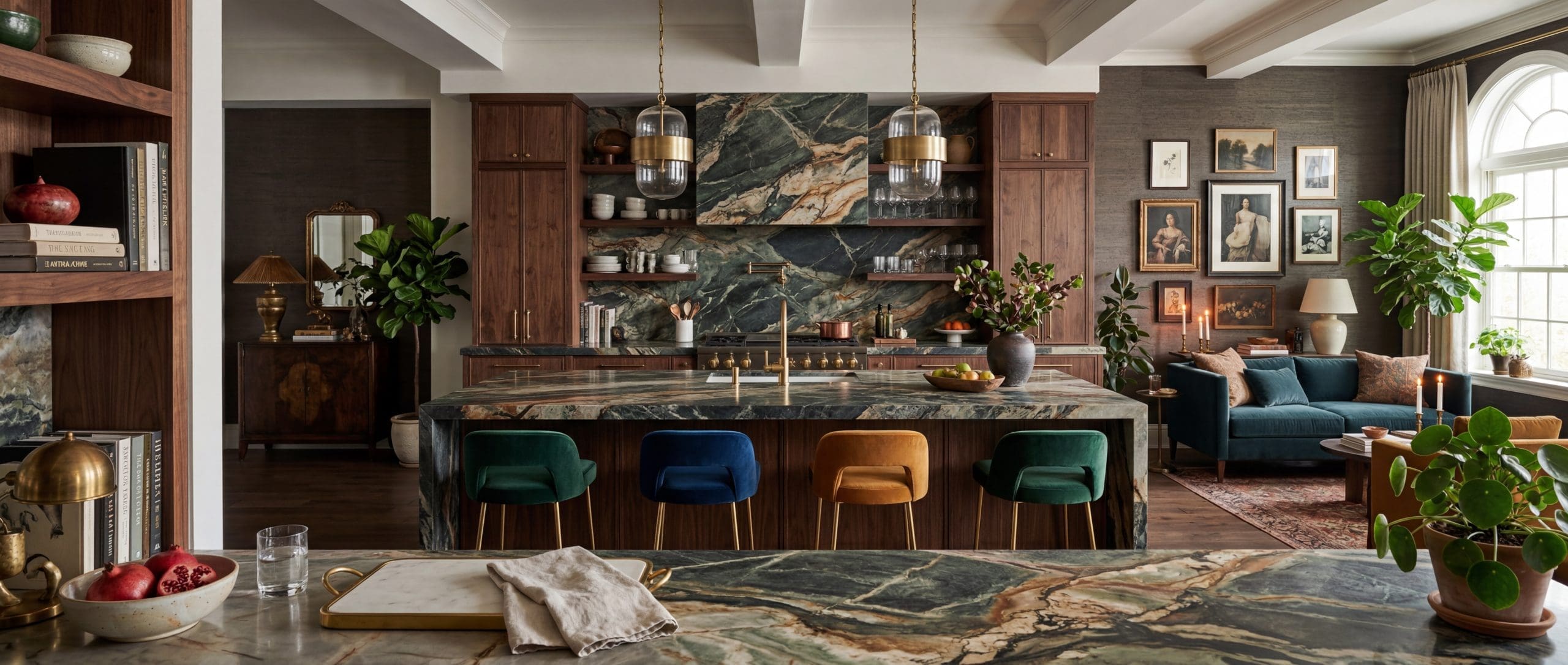
A Return to Color, Pattern, and Personality
After years of pared-back palettes and quiet neutrals, interiors are getting louder again. Maximalism has returned in a more considered form — built on rich color, expressive pattern, and materials chosen for their character rather than their restraint. The result is a home designed to be lived in fully, not held at arm’s length.
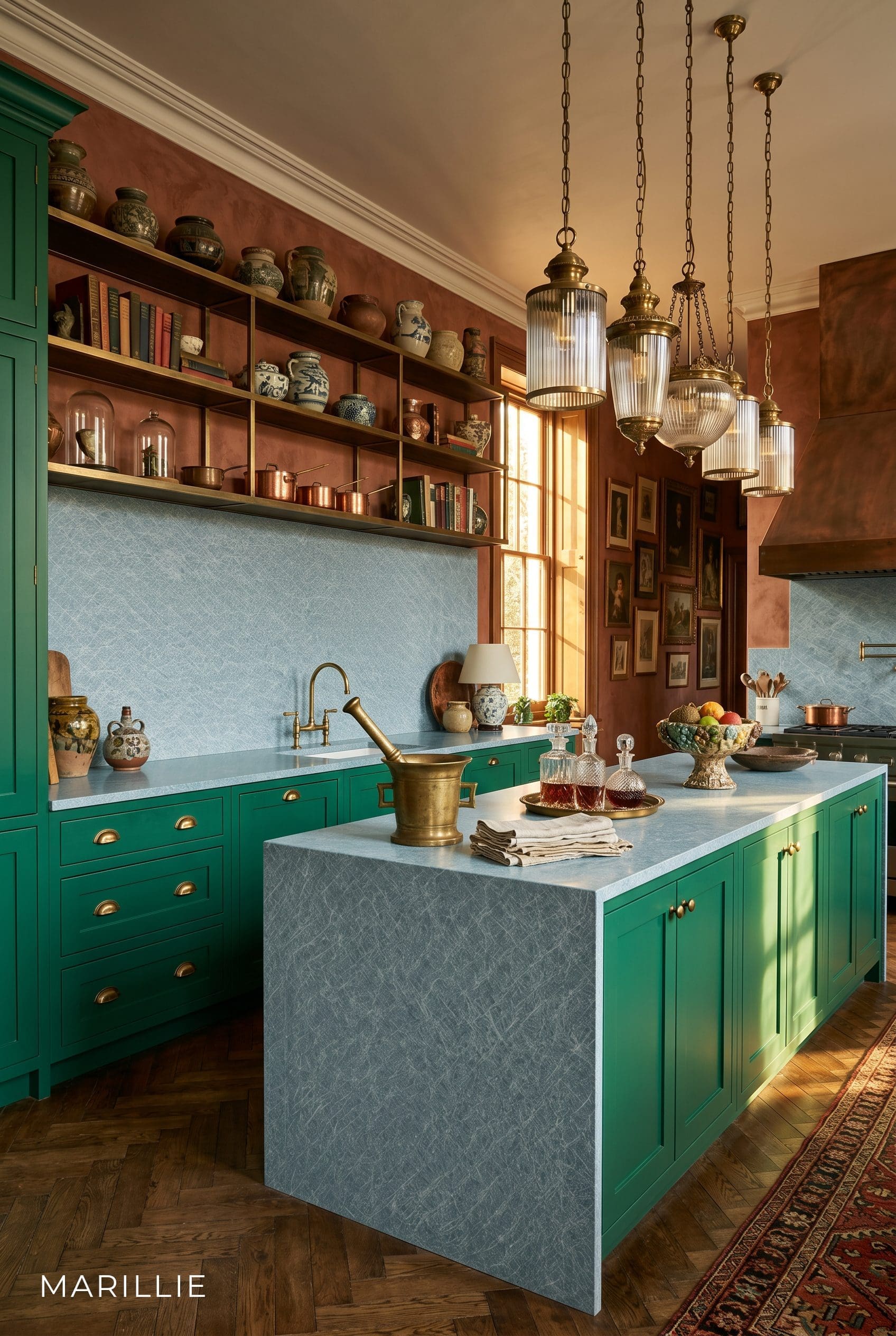
Rather than restraint, today’s maximalist spaces lean into contrast. Saturated cabinetry meets sculptural lighting. Painted millwork pairs with veined stone. Mixed metals, layered textiles, and collected objects all share the room. It’s a style that reads as personal — assembled over time rather than installed all at once.
The trend is showing up across the entire home — kitchens, bathrooms, bars, and the in-between spaces that used to play it safe. Stone is central to how the look comes together. A dramatic countertop, a full-slab vanity, or a back bar built around a single statement slab gives the room its anchor — the moment that holds everything else in place.
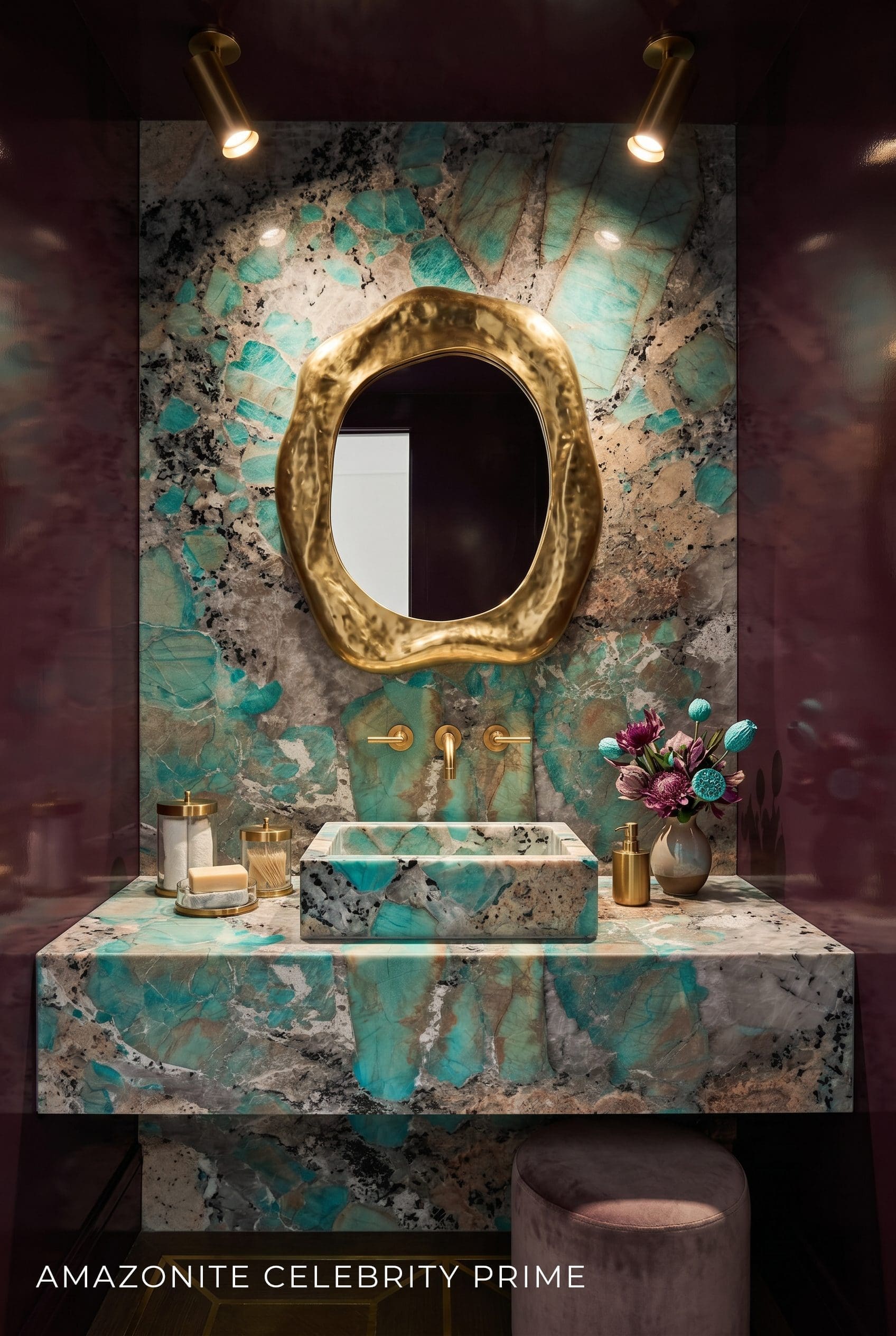
The Art of the Statement Slab
Maximalist interiors reward materials that are willing to be looked at. Where minimalism asks stone to recede, this style asks it to step forward—bringing movement, depth, and a clear point of view to the room. Whether it’s a kitchen island, a floor-to-ceiling powder room wall, or a back bar carved from a single slab, the stone acts as the room’s visual anchor, providing the necessary weight to hold a layered design together.
The most successful maximalist spaces still rely on this kind of structure to feel intentional rather than chaotic. A bold slab works because it sets a definitive tone, allowing the surrounding cabinetry, lighting, and hardware to play a supporting role. By letting the natural veining and saturated color of the stone lead the composition, the layering feels resolved—a deliberate balance where every element has room to breathe.
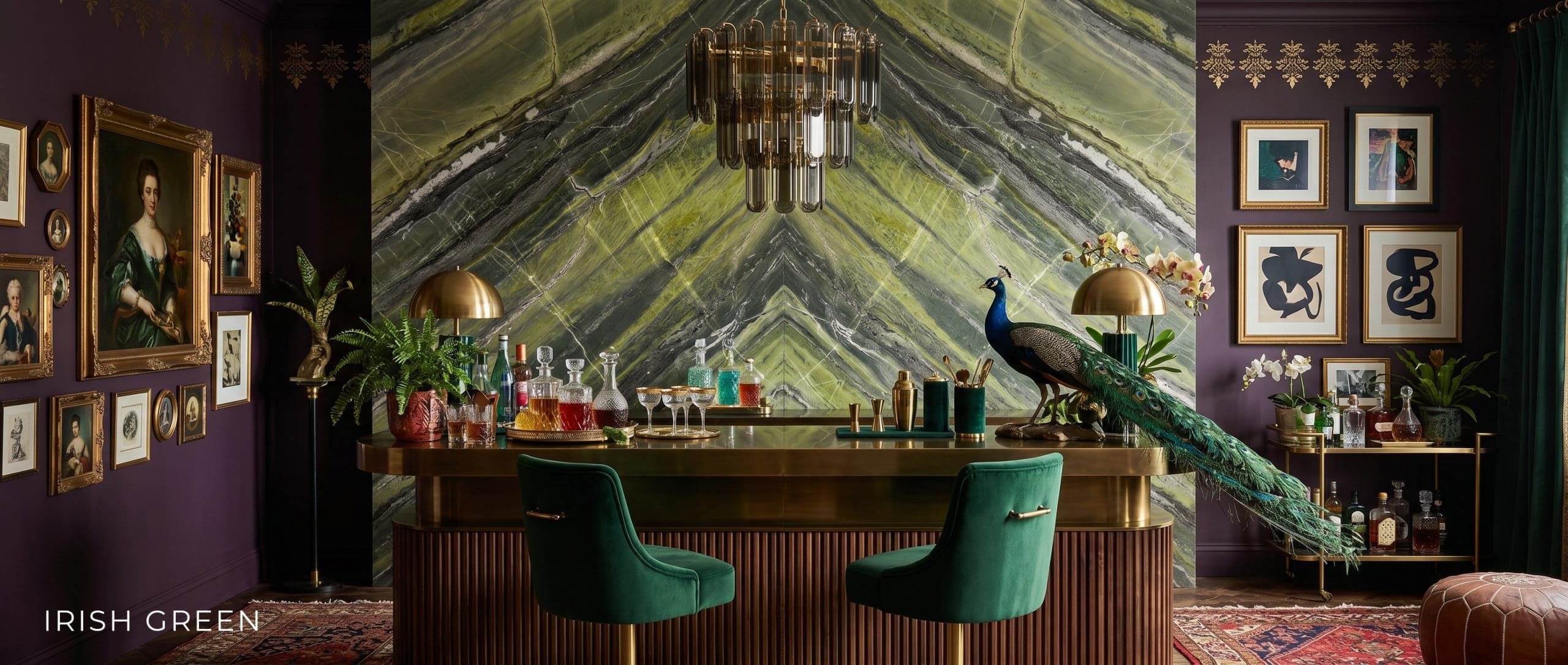
Defining the Maximalist Aesthetic
Maximalist interiors are built through layering — not strict rules. Each element below works alongside the others to create a room that feels rich, considered, and full of character, with natural stone doing much of the work to anchor the design. The same principles carry from a kitchen island to a powder room vanity to a moody back bar.
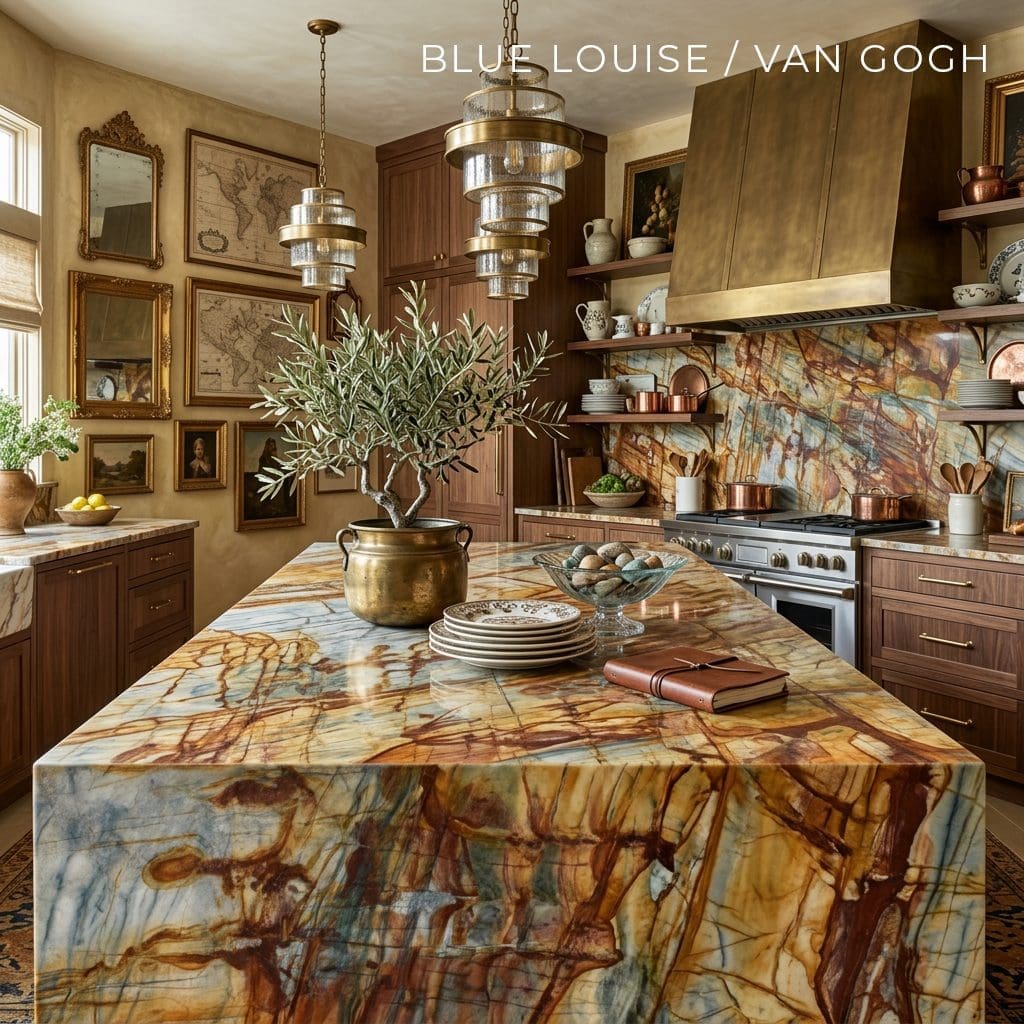
Statement Veining
& Movement
Painterly veining and bold movement turn stone into the room’s focal point.
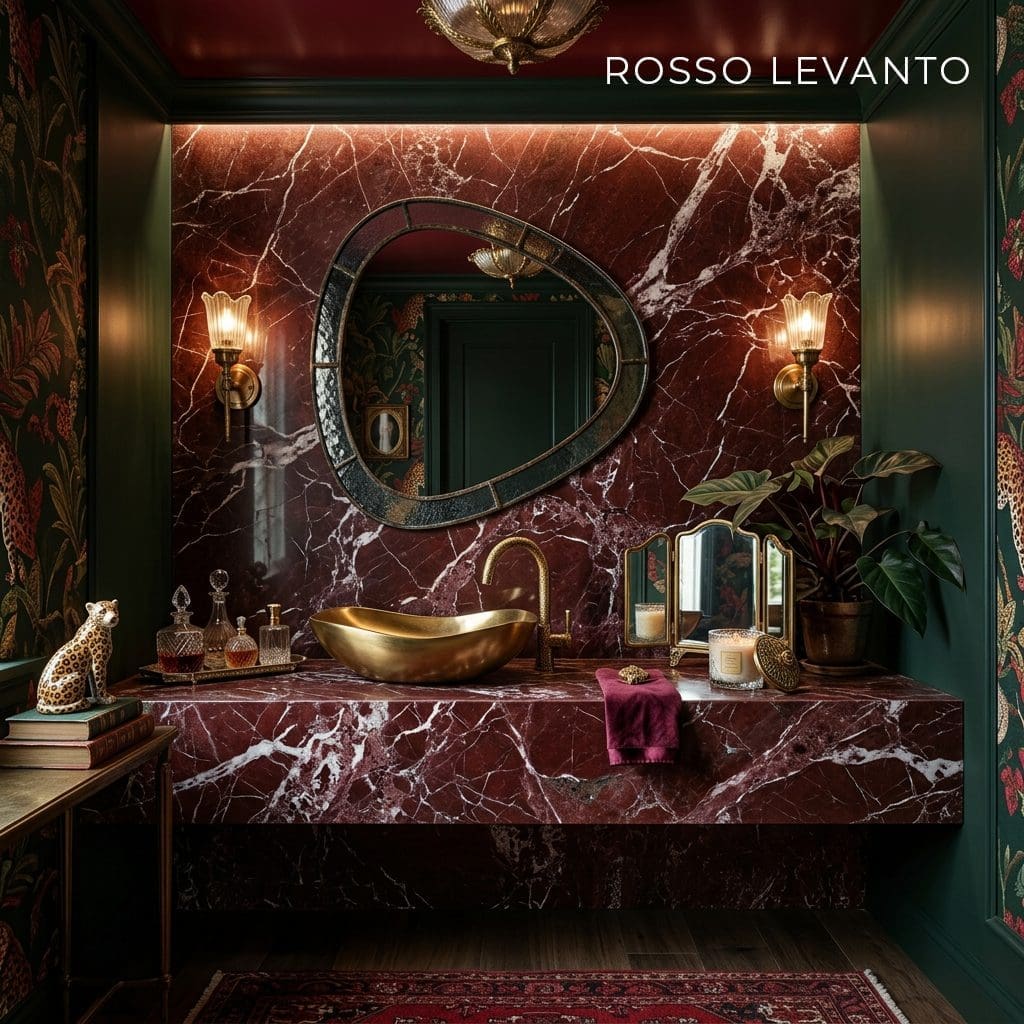
Bold, Saturated
Color
Embracing a “color-drenched” aesthetic with stone provides a rich, tonal anchor.
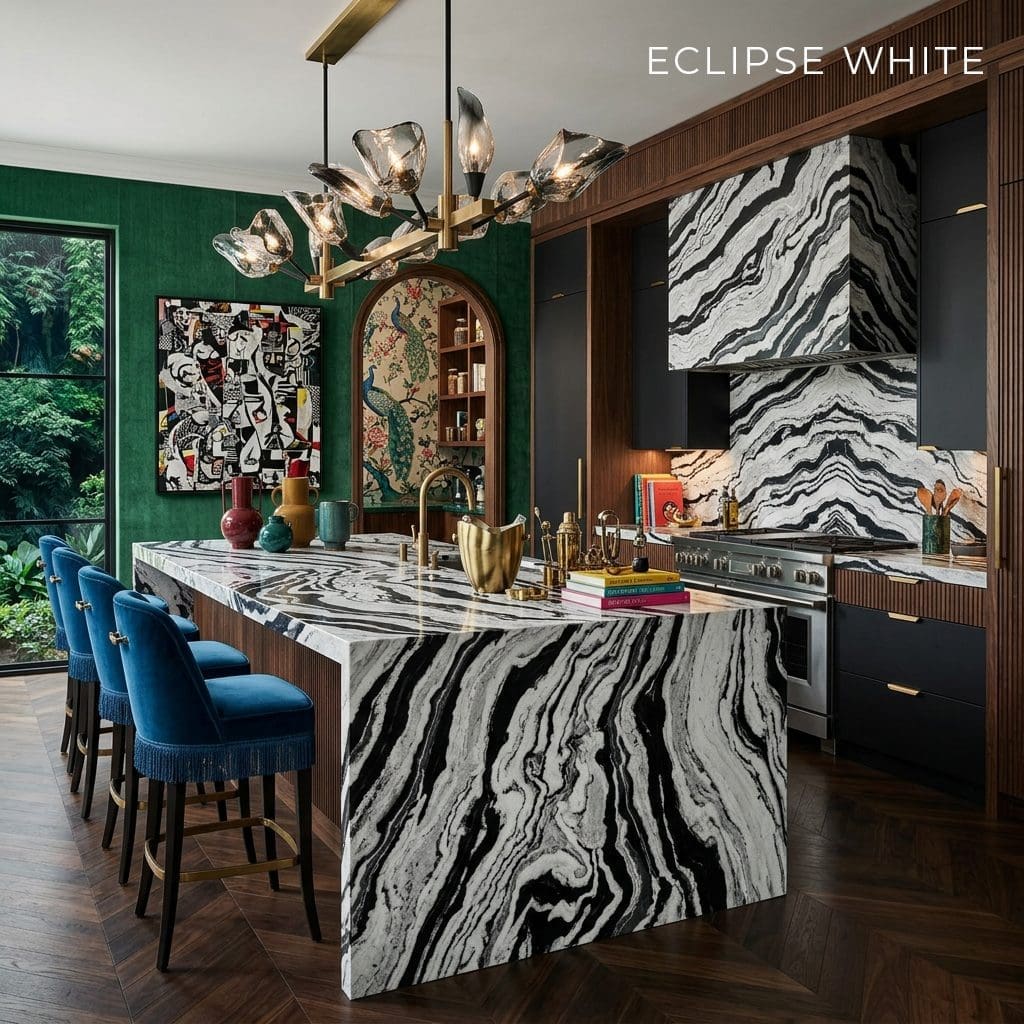
High-Contrast
Drama
Sharp black-and-white veining creates graphic impact and architectural edge.
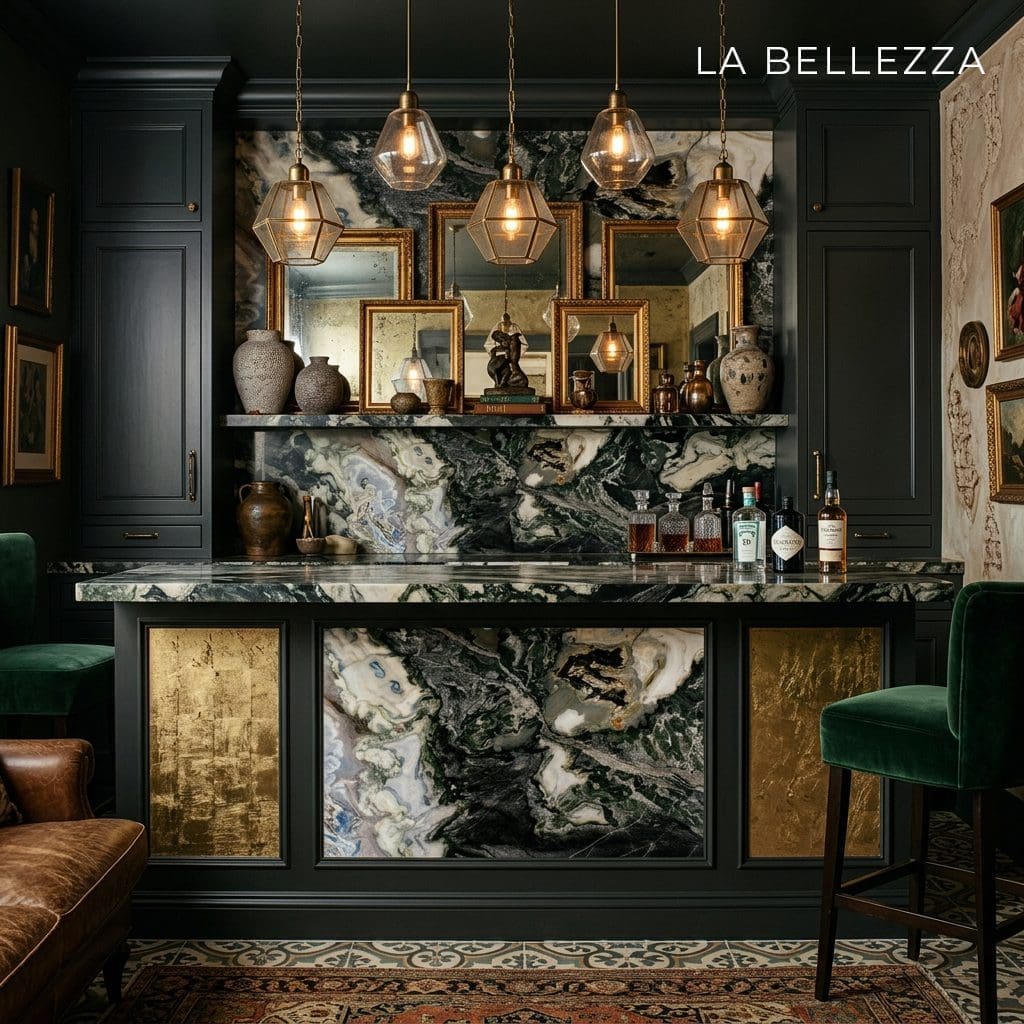
Jewel-Tone
Depth
Deeper tones create atmosphere, by adding dimension.
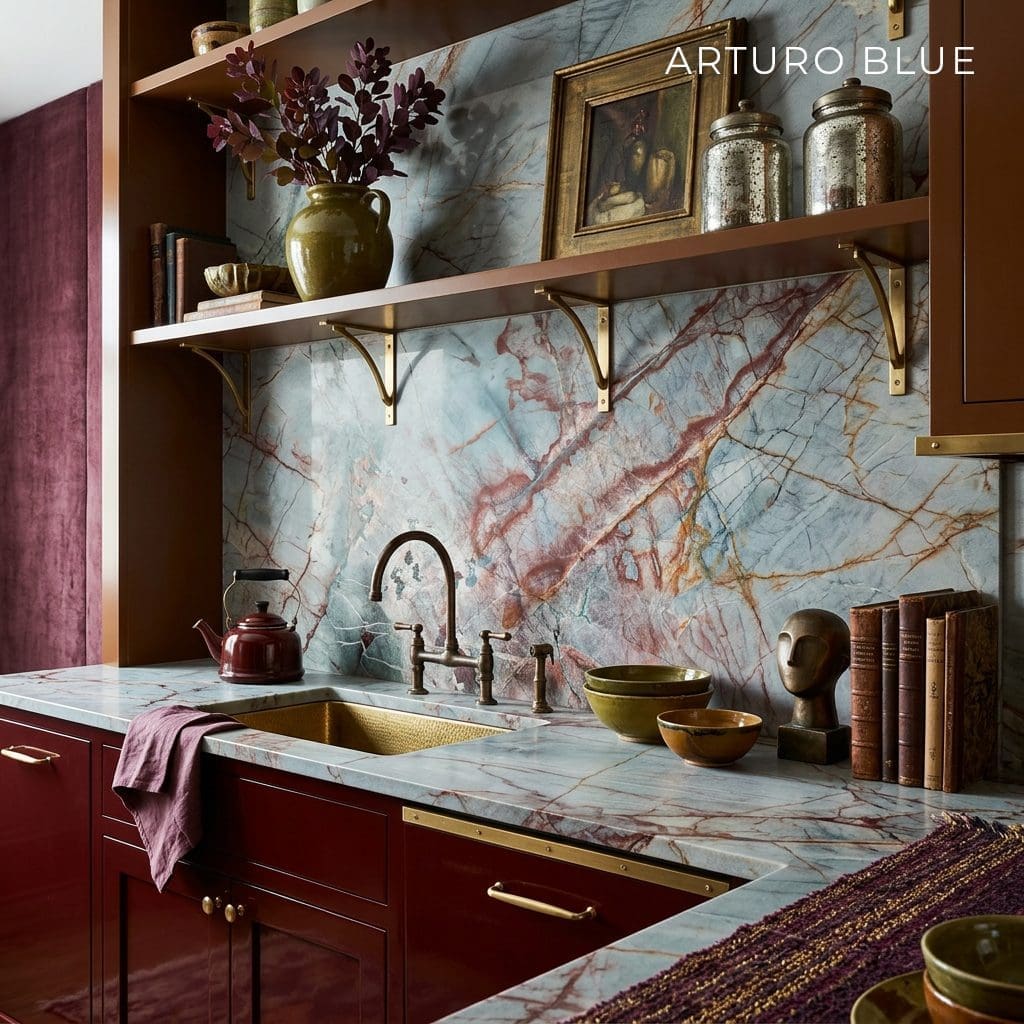
Unexpected
Color Pairings
Stones with multiple tones invite layered, surprising color combinations.
The Discipline Behind the Drama
What separates a successful maximalist room from a chaotic one is intention. Every layer — color, texture, pattern, material — has been chosen because it adds something specific to the space, not because it fills it. The same logic applies whether the project is a full kitchen renovation, a powder room, or a built-in bar.
Stone is one of the most efficient ways to bring that intention forward. A single slab can introduce color, movement, and structural weight all at once, giving the surrounding design something to build around.
That clarity is what makes the look feel collected rather than crowded — and what keeps it readable years after the trend cycle moves on.
Colors That Make Maximalist Interiors
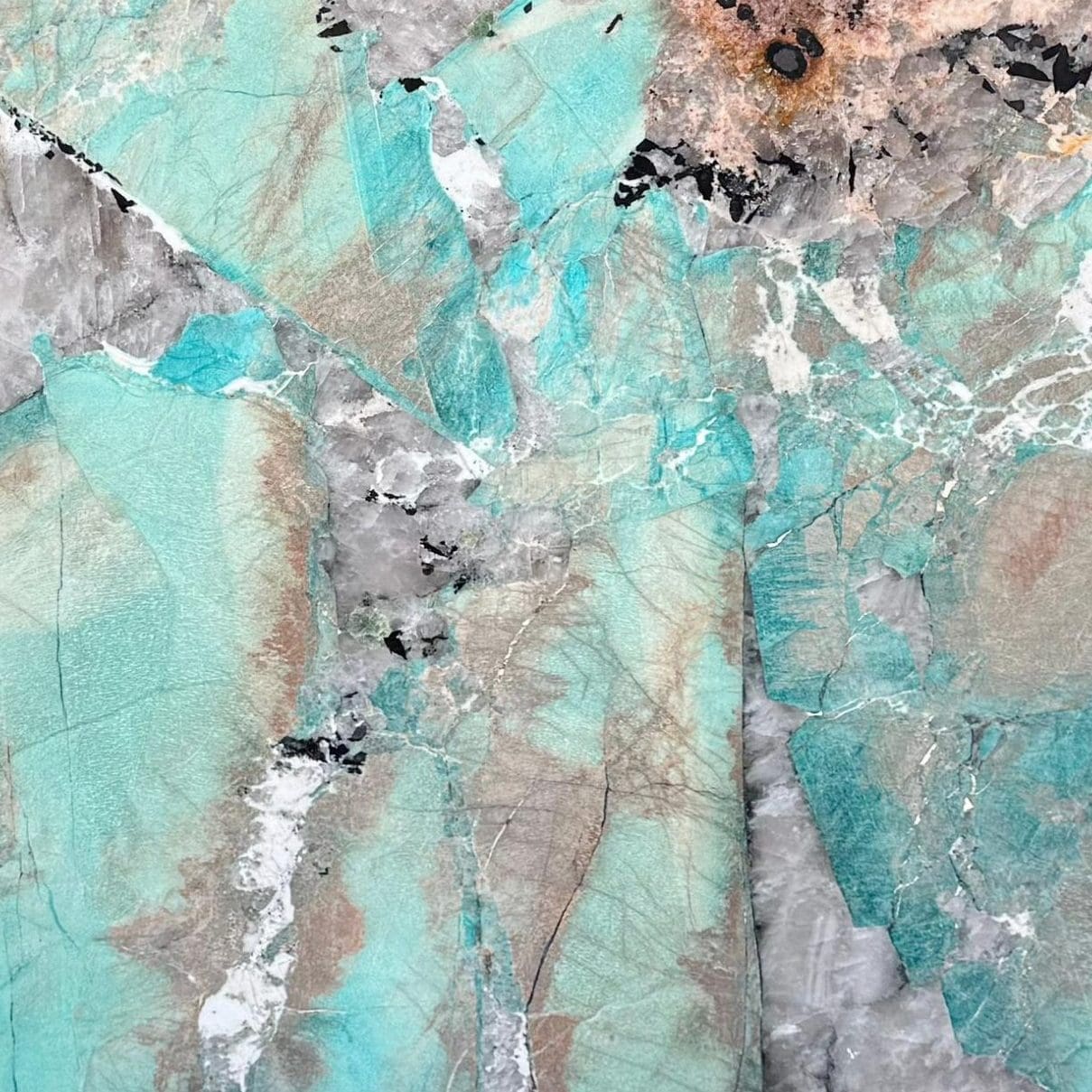
Maximalism leans into saturated, expressive color — surfaces that don’t fade into the background. These selections from UMI’s collection bring the depth, drama, and personality the trend demands, across natural stone, porcelain, and quartz. Each works as a countertop, vanity, full-height feature wall, or bar surround.



Nero Marquina
Pompeii Quartz | Vicostone Quartz

Calacatta Viola
Infinity Porcelain

Panda White
Infinity Porcelain
Bringing Maximalism Home
Translating this trend into a real space comes down to material first. The cabinetry, hardware, lighting, and textiles all carry weight — but the stone sets the tone for everything else. A bold countertop, a slab vanity wall, or a back bar built around a single dramatic stone gives the rest of the room a reason to lean in.
For projects that need flexibility, engineered surfaces like Infinity Porcelain, Vicostone Quartz, and Pompeii Quartz deliver the same visual language with the consistency and scale that natural stone can’t always match. Together, the collection covers the full range of what a maximalist home calls for — from quiet, color-driven moments in a powder room to full-on statement pieces in a kitchen or bar.
Choosing Materials That Carry the Look
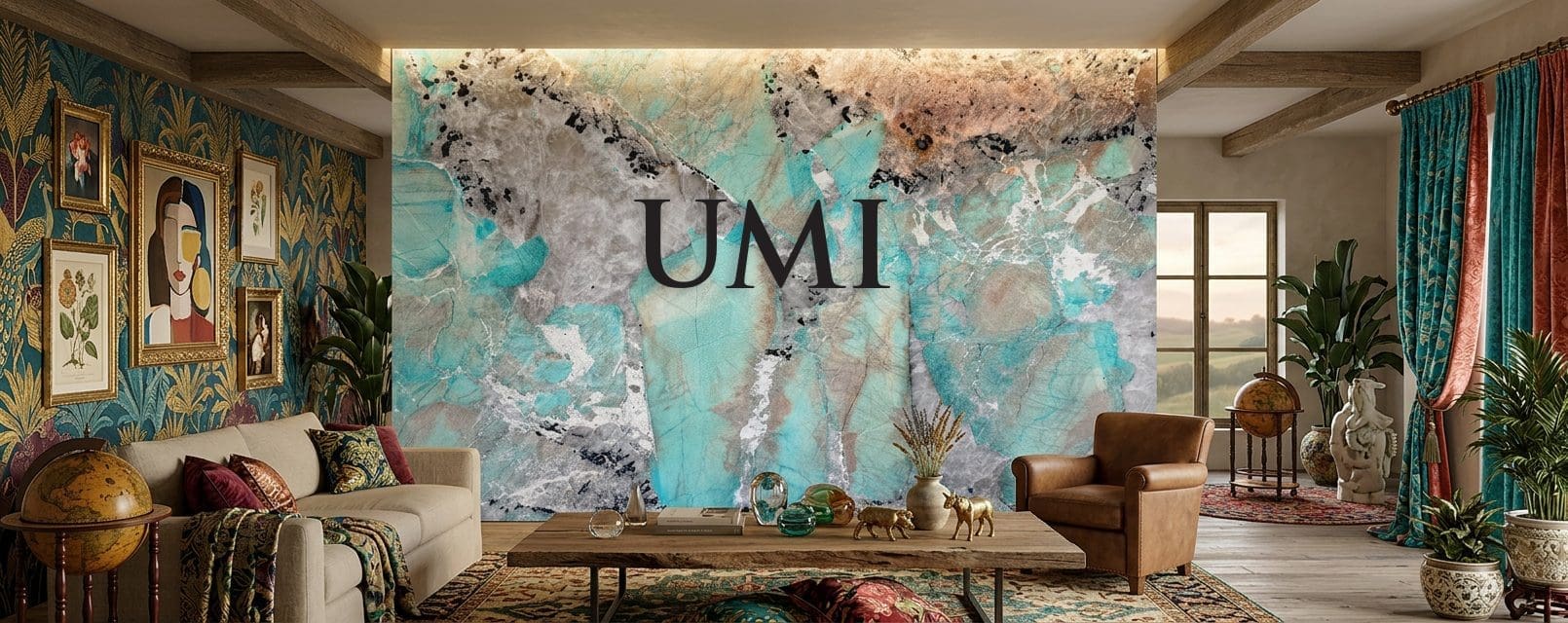
At UMI, the natural stone, porcelain, and quartz collections were built for projects that want their materials to do real work — to anchor a room, set its tone, and hold up over time. Maximalism is one of the styles these surfaces are made for.
Our live inventory shows material availability across all branches, and we offer a wide range of colors, thicknesses, and finishes to meet your project needs.
Because the rooms that feel the most personal are the ones built with materials that don’t ask to fade into the background.

